
Undated
Joaquin Tinta
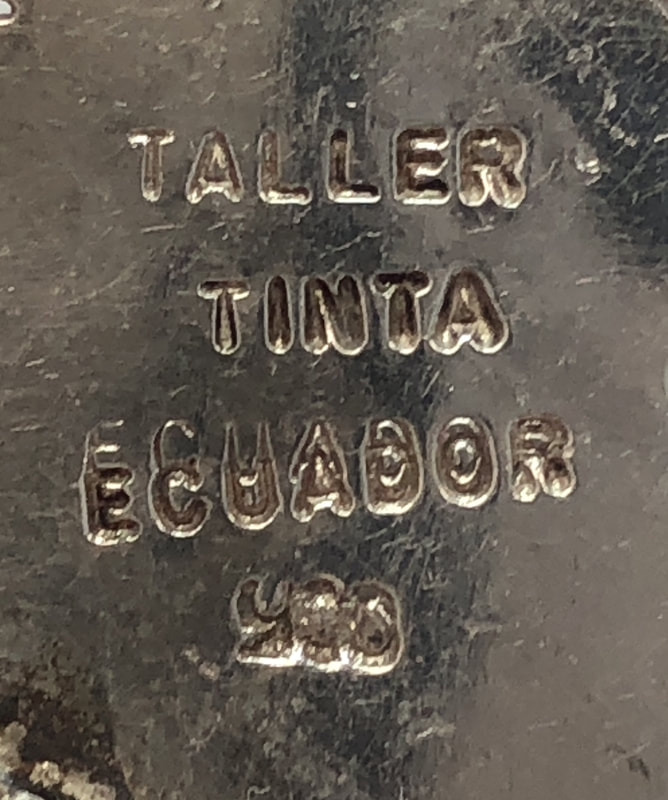
TALLER TINTA / ECUADOR /900: silver fineness alongside workshop and country wording.
Read the stamp
900 on a silver alloy means 900 parts silver per thousand, or 90% silver, below the 92.5% sterling standard. Keep the metal wording with the number: PT 900 describes 90% platinum, while 900 SILVER describes silver.
The millesimal number gives the proportion of precious metal in a thousand parts of alloy. On silver, 900 or .900 expresses 90% silver and 10% other metals. Sterling is 925 parts per thousand, or 92.5%, so the difference is 2.5 percentage points. The 900 grade remains a silver alloy rather than a layer of silver over an unrelated core. The number by itself is a fineness description, with separate symbols and inscriptions supplying the rest of the hallmark.
In current US jewelry guidance, COIN or COIN SILVER describes silver of at least 900 parts per thousand. STERLING has the higher 925 minimum. Historical American wares can use words such as COIN instead of a numerical 900 stamp. The Jones, Ball & Co. example reads PURE SILVER COIN: retain the complete phrase rather than interpreting PURE alone as a modern fine-silver number. A coin-silver description supplies an alloy grade; it does not identify which particular coins, if any, were melted to make the object.
The TALLER TINTA ECUADOR 900 mark combines workshop wording, origin and silver fineness. Its 900 is not a country code and ECUADOR does not add another purity percentage. European objects also use 900 silver: a gilded Vienna compact has a 900 purity mark alongside a separate master’s mark and other numbers. Copy each part of a mark group, including its outlines. A manufacturer, assay device or country inscription can narrow the identification in a way that 900 alone cannot.
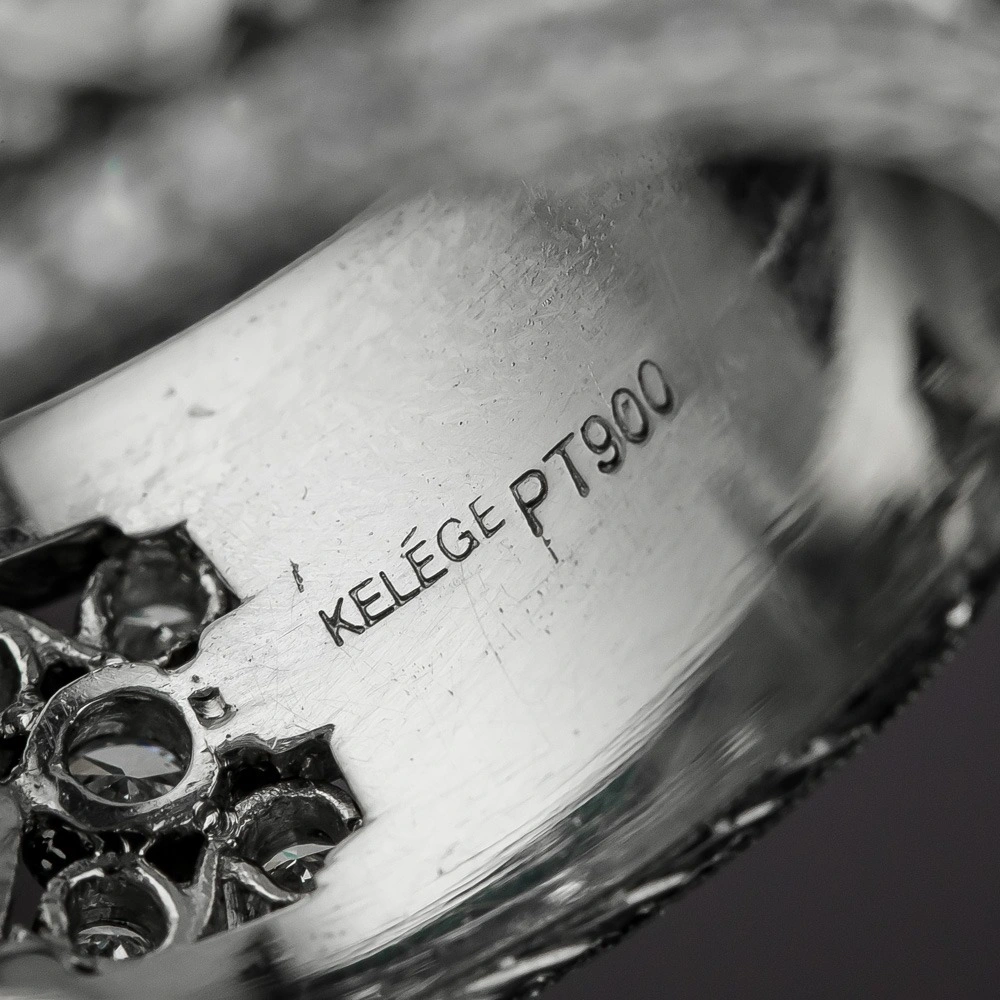
The same fineness number can apply to another precious metal. PT or PLAT beside 900 identifies a platinum alloy containing 900 parts platinum per thousand. A pale metal colour cannot distinguish it from silver. In British hallmarking, the surround of a fineness number also indicates the metal type. Read the full group of punches before choosing a silver hallmark chart. A maker’s name followed by PT 900, as in the Kelége example, must keep that platinum designation attached.
EPNS means silver electroplated over nickel silver, a copper-rich alloy with nickel and zinc. It is a different construction from 900 silver alloy. A gilt surface can, conversely, cover genuine silver: the gold colour is a surface finish rather than a change in the silver’s fineness. Check the principal object and any separately marked fittings, and use the maker and assay information alongside the number when an inscription is worn or incomplete.
Undated
TALLER TINTA / ECUADOR /900: silver fineness alongside workshop and country wording.

1849
JONES, BALL & CO. / BOSTON / PURE SILVER COIN: a historical wording form to compare with numerical 900.
The maker was established in 1849.
Undated
KELÉGÉ PT 900: a deliberate contrast showing that 900 with PT describes platinum.
Contemporary mark.
With silver wording it means 90% silver. With PT it means 90% platinum, so read the metal designation as well as the number.
No.900 is 90% silver, while sterling is at least 92.5%; the difference is 2.5 percentage points.
It describes the silver-alloy fineness. EPNS or silver-plate wording instead identifies a coating over another metal.
No. Use the adjoining country, assay and maker marks; 900 is a fineness number used in more than one context.