
Undated
David Yurman
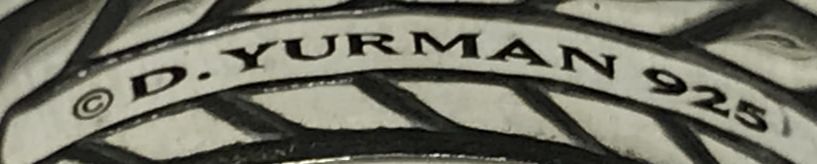
D. YURMAN 925: the name identifies the maker and the number identifies sterling fineness.
DY, D. Yurman and David Yurman are alternative maker signatures.
Read the stamp
925 means 925 parts silver per thousand, or 92.5% silver: the sterling-silver standard. The remaining 7.5% is other metal; a gold-coloured surface can be plating over that sterling-silver alloy.
The number 925 expresses silver fineness in parts per thousand. Adding a decimal point gives .925, the same proportion written as a fraction of the whole. STERLING and shortened STER or STG wording describe the same standard. An S before the number can identify silver, as in Pandora’s S925 stamp. The extra S does not raise the silver percentage. Keep separate initials or symbols when transcribing the inscription: they can identify a maker rather than modify the fineness.
The number describes the silver alloy beneath the surface. Sterling can be gilded or gold plated and retain its silver designation; the gold coating does not turn 925 into a gold-karat mark. In UK marking practice, gold-plated sterling is hallmarked as silver. Read coating wording such as gold plated silver; a yellow surface alone does not mean solid 9K, 14K or 18K gold. A silver-coloured 925 ring is likewise sterling rather than a white-gold grade.
David Yurman, Georg Jensen, Tiffany and many other makers use the 925 standard. Their names, initials or emblems are the identity clues next to it. For example, GJ and 925 perform different jobs on the same inscription. Country wording such as ITALY or DENMARK adds an origin clue, not a different silver percentage. With British hallmarks, the sponsor’s punch, fineness mark and assay-office device are separate components. Preserve that entire group when comparing an unfamiliar stamp.
Check the inside of a ring, the clasp and adjacent tag of a necklace, and the reverse of a charm or pendant. Photograph the marks before polishing, with the camera facing the stamped surface. Where a clasp is detachable or has been replaced, examine the main piece as well: the mark is physically attached to that fitting. An absence of lettering on a tiny part does not supply a different purity number.
EPNS means electroplated nickel silver: silver over a copper-rich nickel-and-zinc alloy. That construction differs from sterling alloy throughout. Sterling itself can tarnish, often darkening when silver reacts with sulphur compounds. Conversely, a 925 stamp is a claim about fineness rather than an elemental test. When a stamp or replaced component conflicts with the object, check the alloy as well as the lettering.
Undated
D. YURMAN 925: the name identifies the maker and the number identifies sterling fineness.
DY, D. Yurman and David Yurman are alternative maker signatures.
Undated
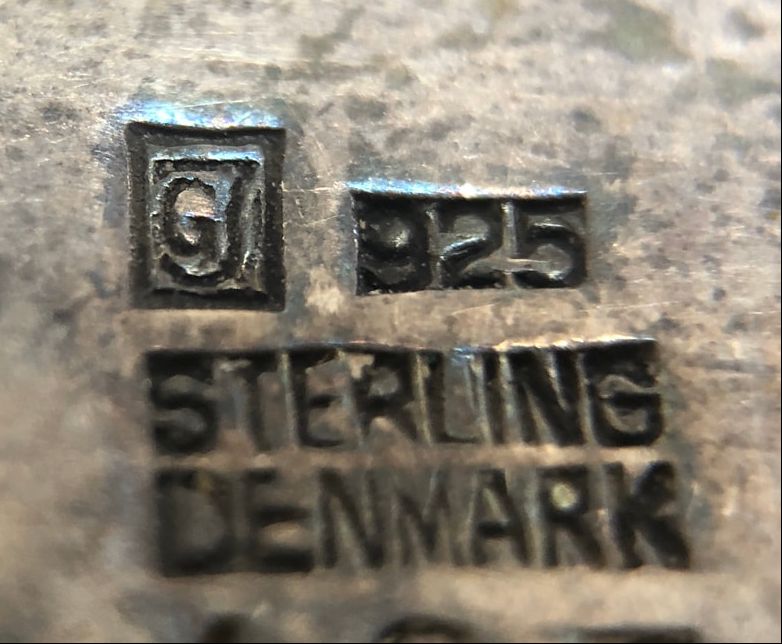
Georg Jensen mark with 925, STERLING and DENMARK: the purity, country and maker have separate roles.
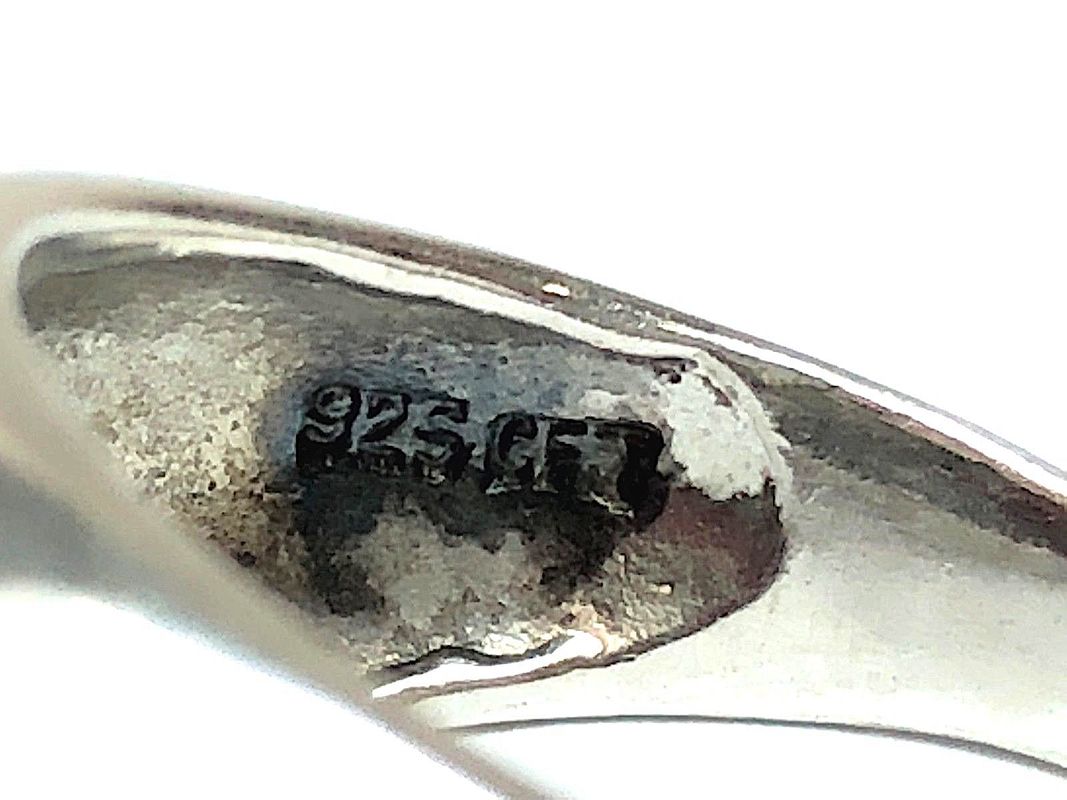
It means at least 92.5% silver, the sterling-silver standard.
925 is a silver standard. Gold-coloured jewelry stamped 925 can be gold-plated or gilded sterling silver; the coating needs its own description.
925 is normally the sterling-silver designation, not a white-gold fineness. Read the complete hallmark to identify the metal.
S925 identifies sterling silver: S for silver and 925 parts silver per thousand. The maker signature beside it is a separate mark.