Antonio Pineda
1919–2009
circle crown
The workshop was established in 1941.
Taxco, Mexico
Cartouche, circle, crown, eagle, frame
Country guide
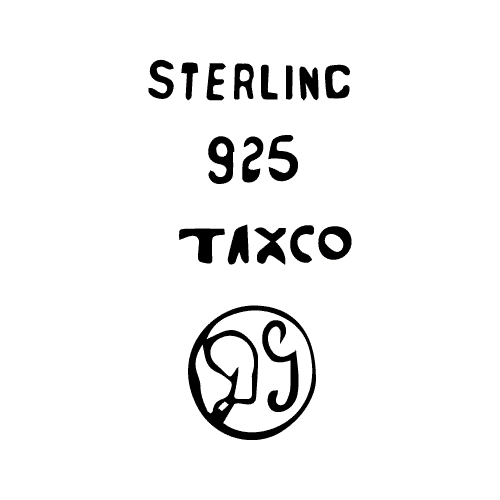
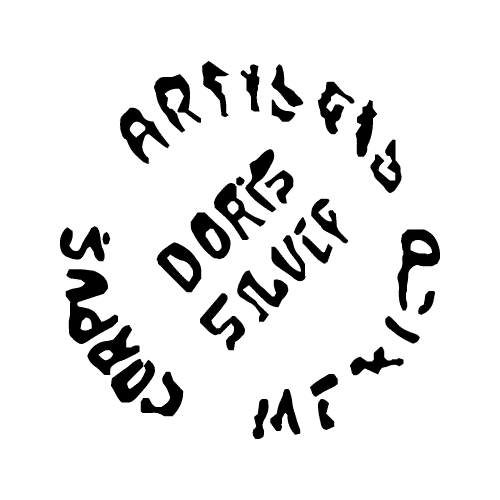
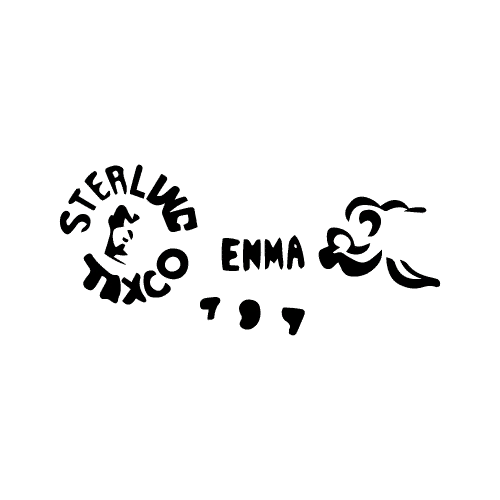
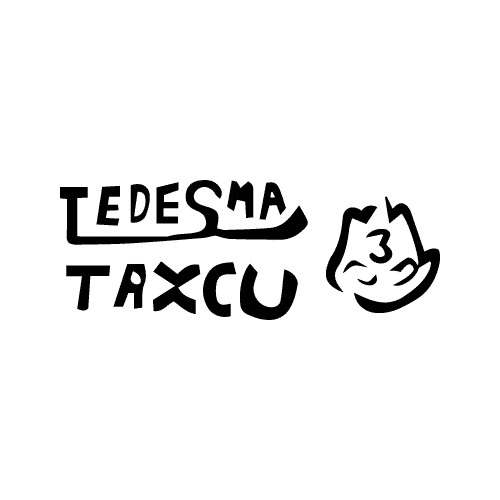
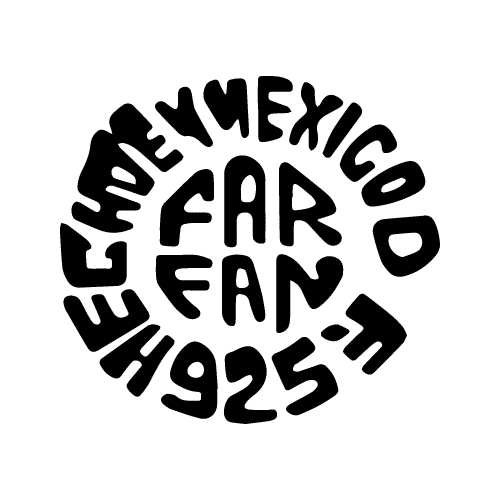
Mexican sterling marks combine a workshop identity with place and silver-content wording. TAXCO, MEXICO, HECHO EN MEXICO, SILVER and PLATA are shared inscriptions, while a monogram or name identifies an individual business. Taxco in Guerrero became a major centre for modern jewellery and decorative silver after William Spratling opened his workshop in 1931. Local master smiths and apprentices helped develop the movement, and several later established workshops of their own.
Antonio Pineda
1919–2009
The workshop was established in 1941.
Taxco, Mexico
Cartouche, circle, crown, eagle, frame
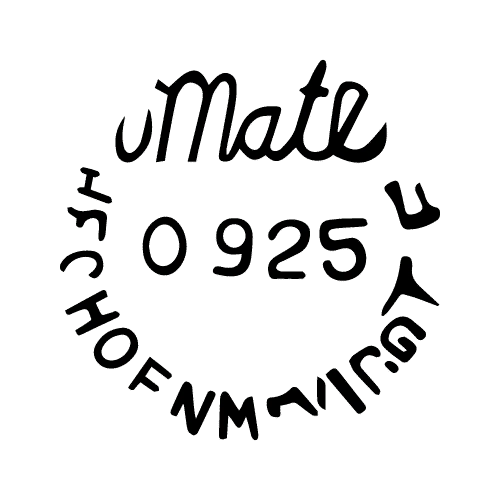
Matl
1934
The business was established in 1934.
Mexico City, Mexico
Cartouche, frame, rectangle
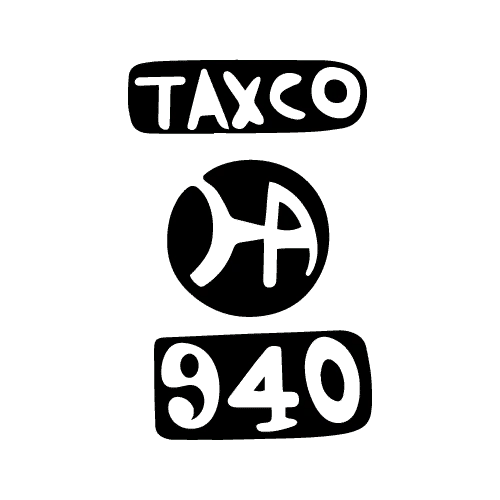
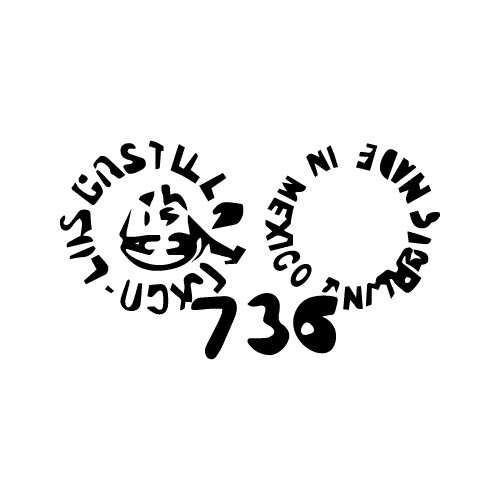
Los Castillo
1939
The business was established in 1939.
Mexico
Azteca, handwrought, los castillo, made in , metales castillo
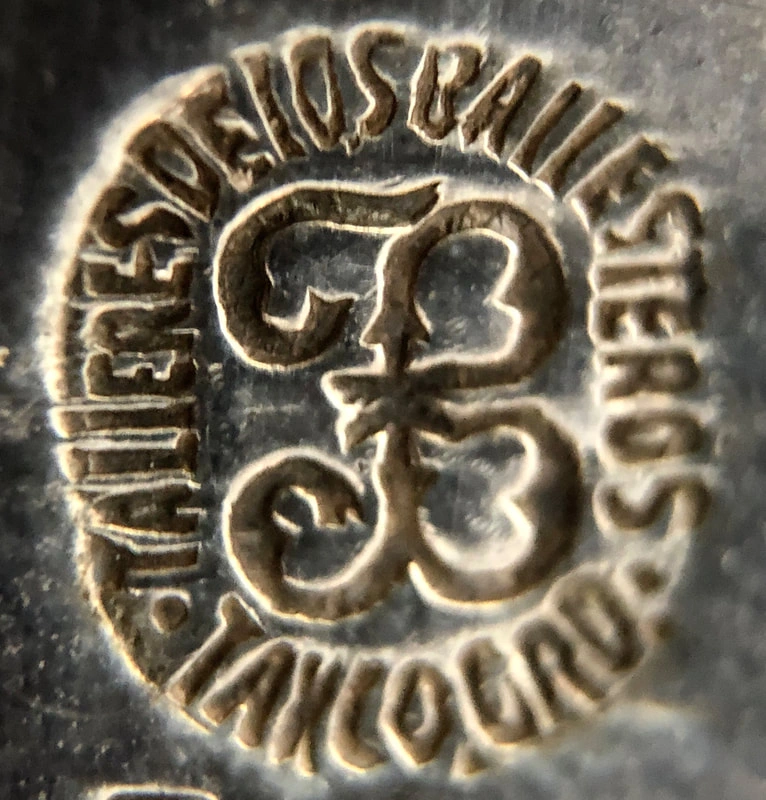
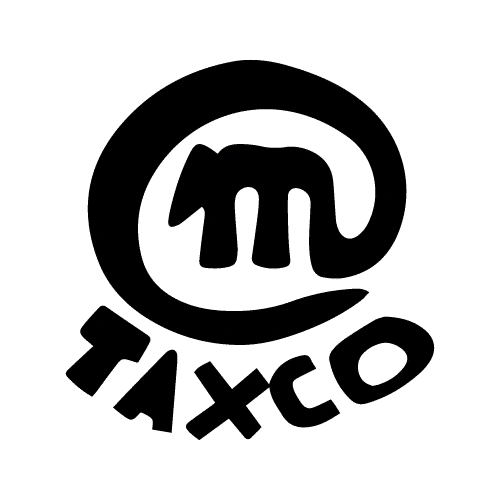
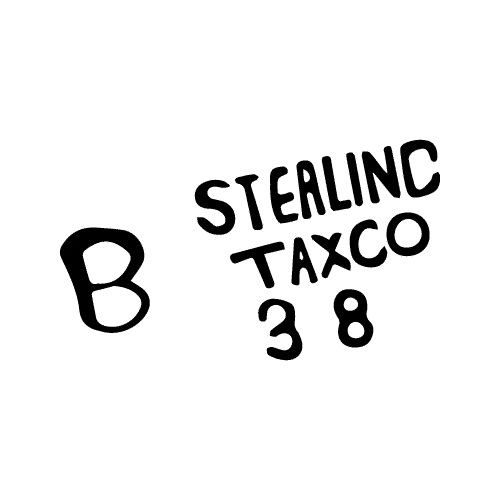
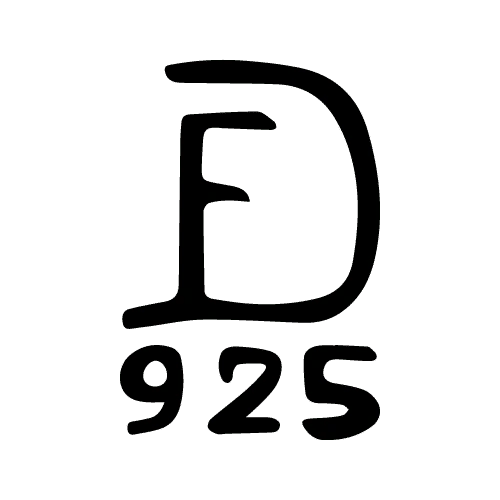
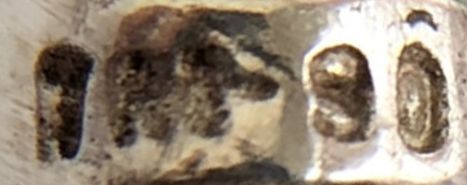
The resulting jewellery ranges from sculptural bracelets and necklaces to brooches, earrings and stone-set designs. Workshops also made flatware, hollowware and mixed-metal objects. Spratling’s WS, Héctor Aguilar’s HA, Los Castillo, Antonio Pineda and Victoria are separate identities. Their designs and metal choices overlap, so a familiar Taxco style needs to be read with its own signature.
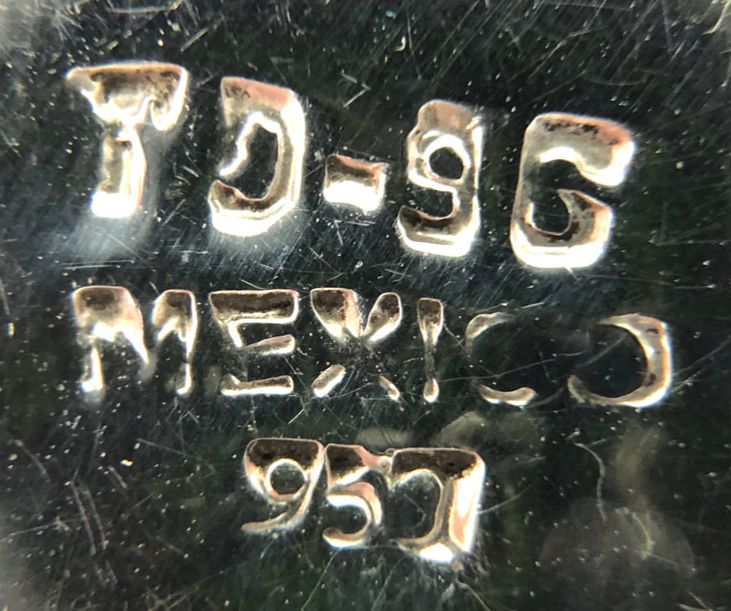
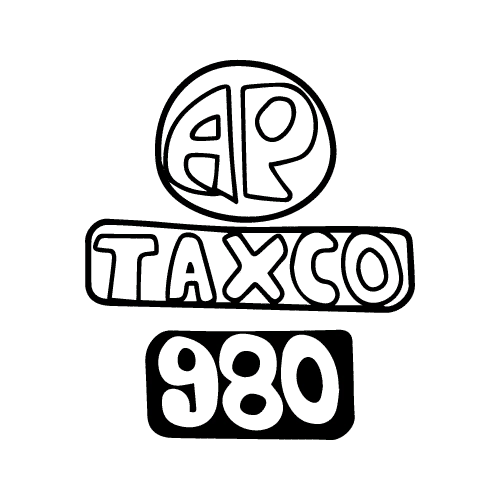
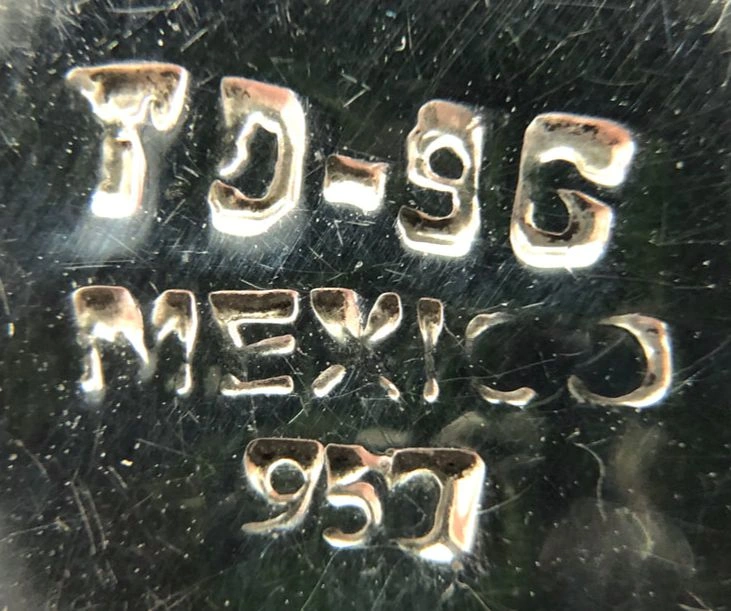
Fineness is another part of the stamp group. 925 means 925 parts silver per thousand; 940, 950, 970 and 980 express other silver contents. Those figures do not name a maker. Numbered eagle stamps were introduced in 1948 and were followed around 1979–1980 by letter-and-number registrations. In a code such as TM-90, the first letter identifies the registration town, the second a name initial, and the number distinguishes the registrant.
Read every punch, including faint emblems and separate numerals. A design number, eagle number and registration number serve different purposes. None should be converted into a production year without its corresponding chronology.
Look on the reverse of a brooch, inside a bracelet or ring, or beside the clasp; photograph the complete group.
Transcribe the name or monogram separately from TAXCO, MEXICO and the fineness.
For an eagle stamp, copy both its shape and internal number; do not identify a workshop from an unclear eagle alone.
For letter-and-number registrations, keep the exact letters, hyphen and digits. T identifies Taxco registration, not a production year.
Compare the maker’s signature and metal wording together; a named workshop can produce silverplate or mixed-metal objects as well as sterling.
Treat separate style or design numbers as model identifiers unless a maker-specific record gives another meaning.
Taxco, Guerrero, Mexico · Workshop established 1931; designer active until 1967.
Silver jewellery, tableware and decorative objects, often combined with other materials.
Taxco, Guerrero, Mexico · Taller Borda founded 1939.
Silver jewellery with strong sculptural and pre-Columbian design references.
Taxco, Guerrero, Mexico · Workshop established 1939.
Jewellery, tableware, decorative silver and mixed-metal pieces.
Taxco, Guerrero, Mexico · Independent workshop active in the 1940s and later 20th century.
Modernist silver jewellery with sculptural forms and carefully engineered construction.
Taxco, Guerrero, Mexico · 20th-century Taxco workshop.
Silver jewellery and decorative metalwork under the Victoria name.
Town and fineness wording can accompany many makers and later copies. Compare the complete signature, construction and design with the workshop’s other pieces.
ALPACA names a copper-nickel-zinc alloy rather than a silver fineness. Read the metal wording before treating a Mexican souvenir as sterling.
The workshop name also appears on objects made with other metals or plating. Check each object’s fineness and material inscription.
VICTORIA also occurs on European porcelain. The Taxco jewellery signature belongs to a different material, country and maker.
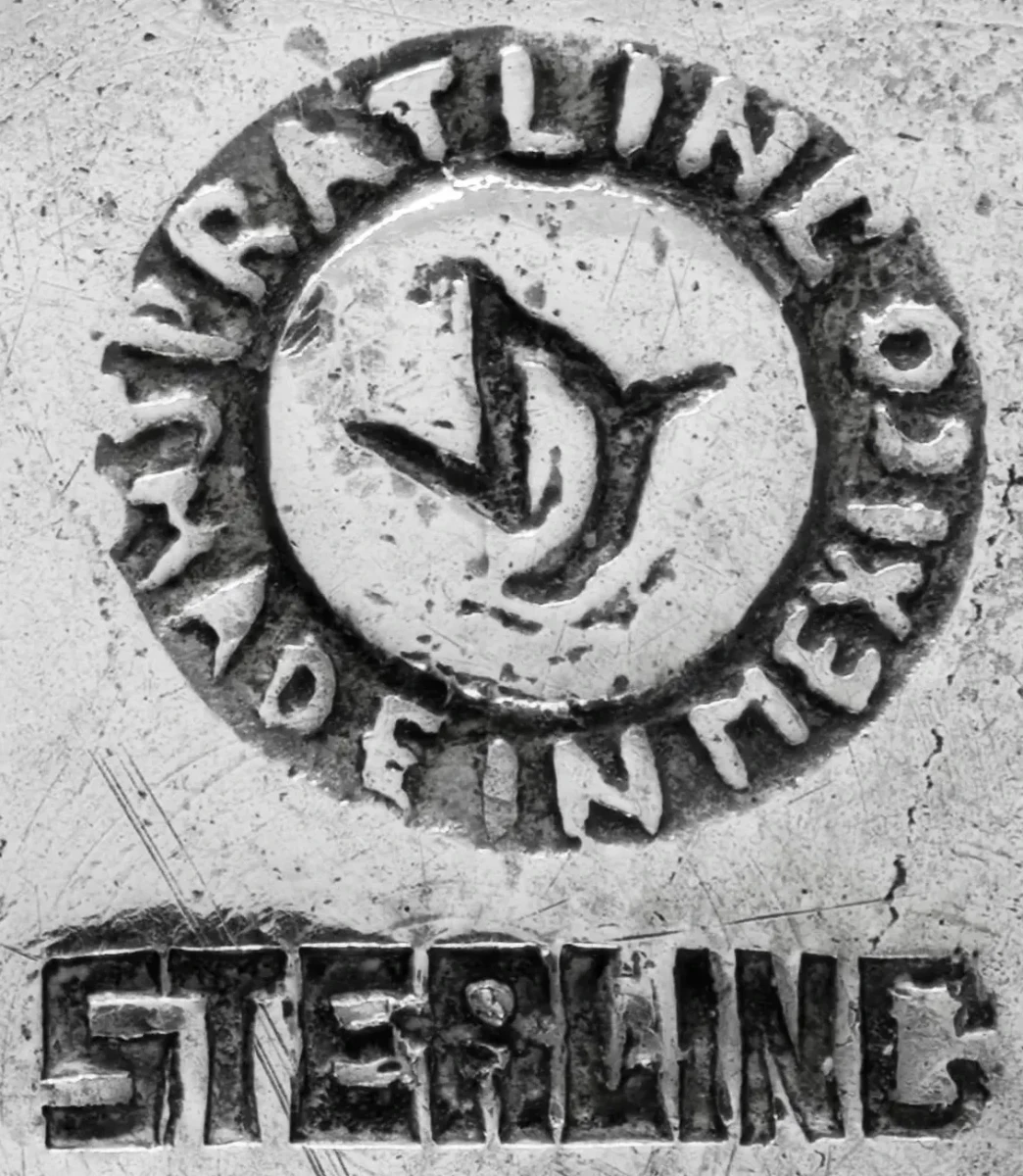
c. 1940–1946
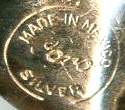
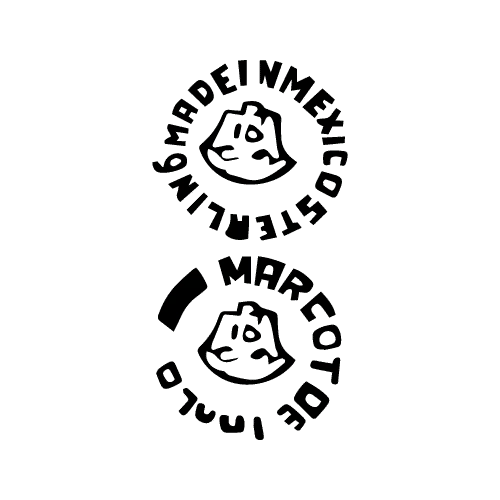
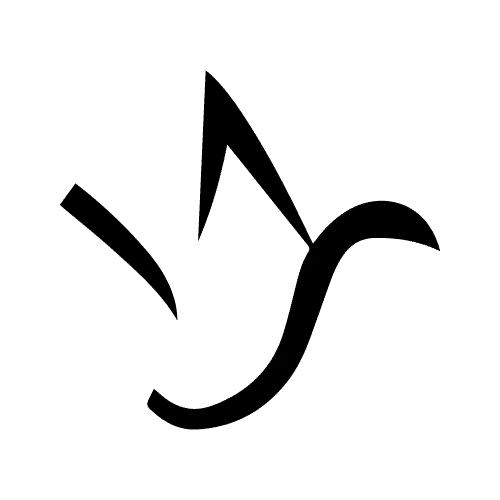
WS bird-like monogram occupies a circular SPRATLING MADE IN MEXICO stamp; separate STERLING below.
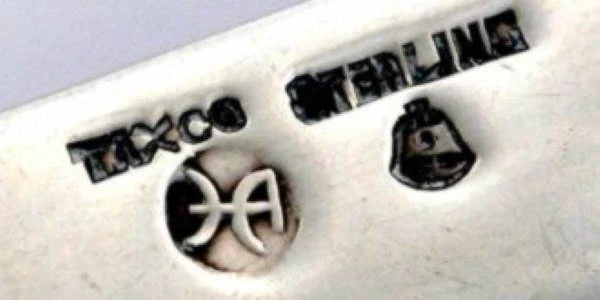
Undated
Conjoined HA monogram sits below TAXCO and STERLING; separate numbered eagle to the right.
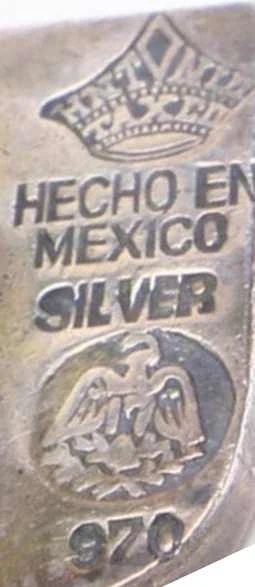
Undated
ANTONIO is enclosed by a crown-shaped outline, with separate country, SILVER and 970 punches below.
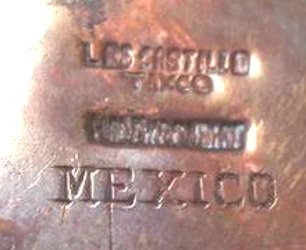
Undated
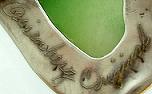
Two-line LOS CASTILLO TAXCO name sits above a separate HANDWROUGHT cartouche and large MEXICO.
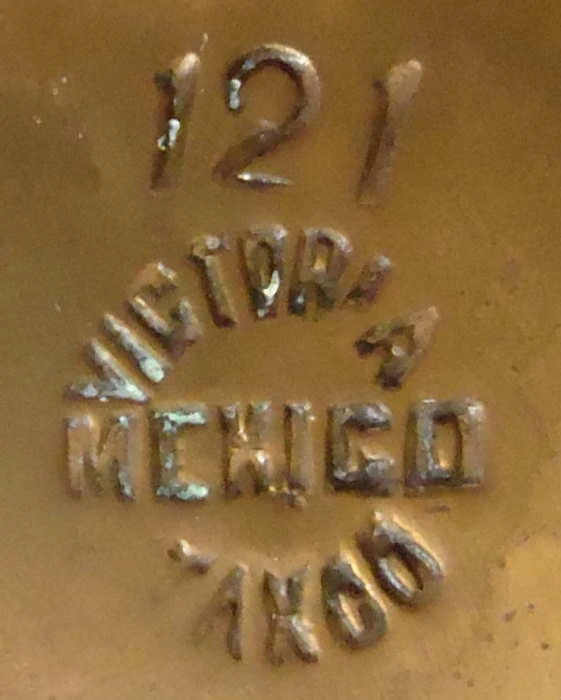
Undated
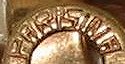
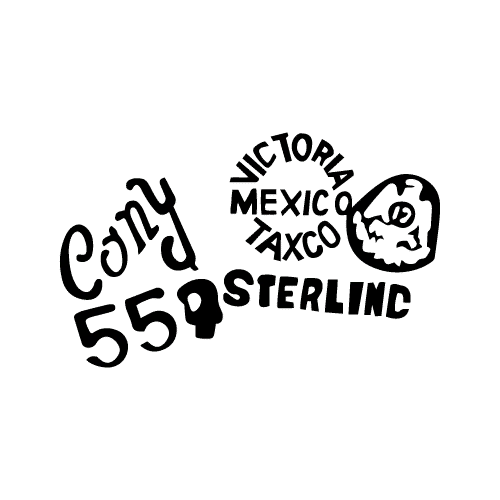
VICTORIA arches above MEXICO and TAXCO; a separate number appears above the name.