
Undated
tool identification
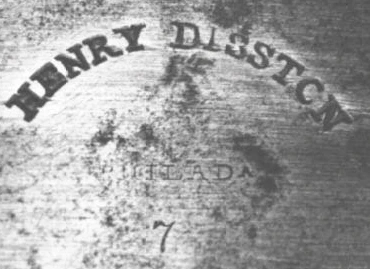
HENRY DISSTON stamped on a saw plate, with locality wording and a separate numeral below; a blade mark differs from the handle medallion.
Read the stamp
Identify a tool by its working form and complete maker logo, then separate its model, size, material description, patent information and date code. CHROME VANADIUM describes steel; a company-specific date code or catalogue comparison provides a different clue.
Start with the working end: the jaw, cutting edge, toothed blade, socket opening or adjustable mechanism identifies the kind of tool. Then inspect both faces, the shank and the handle for a stamped or forged-in trade name. A small pictorial device can identify a manufacturer even when the main name is worn away. Preserve its outline and letters together. P&C, for example, used an elongated hexagonal company logo. A complete logo comparison is more specific than a common description such as wrench, steel or hand forged.
A model or catalogue number identifies a product design, while a size marking describes its working capacity. Read them with the maker’s catalogue and product-number system. CHROME VANADIUM normally describes an alloy-steel specification rather than uniquely naming its manufacturer. Some retailers also used alloy wording as a sales brand, so retain the exact spelling and look for an additional logo. A maker’s own product can carry both a trade name and a steel description; two inscriptions on one shank do not necessarily represent two competing identifications.
A patent date or number concerns an invention or design. Trademark records give another set of dates: first claimed use, filing and registration. These dates should not be turned into an individual tool’s manufacturing year. P&C’s hexagon mark supplies a clear example: the trademark was registered in 1953 but claimed first use in 1926. A tool carrying that device can belong to a broader production period. Match its construction, model and marking style against dated examples instead of choosing the registration year as its date.
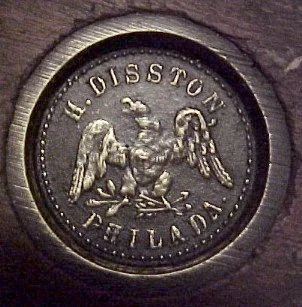
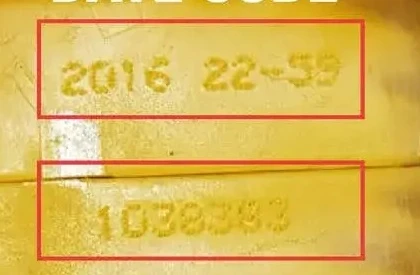
On a Disston handsaw, the blade can carry a stamped name or an etched design, while the handle has a brass medallion or label screw. The medallion sequence is particularly useful for dating, but the blade’s model and handle construction provide separate comparisons. On a power tool, the rating label gives the model, and a distinct date code or serial may be on the housing. The pictured DEWALT compartment labels the date above the serial: 2016 22-59 begins with year 2016 and production week 22. Use the brand’s own format rather than applying one tool company’s chart to another.
Undated
HENRY DISSTON stamped on a saw plate, with locality wording and a separate numeral below; a blade mark differs from the handle medallion.
Undated
Disston brass label screw or medallion: compare its wording and emblem with a period-specific medallion study.
Undated
Power-tool date and serial are separately marked; the upper 2016 22-59 code reads year 2016, week 22.
Compare the working shape and complete maker mark, then use model numbers, construction and dated catalogue illustrations to narrow the identification.
It usually describes the steel. Similar alloy wording was also used as a retailer brand, so preserve the exact spelling and compare the separate maker logo.
It dates the patent. A particular tool can have been made later; use the maker’s product history and construction details.
Check both faces of the head, the shank and handle. Power tools commonly have a rating label and separate housing codes.