Country guide

Occupied Japan marks

Occupied Japan describes the country-of-origin wording used on Japanese export goods during the Allied occupation after the Second World War. The occupation lasted from 1945 until 28 April 1952. Ceramics in this collecting group include porcelain tea services, cups and saucers, plates, vases and figurines. The phrase does not name a single factory: different potteries, decorating businesses, brands and overseas importers used it.

Key makers’ marks

12 marks
Occupied Japan marks mark, c. 1947–1952

agnestelle.com

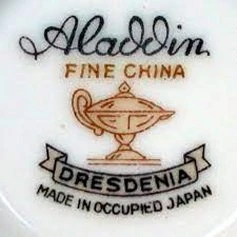
Aladdin Fine China / Dresdenia (brand)

c. 1947–1952

Aladdin FINE CHINA DRESDENIA MADE IN OCCUPIED JAPAN

DRESDENIA is a trade-line name on Japanese porcelain; it is not a Dresden country-of-origin statement.

printed · black and gold · porcelain · Japan

Occupied Japan marks mark, c. 1947–1952

theoccasionalsaler.com

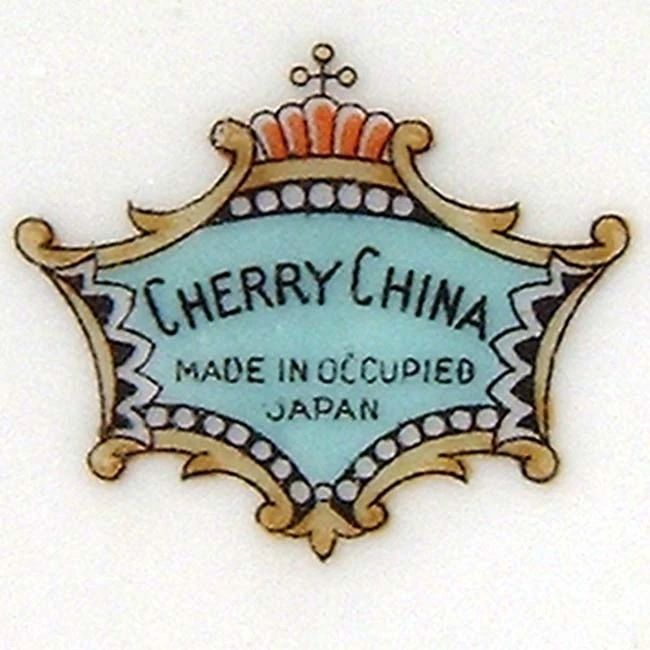
Cherry China

c. 1947–1952

CHERRY CHINA MADE IN OCCUPIED JAPAN

CHERRY CHINA identifies this brand; a crown alone does not identify its factory.

printed · blue, gold, orange and black · porcelain · Japan

Occupied Japan marks mark, c. 1947–1952

agnestelle.com

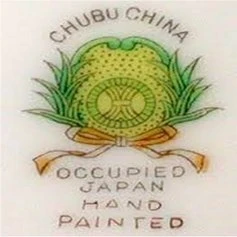
Chubu China

c. 1947–1952

CHUBU CHINA OCCUPIED JAPAN HAND PAINTED

The short OCCUPIED JAPAN wording is placed below the device, with HAND PAINTED beneath.

printed · green, yellow and gold · porcelain · Japan

Occupied Japan marks mark, c. 1947–1952

agnestelle.com

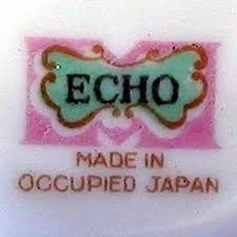
Echo (brand)

c. 1947–1952

ECHO MADE IN OCCUPIED JAPAN

ECHO is the brand wording; read the separate origin lines underneath.

printed · pink, green, gold and black · porcelain · Japan

Occupied Japan marks mark, c. 1947–1952

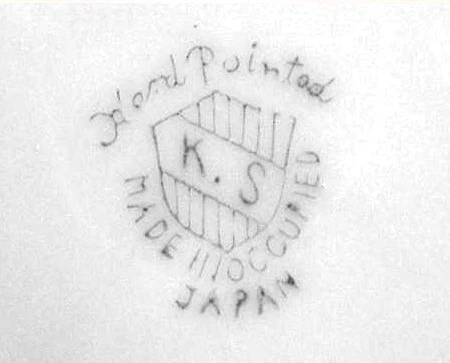
gotheborg.com

K.S. (unexpanded initials)

c. 1947–1952

Hand Painted K.S. MADE IN OCCUPIED JAPAN

The K.S. initials are inside the shield; they remain unexpanded rather than being assigned to a guessed factory.

printed · grey/black · porcelain · Japan

Occupied Japan marks mark, c. 1947–1952

gotheborg.com

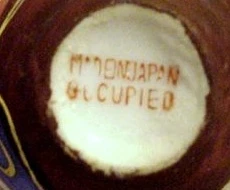
Unidentified manufacturer

c. 1947–1952

MADE IN JAPAN OCCUPIED

The word OCCUPIED is separated onto its own lower line; it is still part of the country statement.

printed · red · porcelain · Japan

Occupied Japan marks mark, c. 1947–1952

theoccasionalsaler.com

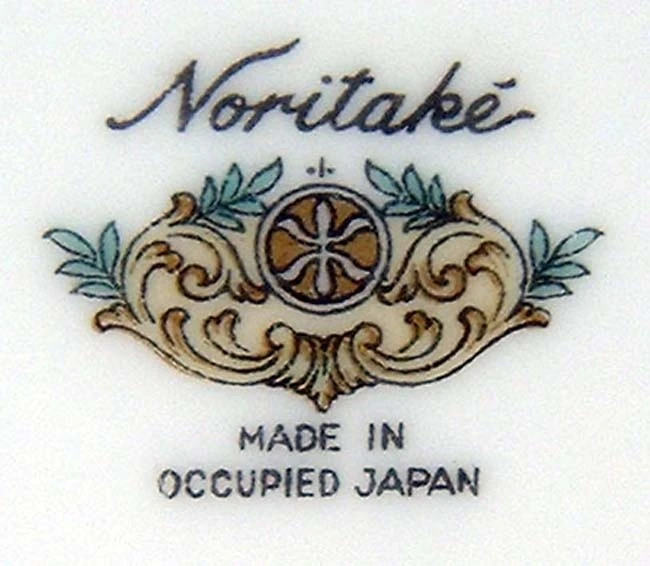
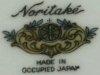
Noritake

c. 1947–1952

Noritaké MADE IN OCCUPIED JAPAN

The central Komaru device differs from the M in a wreath; a green or multicolour printing is the same design.

printed · blue, green, gold and black · porcelain · Japan

Occupied Japan marks mark, c. 1947–1952

theoccasionalsaler.com

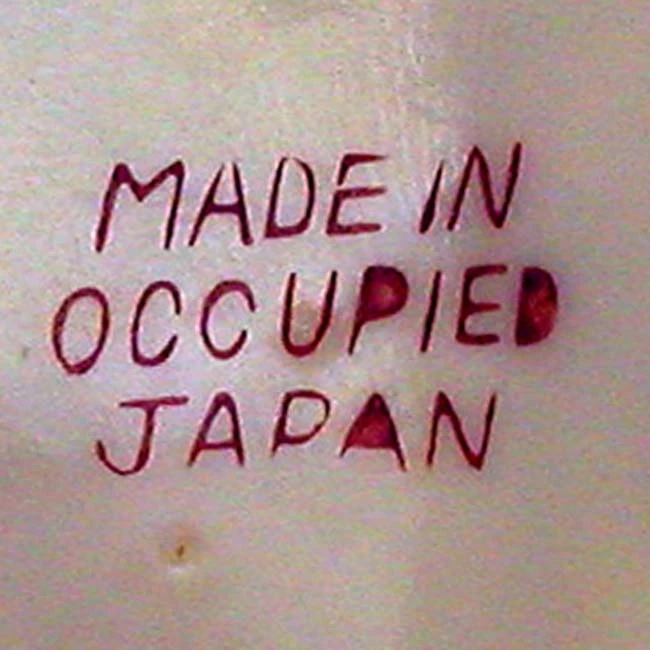
Unidentified manufacturer

c. 1947–1952

MADE IN OCCUPIED JAPAN

This wording identifies export origin and period but supplies no manufacturer name.

printed · red · porcelain · Japan

Occupied Japan marks mark, c. 1947–1952

theoccasionalsaler.com

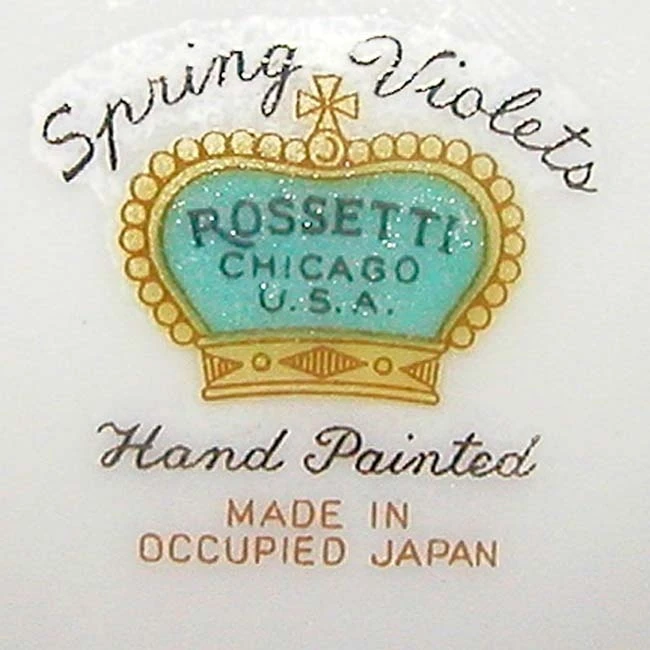
Rossetti, Chicago (brand/importer)

c. 1947–1952

Spring Violets ROSSETTI CHICAGO U.S.A. Hand Painted MADE IN OCCUPIED JAPAN

CHICAGO U.S.A. is the distributor address; MADE IN OCCUPIED JAPAN identifies production origin.

printed · turquoise, gold and black · porcelain · Japan

Occupied Japan marks mark, c. 1947–1952

theoccasionalsaler.com

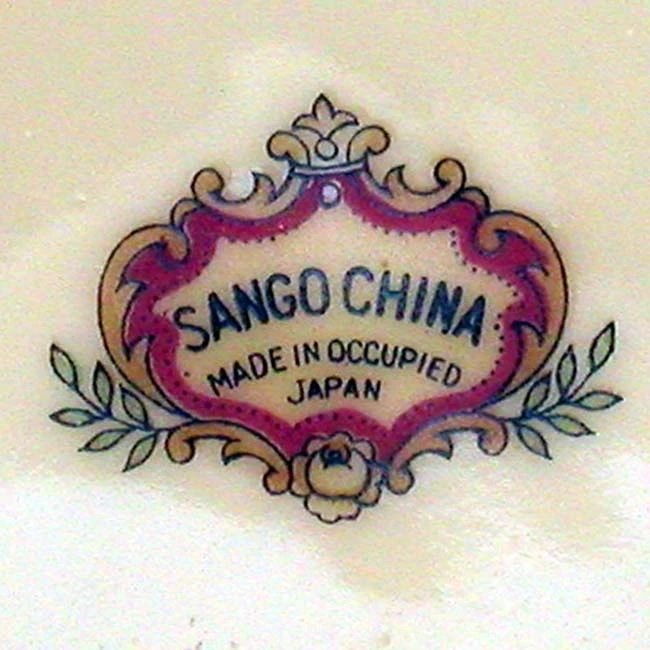
Sango China

c. 1947–1952

SANGO CHINA MADE IN OCCUPIED JAPAN

The SANGO name sits inside the cartouche; the origin wording appears below it.

printed · pink, blue and gold · porcelain · Japan

Occupied Japan marks mark, c. 1947–1952

theoccasionalsaler.com

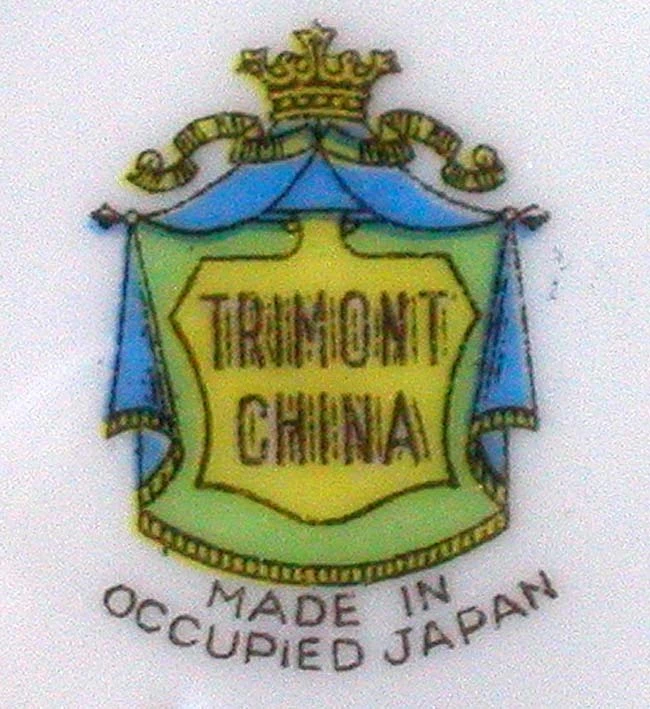
Trimont China

c. 1947–1952

TRIMONT CHINA MADE IN OCCUPIED JAPAN

Read TRIMONT inside the banner; the separate curved country line distinguishes this from plain-Japan versions.

printed · blue, green, yellow and gold · porcelain · Japan

Occupied Japan marks mark, c. 1948–1952

gotheborg.com

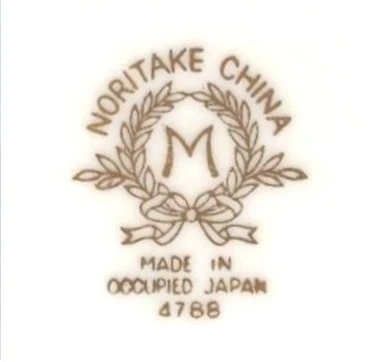
Noritake

c. 1948–1952

NORITAKE CHINA M MADE IN OCCUPIED JAPAN 4788

The M is a Morimura emblem; 4788 is a pattern number, not a year.

printed · brown · porcelain · Japan

About Occupied Japan marks

The export-marking instruction was issued on 20 February 1947. It required goods prepared for export after a fifteen-day interval, together with their containers and outer packages, to carry the English wording Made in Occupied Japan. On 5 December 1949 a revised instruction permitted Made in Occupied Japan, Made in Japan or Japan, with an exception for qualifying destinations where the buyer requested omission. The occupation years and the period of mandatory wording are therefore different.

Look for the complete country statement alongside a separate maker or brand device. Noritake used a floral Komaru design and the familiar M within a wreath; other marks name Sango, Chubu, Cherry China or Trimont. An American address, such as Rossetti Chicago, identifies a commercial business while the Japanese origin statement identifies where the ware was made. Some objects carry only plain lettering. Colourful crowns, shields and ribbons recur across several brands, so compare the full wording rather than the border alone. Plain Japan wording can also occur on occupation-period exports, and old stock could remain in shops after 1952.

How to read the marks

Read the whole country statement on the base, including words outside a crest or cartouche.

Record the brand or importer separately from the origin wording; an American city does not override MADE IN OCCUPIED JAPAN.

Compare the exact central device: an M wreath and the floral Komaru cartouche are different Noritake designs.

Treat numerals below a backstamp as pattern or model numbers unless a dated record identifies them otherwise.

Check every component of a set. Plain JAPAN does not exclude occupation-period manufacture.

Key makers

Noritake / Nippon Toki Kaisha

Nagoya, Aichi, Japan · Founded 1904; continuing. Rose China adopted in 1946; Noritake China name restored in 1948.

Porcelain dinnerware, tea services and decorative wares.

George Zoltan Lefton Company

Chicago, Illinois, United States; Japanese production supplied by other firms · Founded in 1941.

Importer of ceramic giftware, figurines and tableware.

UCAGCO / United China and Glass Company

New Orleans and New York, United States; imported Japanese wares · Business traced to Abe Mayer & Co. in 1850; UCAGCO trade name from the 1930s; sold in 1956.

Imported china, glassware and decorative ceramics.

Sango China

Japan · Marks appear on occupation-era ware.

China bearing the Sango floral cartouche.

Chubu China

Japan · Marks appear on occupation-era ware.

Hand-painted china bearing a circular device and foliage.

Cherry China

Japan · Marks appear on occupation-era ware.

China bearing a crowned cartouche.

Trimont China

Japan · Marks appear on occupation-era ware.

China bearing a crowned banner.

Rossetti

Chicago, Illinois, United States; illustrated ware made in Japan · Marks appear on occupation-era ware.

Spring Violets hand-painted china marketed under the Rossetti name.

Aladdin Fine China / Dresdenia

Japan · Marks appear on occupation-era ware.

China carrying a lamp device and Dresdenia trade-line wording.

Echo

Japan · Marks appear on occupation-era ware.

China carrying an ECHO reserve mark.

Look-alikes & fakes

Plain JAPAN and MADE IN JAPAN

These wordings occur before, during and after the occupation. They cannot by themselves establish an Occupied Japan date.

Dresden-style figurines and Dresdenia branding

Japanese export figurines can copy European styles. Read the country statement; Dresdenia on the Aladdin mark accompanies MADE IN OCCUPIED JAPAN.

Later-added Occupied Japan stamps or transferred labels

Compare the complete object, decoration and mark with another example of the same design. An origin stamp or loose label can be added to a later piece.

Noritake M wreath and unrelated wreaths

A letter in a wreath is not enough to name Noritake. Compare the name above the wreath and the full origin wording.

Browse makers

2 makers

More to explore