
Undated
epns hallmark silver
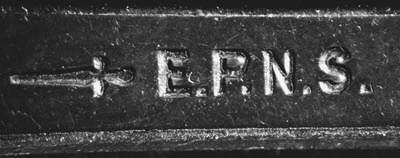
E.P.N.S. stamped on the back of a fork; the letters specify silver electroplate over nickel silver.
stamped
Read the stamp
EPNS means electroplated nickel silver: a silver coating over a copper, nickel and zinc alloy. The nickel silver base contains no silver; A1 is a plating-quality designation, not a sterling purity mark.
EPNS means electroplated nickel silver. EP describes the silver coating, while NS names the alloy beneath it: copper, nickel and zinc. Nickel silver contains no silver of its own. The precious metal is the thin surface deposit applied by electroplating. The same letters can appear together, separated by stops as E.P.N.S., or divided among small punches. Their meaning stays the same.
A1 or AI is a plating-quality designation. It does not turn the base metal into sterling, and it is not a silver fineness figure. Read it as a maker’s grade of plating rather than a universal percentage of silver. Numbers beside a plated maker’s stamp commonly identify a pattern, production series or stock item. They should not automatically be read as a year. Patent wording identifies a patent claim; a capacity inscription describes the vessel. Keep those details separate from the EPNS letters.
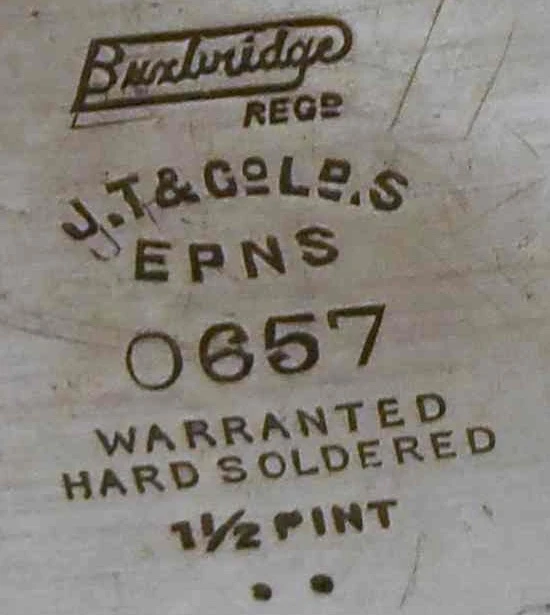
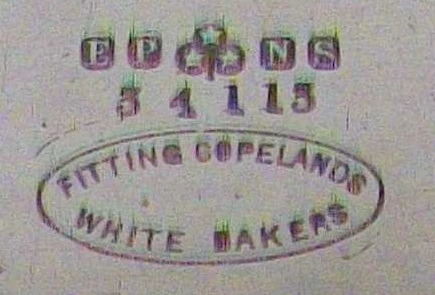
On flatware, turn the handle over and inspect its back. On a teapot or serving vessel, examine the underside for the complete stamp group. Record the maker’s name, initials, trademark and retailer wording as well as EPNS. John Turton’s example combines J.T. & Co Ltd with EPNS and the Burwood trademark. The Barker Brothers example has separate E, P, N and S punches and additional retailer wording. A retailer name and a manufacturer’s device can therefore occur on the same object.
Sterling silver is an alloy containing at least 925 parts silver per thousand, or 92.5%, under the US standard. EPNS describes silver over a different metal instead. EPBM means electroplated Britannia metal, a tin-based substrate; EPC describes electroplate on copper. These letters distinguish the base material, not different sterling grades. A British hallmark combines a sponsor’s mark, fineness mark and assay-office mark. A row of decorative shields on plated ware should be read with its accompanying words before assigning it an assay office.
Look at exposed edges, the bowl of a spoon and raised decoration for a change of surface where plating has worn. The Canadian Conservation Institute illustrates E.P.N.S. on a fork and explains that electroplating covers a base alloy. Repeated abrasive polishing removes metal from the surface, so brightening a plated piece can also thin its remaining silver. Identify the full stamp before polishing; the letters and maker’s device are more useful than overall colour for distinguishing nickel silver plate from a silver alloy.
Undated
E.P.N.S. stamped on the back of a fork; the letters specify silver electroplate over nickel silver.
stamped
Undated
John Turton & Co Ltd: J.T. & Co Ltd, EPNS and the Burwood trademark, with separate pattern and capacity wording.
stamped
Undated
Barker Brothers: E, P, N and S in separate punches above a number and retailer wording.
stamped
EPNS identifies silver-plated nickel silver; A1 describes plating quality. It does not mean 925 or sterling silver.
Read the initials or trademark beside EPNS and any retailer name. EPNS identifies the material and process, so those letters alone do not identify the maker.
EPNS is a material designation. Nearby numbers commonly identify a pattern or stock item; match them to the manufacturer before treating them as dates.
Both describe silver plate. EPNS has a nickel-silver base; EPBM has a tin-based Britannia-metal base.