
pushkinantiques.squarespace.com
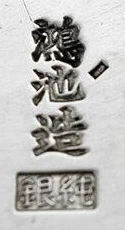
Konoike
c. 1900
鴻池造 純銀
鴻池造 names the workshop; the neighbouring 純銀 is a metal description.
stamped · silver · Japan
Country guide
Japanese silver marks combine metal descriptions, workshop signatures, retail names and, on some pieces, an official assay mark. Meiji-period export silver, made from 1868 to 1912, includes tea services, bowls, boxes and ornaments made for foreign buyers. Yokohama firms such as Konoike and Samurai Shokai supplied this trade. Tokyo businesses including Miyamoto Shoko and Hattori also sold silverware, often with Japanese and Roman-letter marks in different combinations.
pushkinantiques.squarespace.com
Konoike
c. 1900
鴻池造 names the workshop; the neighbouring 純銀 is a metal description.
stamped · silver · Japan
pushkinantiques.squarespace.com
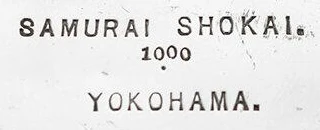
Samurai Shokai (retailer)
c. 1900
The 1000 version differs from the STERLING wording on other Samurai Shokai objects.
stamped · silver · Japan
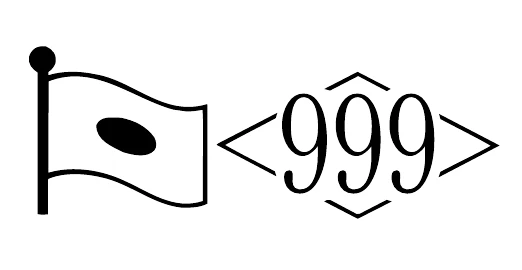
Japan Mint (assay authority; object maker unspecified)
From 2012
Read the fineness numeral together with the flag; 999 replaced 1000 for submissions after March 2012.
stamped · silver · Japan
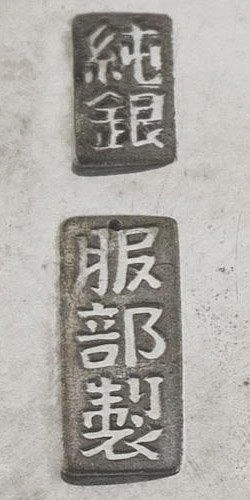
K. Hattori & Co.
Undated
The full 服部製 signature distinguishes this version from the bird and Roman-letter marks.
stamped · silver · Japan
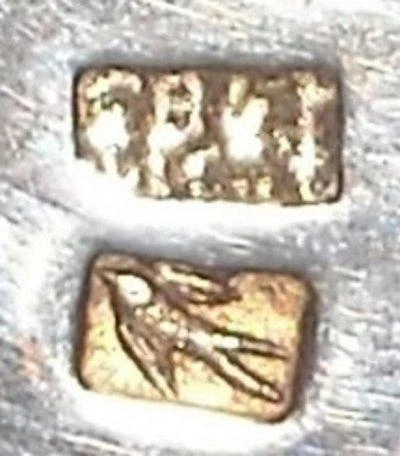
K. Hattori & Co.
Undated
The bird emblem accompanies a separate purity punch.
stamped · silver · Japan
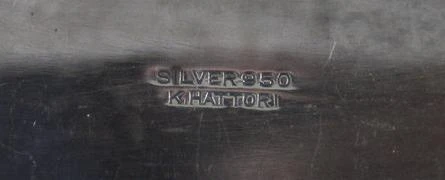
K. Hattori & Co.
Undated
The 950 numeral states fineness; K. HATTORI supplies the business identity.
stamped · silver · Japan
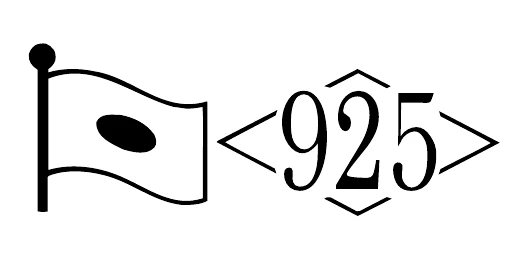
Japan Mint (assay authority; object maker unspecified)
Undated
Read the fineness numeral together with the flag; this is an official assay design rather than a workshop logo.
stamped · silver · Japan
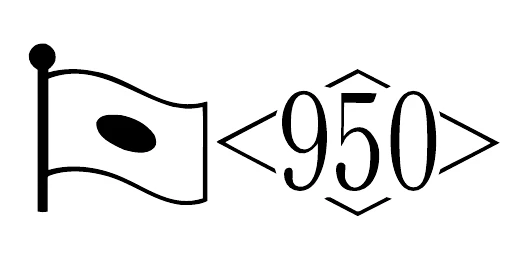
Japan Mint (assay authority; object maker unspecified)
Undated
Read the fineness numeral together with the flag; this is an official assay design rather than a workshop logo.
stamped · silver · Japan
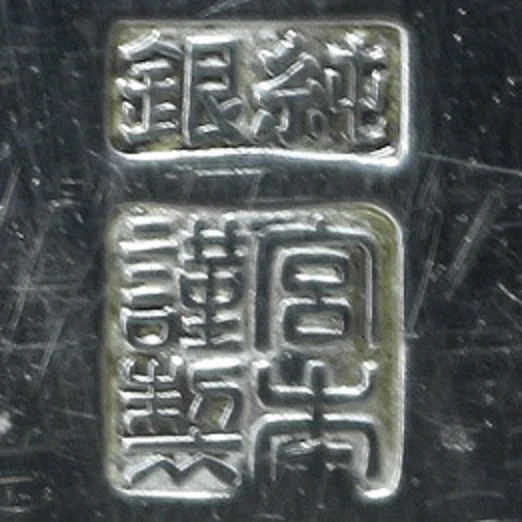
Miyamoto Shoko
Undated
The four-character 宮本謹製 seal is distinct from the simple two-character name.
stamped · silver · Japan
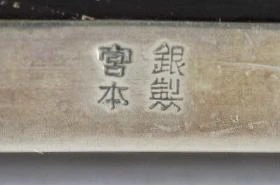
Miyamoto Shoko
Undated
銀製 means made of silver; it is different wording from 純銀, pure silver.
stamped · silver · Japan
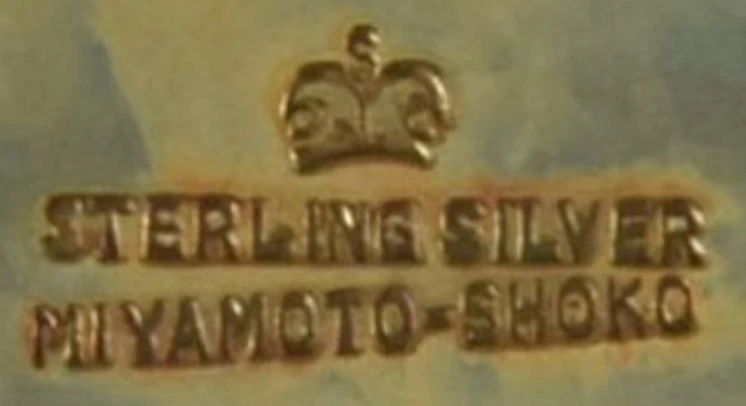
Miyamoto Shoko
Undated
STERLING SILVER indicates the stated 925 fineness; the Roman company name identifies the firm.
stamped · silver · Japan
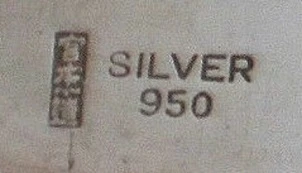
Miyamoto Shoko
Undated
The 製 ending and adjacent 950 distinguish this layout from the longer 謹製 seal.
stamped · silver · Japan
Look first for the metal wording. 純銀 reads jungin, meaning pure silver; 銀製 reads ginsei, meaning made of silver. These words have different meanings. A numeral such as 950 states 950 parts of silver per thousand, while STERLING denotes 925 parts per thousand. Neither a bare number nor an English silver description identifies Japan on its own. A separate name, such as 宮本 for Miyamoto or 鴻池造 for Konoike, supplies the workshop clue.
The Japan Mint began its hallmarking service in 1929. Its official design pairs the Japanese flag with a fineness numeral in a lozenge; the service is voluntary. A company stamp and a Mint hallmark therefore perform different jobs. The older official 1000 notation changed to 999 for submissions after March 2012 without a change in the stated purity. Read every punch before assigning an age: a retailer could sell work from several workshops, and a familiar signature can appear with more than one metal description.
Check the underside of vessels, the backs of spoon handles and the inside of box lids; photograph all punches together.
Separate 純銀, 銀製, SILVER, STERLING and numeric fineness from the maker name.
Read horizontal Japanese wording in its original order; some older stamps run right to left. Read vertical columns top to bottom, normally right column first.
Compare the complete business name and border; distinguish a retailer from a workshop when both are named.
Identify a Japan Mint flag-and-lozenge mark separately from company emblems and from a bare fineness number.
Ginza, Tokyo, Japan · Founded 1880; continuing.
Silver tableware, sake vessels, boxes, jewelry and presentation pieces.
Tokyo, Japan · Business founded 1881; exact silverware production limits unknown.
Silver cups, boxes and other luxury goods alongside its clock and watch trade.
Yokohama, Japan · Circa 1880–1921.
Repoussé and chased silver tea services, vases and tableware.
Yokohama, Japan · Founded in 1894.
Retailer commissioning and selling export silver and other decorative arts.
Tokyo, Japan · Founded 1884; continuing.
Silver tableware, ornaments and Hirado silver-wire jewelry.
Yokohama, Japan · Established circa 1860; exact end unknown.
Export silver hollowware and spoons, including work sold through Liberty.
Chinese shop marks also use characters and Roman letters. Read the full name and inscription; dragons and a bare 950 are shared visual clues, not country identifications.
EPNS and SILVER PLATE describe plated wares; a maker name alone does not establish the body metal.
The flag and 950 also occur on platinum. Check for the separate Pt mark before treating 950 as silver.
Compare the complete punch, construction and any dated inscription. A copied or later-applied stamp can repeat a familiar name; compare the punch with the construction and any dated inscription.
From 2012
Read the fineness numeral together with the flag; 999 replaced 1000 for submissions after March 2012.
stamped · silver · Japan
pushkinantiques.squarespace.com
c. 1900
鴻池造 names the workshop; the neighbouring 純銀 is a metal description.
stamped · silver · Japan
pushkinantiques.squarespace.com
c. 1900
The 1000 version differs from the STERLING wording on other Samurai Shokai objects.
stamped · silver · Japan
Undated
The full 服部製 signature distinguishes this version from the bird and Roman-letter marks.
stamped · silver · Japan
Undated
The 950 numeral states fineness; K. HATTORI supplies the business identity.
stamped · silver · Japan
Undated
Read the fineness numeral together with the flag; this is an official assay design rather than a workshop logo.
stamped · silver · Japan
Undated
Read the fineness numeral together with the flag; this is an official assay design rather than a workshop logo.
stamped · silver · Japan
Undated
The four-character 宮本謹製 seal is distinct from the simple two-character name.
stamped · silver · Japan
Undated
銀製 means made of silver; it is different wording from 純銀, pure silver.
stamped · silver · Japan
Undated
STERLING SILVER indicates the stated 925 fineness; the Roman company name identifies the firm.
stamped · silver · Japan
Undated
The 製 ending and adjacent 950 distinguish this layout from the longer 謹製 seal.
stamped · silver · Japan