
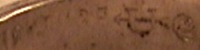
From 1920
Uncas Manufacturing Co.
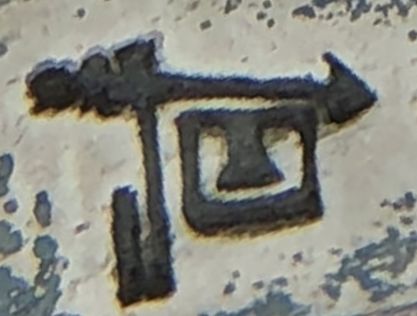
Uncas: U crossed by a horizontal arrow; distinguish it from the separate inward-arrow arrangement.
The U-with-arrow version is described as used from 1920 through at least 1988.
Symbol guide
An arrow jewelry mark identifies the maker through its accompanying letters or devices: U with an arrow is Uncas, CA with an arrow is Carl-Art, and a crossed whip and arrow with Fouquet initials is a different French maker’s punch. A crown or hanging bell points to other users of the arrow.
A U crossed by an arrow, or a U between inward-pointing arrows, identifies Uncas Manufacturing Co. of Providence, Rhode Island. The company began in 1911 under Vincent Sorrentino. These are two related arrangements, so check whether the shaft actually passes through the U or whether separate arrowheads face it. Collector records place the arrow marks in use from around 1919–1920 and still record them in 1988. That long span makes the symbol useful for identification but insufficient to assign a ring to a particular decade. Read any STERLING or plating wording separately.
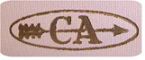
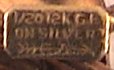
Carl-Art’s device contains both C and A, pierced by an arrow. The letters can be close together, and some examples have a curved shaft or an oval border. This differs from the single U of Uncas. Carl-Art was established in Providence in 1936; its CA-and-arrow mark dates from 1937. Jewelry includes sterling and gold-filled pieces. A plaque reading CA with 1/20 12K G.F. on Silver combines a maker device with a gold-filled description; it does not describe solid gold throughout. Check the full wording rather than identifying the metal from the arrow.
Fouquet’s French maker punches combine initials with a crossed whip and arrow. The initials distinguish the punches: Alphonse Fouquet used A F, while a Georges Fouquet ring has G and F around the crossed devices. Look closely inside the small maker’s punch, rather than treating a separate signature as the same mark. The crossed whip helps distinguish this emblem from the single horizontal arrows passing through American makers’ initials. A neighbouring French precious-metal assay punch performs a different job from the maker’s device.
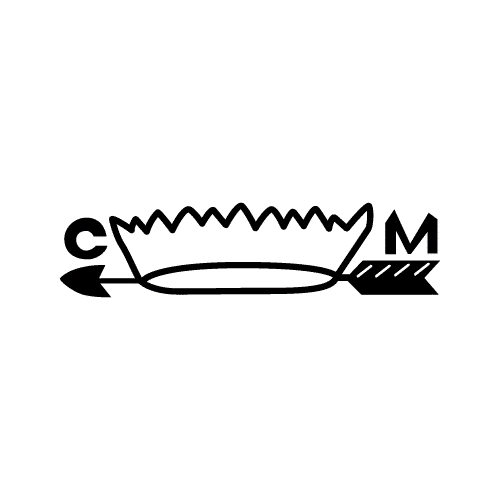
Campbell Metcalf’s illustrated mark combines C and M with a crown and horizontal arrow. Retain the crown when comparing it: an isolated shaft loses the most useful part of the identification. Bell Trading Post uses another distinctive construction, a bell suspended from a signpost beneath a horizontal arrow. Its hanging bell separates it from both the Carl-Art letters and Fouquet’s crossed devices. On rings, inspect the inner band; on brooches, pendants and bracelets, examine the reverse and clasp area. Record the entire stamped group, including any tiny letters beside the arrow.
From 1920
Uncas: U crossed by a horizontal arrow; distinguish it from the separate inward-arrow arrangement.
The U-with-arrow version is described as used from 1920 through at least 1988.
Undated
Carl-Art: CA crossed by an arrow inside an elongated oval.
The CA arrow mark dates to 1937.
Undated
Carl-Art: CA-and-arrow beside 1/20 12K G.F. on Silver; maker and material wording have separate meanings.
Undated
Campbell Metcalf: C and M flank a crown crossed by an arrow.
The business was established in 1892.
United States
arrow, cartouche, , frame, shape
Undated
Bell Trading Post: hanging bell and signpost beneath a right-pointing arrow.
CA pierced by an arrow is Carl-Art. Compare both letters, the shaft and any oval border; read sterling or gold-filled wording separately.
Uncas Manufacturing Co. used U crossed by an arrow and U between inward-pointing arrows.
The arrow is part of a maker’s device. Look for a separate metal description such as STERLING or a gold-filled stamp.