

Undated
Fattorini & Sons
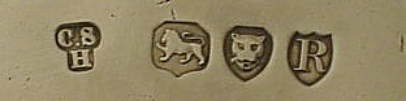
Fattorini & Sons F&S sponsor punch beside crown, lion passant and date-letter punches: a Sheffield group dated 1894.
Sheffield hallmark dated 1894.
Symbol guide
A single crown in a British silver hallmark group is the historic Sheffield assay-office mark, replaced by the rose in 1975. Three Swedish crowns, Germany’s crescent-and-crown and crowns in plated makers’ logos belong to different systems.
Undated
Fattorini & Sons F&S sponsor punch beside crown, lion passant and date-letter punches: a Sheffield group dated 1894.
Sheffield hallmark dated 1894.
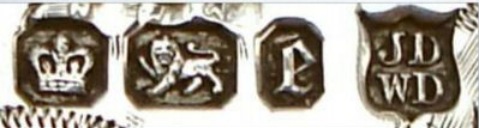
Undated
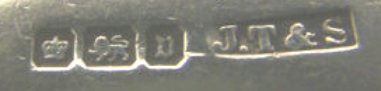
James Deakin & Sons: crown and lion passant beside the JD/WD sponsor punch; illustrated Sheffield group dated 1897.
Captioned hallmark examples: Sheffield 1897; Chester 1903; Birmingham 1920.
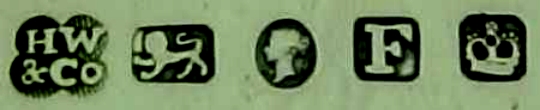
Undated
Henry Wilkinson & Co: HW&Co, lion passant, sovereign’s head, date letter and Sheffield crown; illustrated group dated 1873.
Illustrated Sheffield 1873 hallmark.
With British silver hallmarks, it can identify Sheffield before the rose replaced the crown in 1975. Check the lion passant, sponsor and other punches to confirm that system.
Three crowns within a three-lobed shield are Sweden’s cat’s-foot control mark. An accompanying S in a six-sided shield denotes silver.
No. SILVER ON COPPER describes plated construction. A maker’s crown device does not change the metal description to sterling.
In a group with a silver fineness number and maker’s mark, it identifies Germany’s national silver-marking system introduced in 1888.
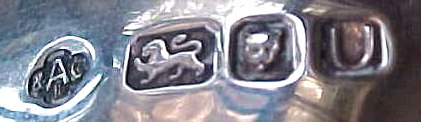
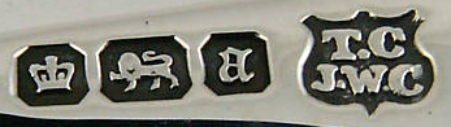
Undated
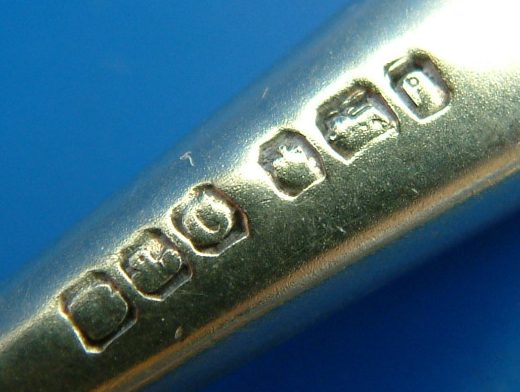
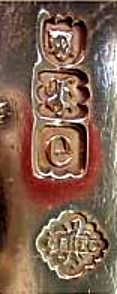
This Sheffield hallmark dates to about 1907.
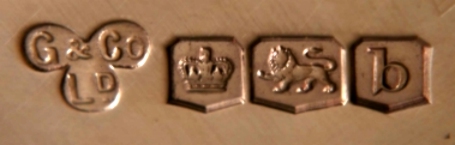
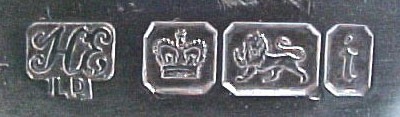
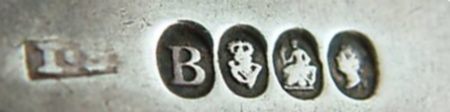
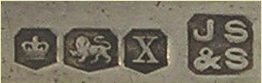
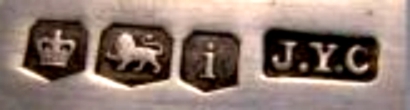
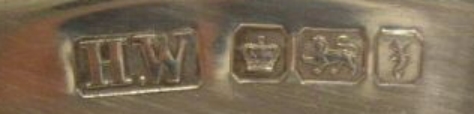
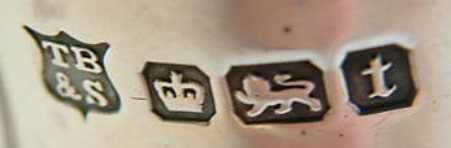
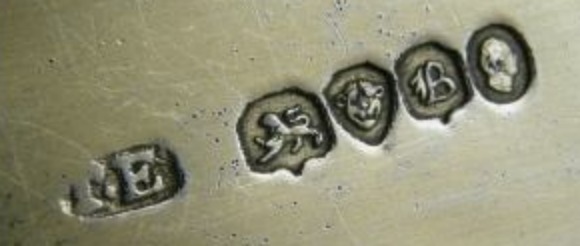
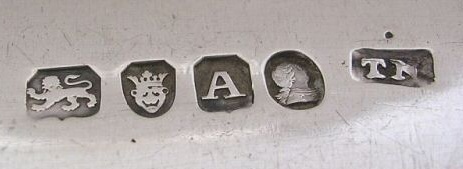

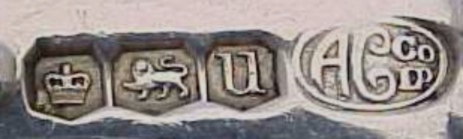
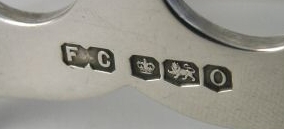
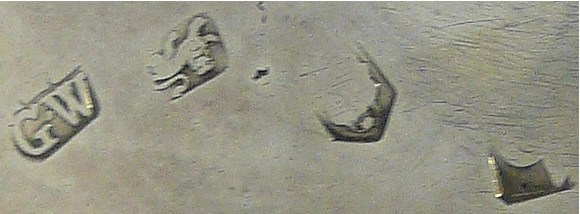
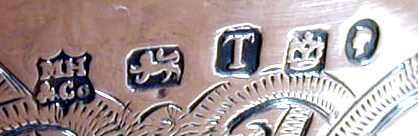
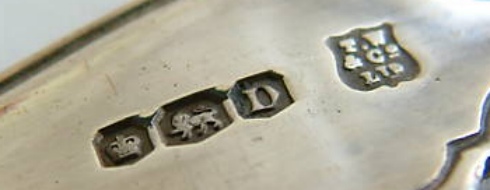
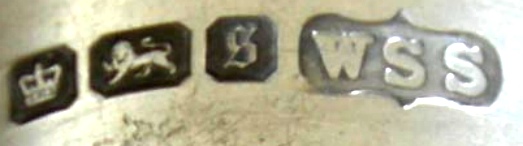
On British silver, a separate crown punch accompanied by the lion passant and a sponsor’s initials identifies the historic Sheffield assay office. Sheffield began marking in 1773. The office replaced its silver crown with the rose in 1975. The lion passant supplies the sterling-standard context; the crown identifies the office rather than a particular manufacturer. Fattorini, James Deakin and Henry Wilkinson could therefore all submit silver carrying the same town device alongside their different sponsor punches.
A traditional Sheffield group may include a date letter, and older examples can include a sovereign’s-head duty mark. Match the letter’s typeface, case and shield to a Sheffield date table. The illustrated Fattorini group is dated 1894, while the Deakin group is dated 1897; those dates apply to the illustrated hallmark groups, not to every object with the same sponsor initials. A sponsor identifies the business or person who submitted the piece and is not necessarily its physical manufacturer.
Sweden’s kattfoten, or cat’s-foot control mark, contains three crowns arranged in a three-lobed shield. It is a national control mark rather than Sheffield’s single crown. The system began in 1754. On silver, an S in a separate six-sided shield helps identify the metal. Read the maker’s registered name stamp, fineness and any date code with it. The three crowns alone do not name the silversmith or supply a production year.
A crescent moon beside an imperial crown and a fineness number points to Germany’s national silver-marking system introduced in 1888. An accompanying 800 means 800 parts silver per thousand, or 80%; other finenesses also occur. The maker’s symbol is separate. This group differs from Sheffield’s crown and lion passant and from Sweden’s three-crown control mark. Identify the crescent as well as the crown before assigning a country.
Manufacturers of silver plate also used crowns and groups of shield-shaped trade punches. SILVER ON COPPER describes a silver coating over copper; EPNS identifies electroplate on nickel silver. A crown beside that wording remains part of a plated manufacturer’s stamp group. On British gold, a crown can instead be the traditional gold-standard symbol. Keep the entire row visible, including words, numbers, animals and letter shields: the crown’s role follows from that complete combination.