Country guide
British silver hallmarks
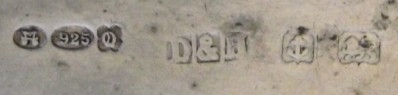
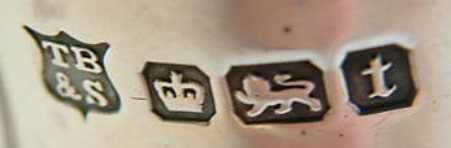
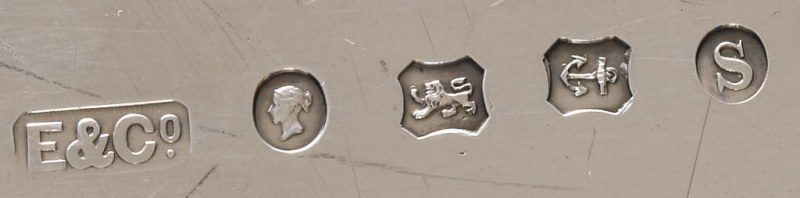
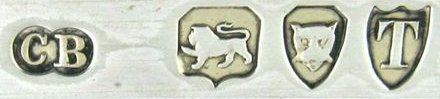
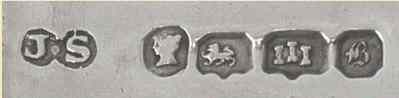
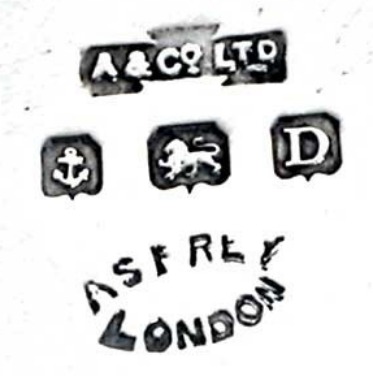
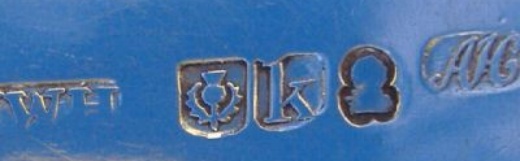
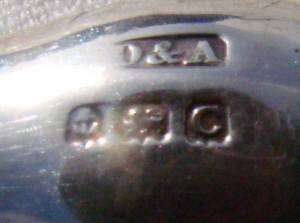
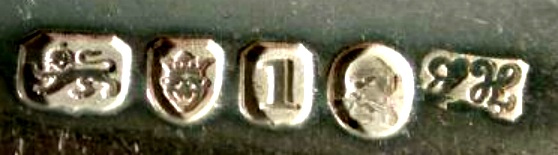
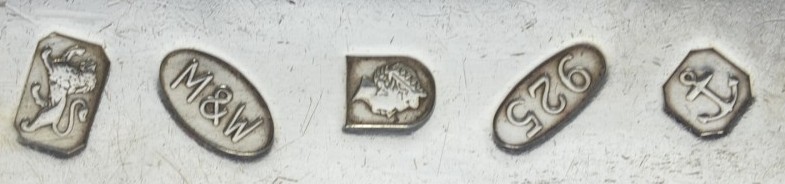
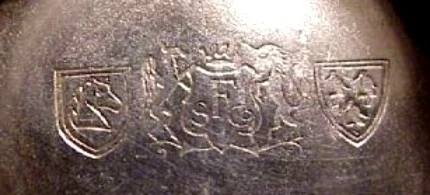
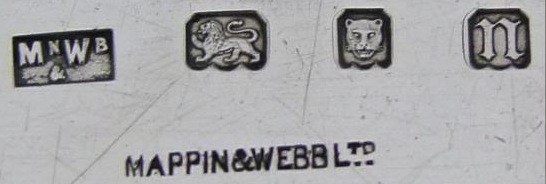
British silver hallmarks combine several small punches, each with a different job. The system developed from the 1300 requirement to mark silver with a leopard’s head, and it remains a way to read the sponsor, silver standard and testing office together. Georgian and Victorian tableware, boxes and flatware commonly carry a row of these marks; a separate set may appear on a lid or other detachable part.
About British silver hallmarks
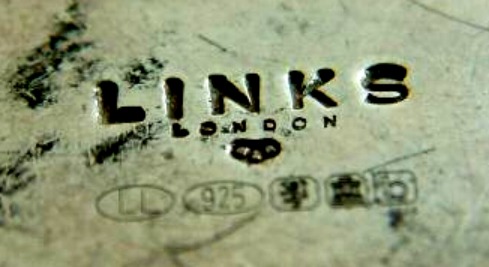
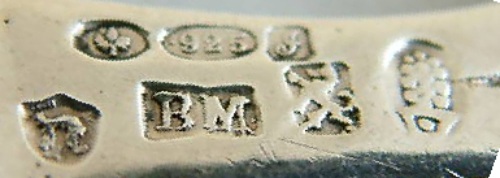
The sponsor’s initials identify the business that submitted the work for assay. That business can be a manufacturer, retailer or importer. Its punch must be compared by the outline and lettering as well as the initials. Sterling contains 925 parts of silver per thousand; the traditional lion passant denotes sterling, while the Britannia figure denotes the higher 958 standard. Modern hallmarks use numerical fineness alongside the sponsor and assay-office punches.
London’s emblem is a leopard’s head, Birmingham’s an anchor, Sheffield’s a rose and Edinburgh’s a castle. Earlier Sheffield silver carries a crown. A date letter identifies the assay year rather than a designer’s lifetime or the date of a later inscription. Before 1975 each office used its own sequence; from 1999 the date letter became optional. Read the complete combination before assigning a maker or year.
How to read the marks
Find the full row on the back, underside or near a rim; inspect lids and detachable parts separately.
Identify the assay-office emblem before looking up a date letter. Use the correct office’s chart for older work.
Record the sponsor’s exact initials, typeface, punctuation and surrounding shield.
Read sterling lion or numerical fineness with the other punches; a lone crown or 925 does not identify an office or maker.
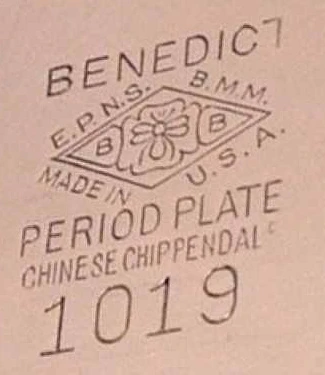
Separate an engraved presentation date from the assay date, and compare any EPNS or plate wording before using a sterling chart.