
Undated
Waterford Crystal
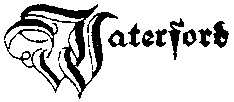
Waterford name mark: use the signature to find the maker and pattern, then check that pattern’s material description.
Read the stamp
Crystal is a type of glass: traditional lead crystal contains lead oxide, while lead-free crystal uses a different composition. European lead-crystal categories start at 24% lead oxide, with full lead crystal at 30%; a maker’s product description identifies which material a particular piece uses.
Most everyday drinking glasses are soda-lime glass, made principally with silica, soda and lime. Traditional lead crystal replaces part of that composition with lead oxide. The resulting glass has a high refractive index and can show strong brilliance, especially across polished cut facets. Crystal in a glassware description is a commercial material name, rather than a claim that the vessel is a natural rock crystal. Clear colour alone does not separate the materials: ordinary glass can also be colourless.
European labelling distinguishes lead crystal containing at least 24% lead oxide from full lead crystal containing at least 30%. These categories also have physical-property requirements; the percentage is specifically lead oxide, not the percentage of elemental lead metal. A label reading 24% PbO therefore describes composition. A label that says only crystal, a country name or a factory name does not give the same numerical information. Read the complete label rather than treating every use of crystal as a 24% claim.
Modern crystal glass need not use lead oxide as its principal ingredient. Riedel, for example, states that its production has used this type of crystal glass exclusively since 2015. Brand identity and production period therefore matter when comparing an older piece with a current product. A familiar maker name does not mean that every range and every generation has an identical recipe. Match the exact series or model to its product description.
Turn the piece over and look for a lightly etched name on the foot or base, a moulded trademark or a surviving paper label. Read every word, then compare the outline, height, rim diameter, base diameter and decoration with the maker’s pattern. Photographs of the whole object and its underside help separate similar models. An etched name identifies the maker; the model’s composition identifies the material. A heavy feel, bright reflections or a musical ring does not provide a lead-oxide percentage.
Cutting removes glass with abrasive wheels and can decorate lead glass, but cut facets are a manufacturing feature rather than a chemical formula. Likewise, a moulded pattern does not automatically mean ordinary soda-lime glass. Keep the decoration and material descriptions separate when identifying a piece. A metal detector cannot establish lead content: lead in glass is chemically bonded into the glass structure and does not behave like a lump of conductive lead metal.
Undated
Waterford name mark: use the signature to find the maker and pattern, then check that pattern’s material description.
Undated
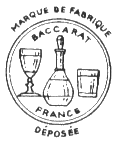
Baccarat factory mark with BACCARAT FRANCE wording: a maker identity, separate from a numerical lead-oxide label.

Undated
LALIQUE FRANCE signature: the complete wording helps distinguish the manufacturer before comparing models and composition.
The registered trademark symbol is not found on earlier pieces.
Read the base signature and label, identify the pattern or model, then check its composition. Crystal itself is glass; the material question is usually lead crystal, lead-free crystal or ordinary soda-lime glass.
A ringing sound is an observation, not a measurement of lead oxide. Use the maker, model and material description to identify the composition.
No. Lead-free crystal glass is also made; Riedel states that it has used crystal glass without lead oxide as a principal ingredient since 2015.