
Country guide
Limoges porcelain marks
Limoges porcelain comes from a regional industry rather than a single factory. Kaolin found near Saint-Yrieix-la-Perche in 1768 supported the first Limoges porcelain manufactory in 1771. During the nineteenth century the city developed a network of porcelain manufacturers, decorating workshops and export businesses. Dinnerware, tea services, vases and ornamental pieces travelled widely, especially to the United States.
Key makers’ marks
13 marks
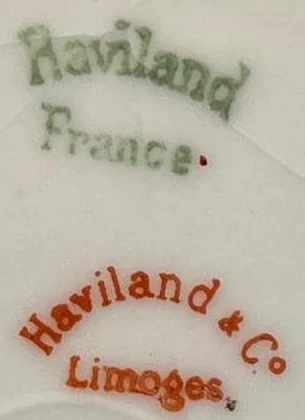
Haviland & Co.
c. 1894–1931
Haviland / France
Script Haviland above France, distinct from H&Co. initials and Theodore Haviland signatures.
printed · Porcelain · Limoges, France
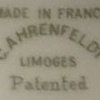
Ahrenfeldt Limoges
c. 1894–1939
Made in France C. Ahrenfeldt Limoges Patented
porcelain · Limoges, France
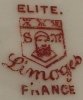
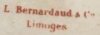
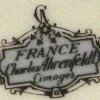
Ahrenfeldt Limoges
1945–1969
France Charles Ahrenfeldt Limoges
porcelain · Limoges, France
Ahrenfeldt mark
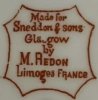
Redon
Undated
Made for Sneddon & sons Glasgow by M. Redon Limoges France
Limoges, France
Made for the retailer Sneddon & Sons, Glasgow.
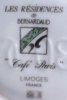
Bernardaud
Undated
LES RÉSIDENCES BERNARDAUD Café Paris LIMOGES FRANCE
The Café Paris pattern was produced in 1995–2007; that range is not stated as the mark's use period.
porcelain · Limoges, France
Les Residences de Bernardaud Cafe Paris Limoges France mark. The Cafe Paris pattern was produced between 1995-2007

About Limoges porcelain marks
A Limoges base can carry more than one useful mark. The factory that made the white porcelain might apply an underglaze stamp; a decorating house could add a separate coloured mark after painting and gilding. A retailer’s name can appear as well. Haviland’s whiteware and decorated-ware marks illustrate this distinction: an outside decorating signature can accompany a Haviland factory mark.
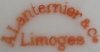
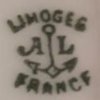
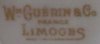
LIMOGES and FRANCE name the place and country, so the initials, emblem or company name beside them are essential. Guérin’s full-name stamps, Lanternier’s AL anchor, Coiffe’s star and Bernardaud’s name belong to different businesses. Successor companies sometimes retained earlier identities; an old name can therefore outlast a change of ownership.
Read all the stamps before comparing a date range. A factory mark dates the porcelain body more directly than a later painted signature. Pattern numbers, retailer names and a painter’s initials have different purposes. Green, red or blue printing alone is not a reliable factory or year identifier.
How to read the marks
Photograph the complete base in daylight, including faint green stamps and separate red or gold wording.
Read the manufacturer’s name or initials first, then LIMOGES and FRANCE.
Identify factory, decorator and retailer marks separately; do not combine two firms into one maker.
Compare the exact emblem: AL anchor, Coiffe star and letter monograms require different references.
Use the maker’s specific mark chronology with the shape and decoration; do not date from ink colour alone.
On a set, compare the marks on several pieces for later additions or replacements.
Key makers
Haviland & Co.
Limoges, Haute-Vienne, France · David Haviland established the Limoges business in 1842; later Haviland branches have separate histories.
Porcelain table services, tea and coffee wares and decorative pieces.
Bernardaud
Limoges, France · Factory established 1863; Léonard Bernardaud purchased it in 1900.
Porcelain tableware, decorative objects and artist-designed wares.
William Guérin & Co.
Limoges, France · Porcelain manufacturing from 1877; combined with Pouyat in 1911; successor factory closed 1932.
White porcelain blanks and decorated export tableware.
A. Lanternier & Cie
Limoges, France · Family business from the mid-19th century; A. Lanternier name from c. 1890.
Decorated porcelain tableware and ornamental wares.
Coiffe et Cie
Limoges, France · Active from the 1870s into the early 20th century.
Porcelain tableware and whiteware decorated by other studios.
Look-alikes & fakes
Johann Haviland Bavaria
Johann Haviland is a Bavarian porcelain identity. Read BAVARIA or GERMANY rather than assigning Limoges from the Haviland surname.
Generic or copied LIMOGES FRANCE stamps
These words alone do not name a factory. Compare the complete company device and the object’s body and decoration with a matching format.
Later decoration on an older blank
A genuine factory mark can sit beside painting by an outside artist. Read the decorating signature separately and compare both dates.
Related marks
101 marks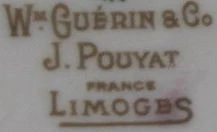
c. 1911–1920
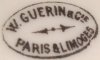
Wm Guérin & Co. / J. Pouyat
Both Guérin and Pouyat names place this after the 1911 combination.
auctions.caswellprewittrealty.com
Undated
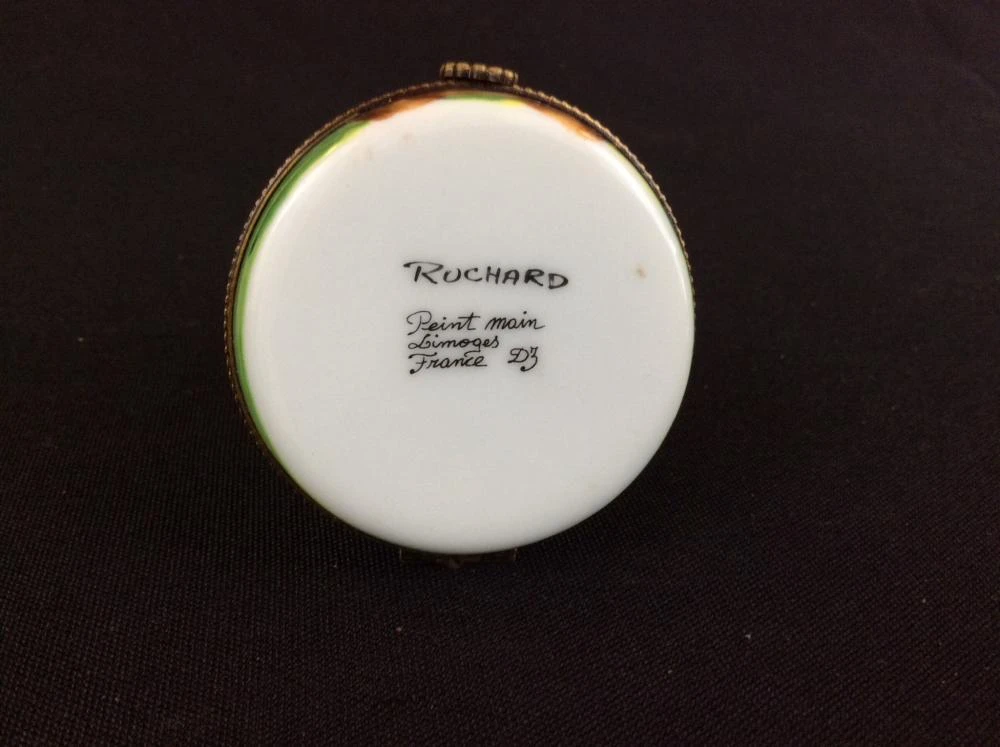
Rochard Limoges
Separated uppercase ROCHARD above a four-line hand-painted inscription, with painter code at lower right.
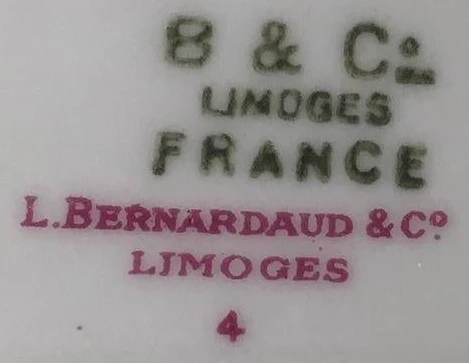
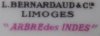
c. From 1900
L. Bernardaud & Cie
Initials factory stamp paired with full-name Bernardaud decorating stamp.
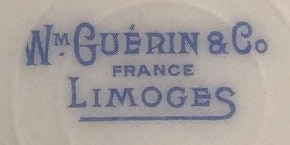
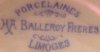
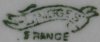
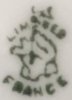
c. 1891–1932
William Guérin et Cie
Full name over a separate France line and underlined Limoges; blue in this specimen.


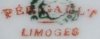
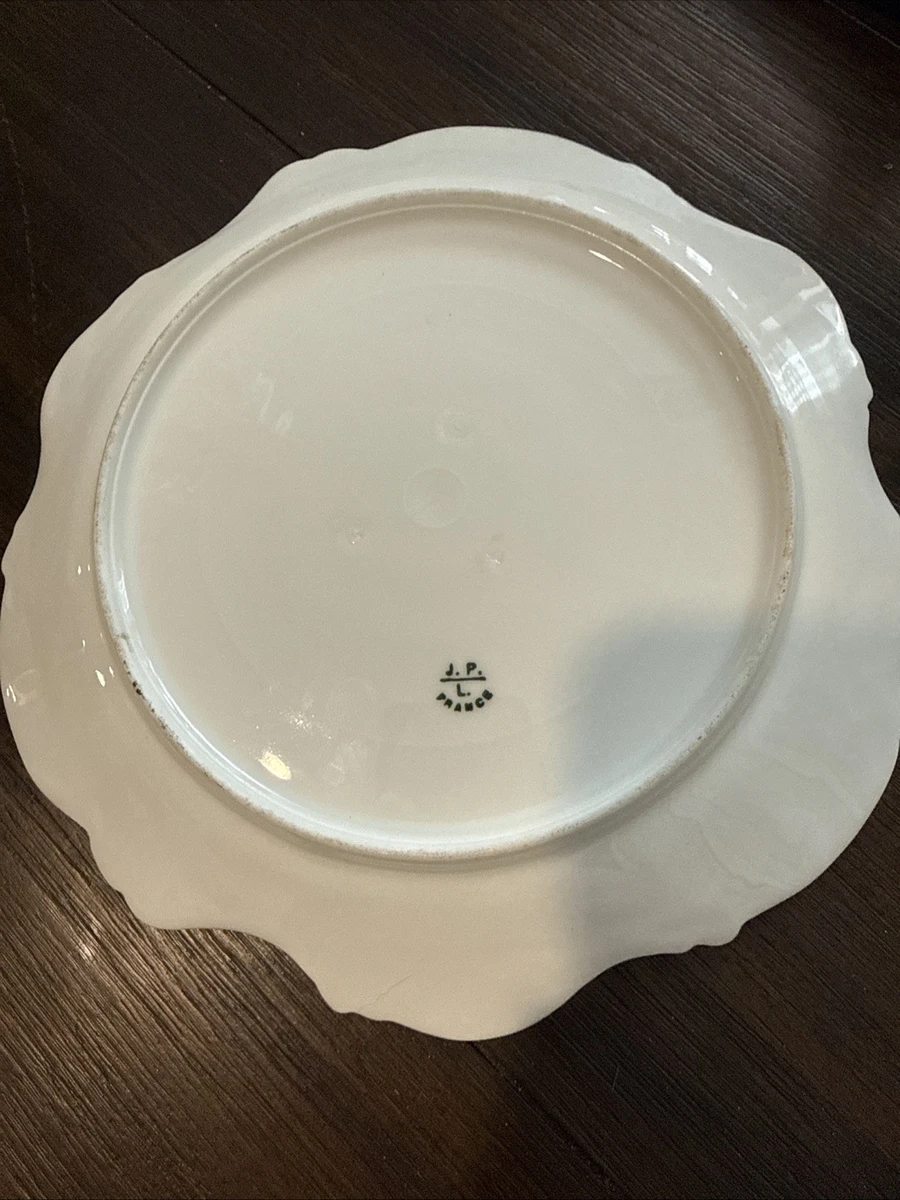
c. 1891–1932
Jean Pouyat / successors retaining mark
FRANCE distinguishes the export-format stamp from the earlier JP/L; the decorating date may be later.
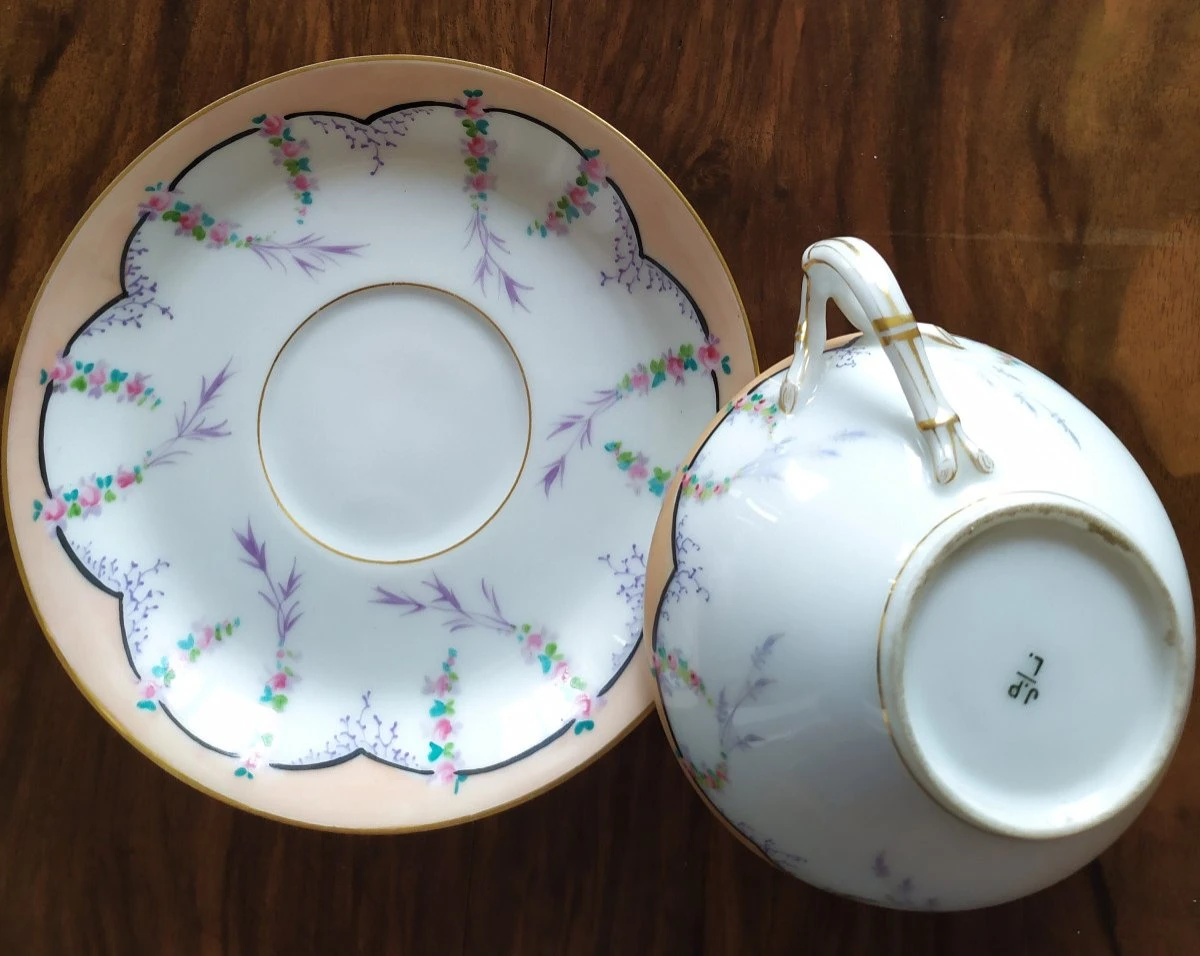
From 1852
Jean Pouyat / La Céramique
The dividing line was introduced in 1852; the absence of FRANCE alone does not date a mark to before 1891.
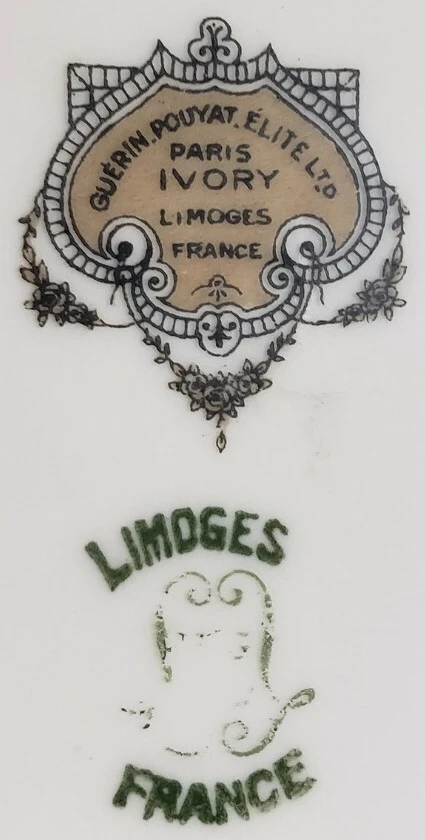
Undated
Guérin-Pouyat-Elite Ltd.
ELITE LTD and PARIS IVORY distinguish this successor mark from the earlier combined names.
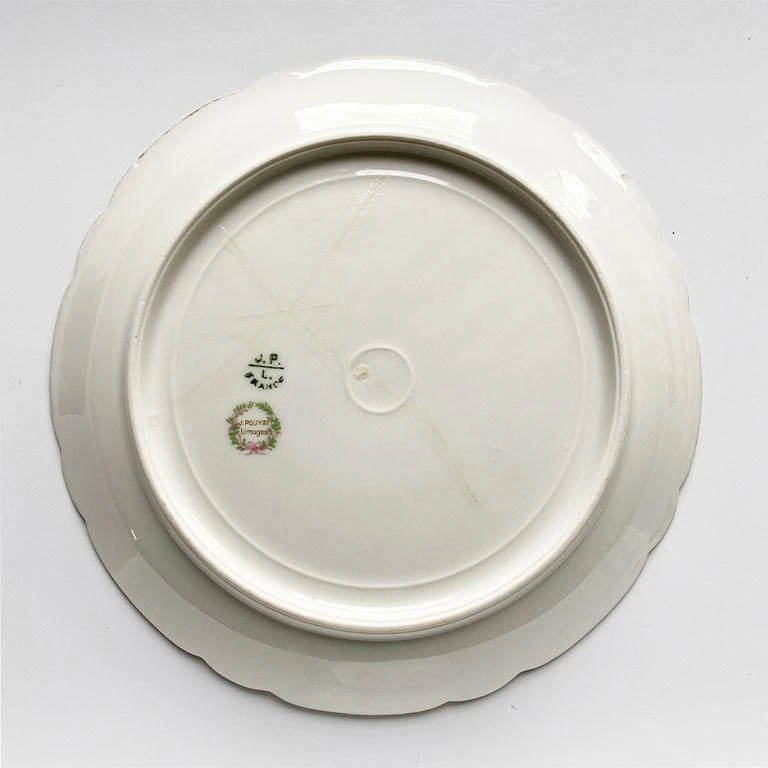
Undated
Pouyat decorating workshop
The full POUYAT name within a laurel wreath and ribbon distinguishes the decorating stamp from the small JP/L factory stamp.
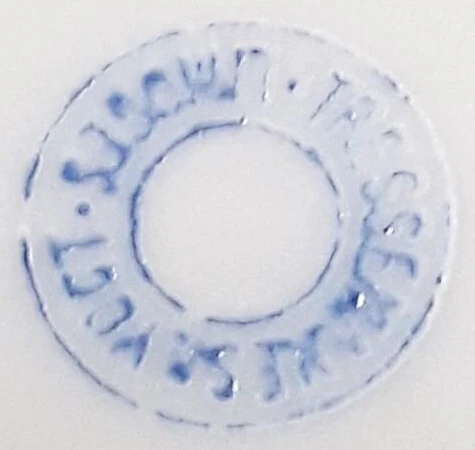
c. 1880–1891
Tressemanes & Vogt
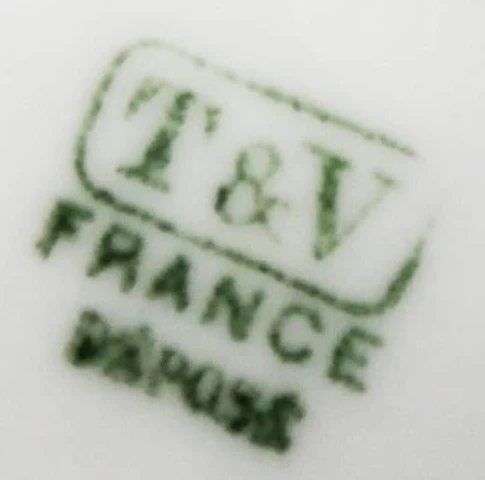
Full company names in a circle distinguish the exporter’s stamp from the later rectangular initials.
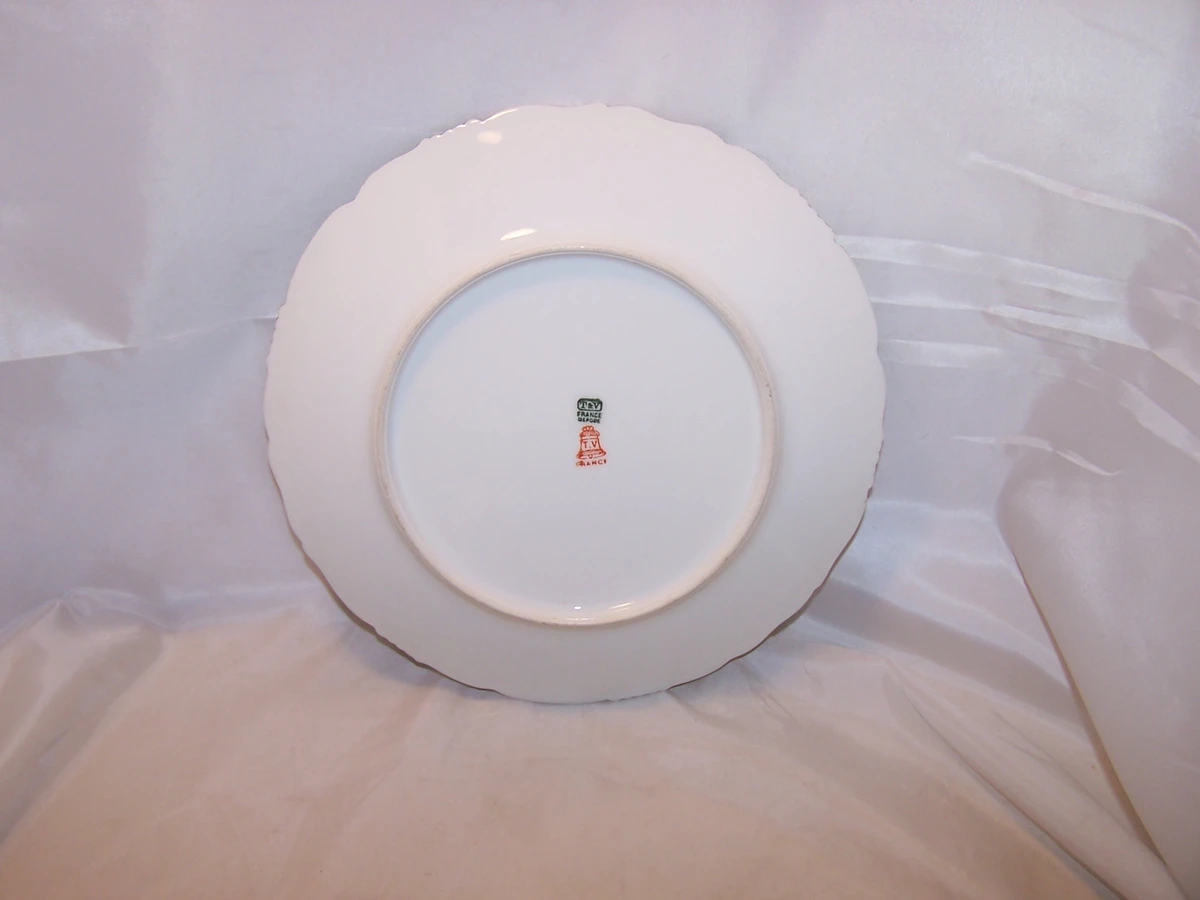
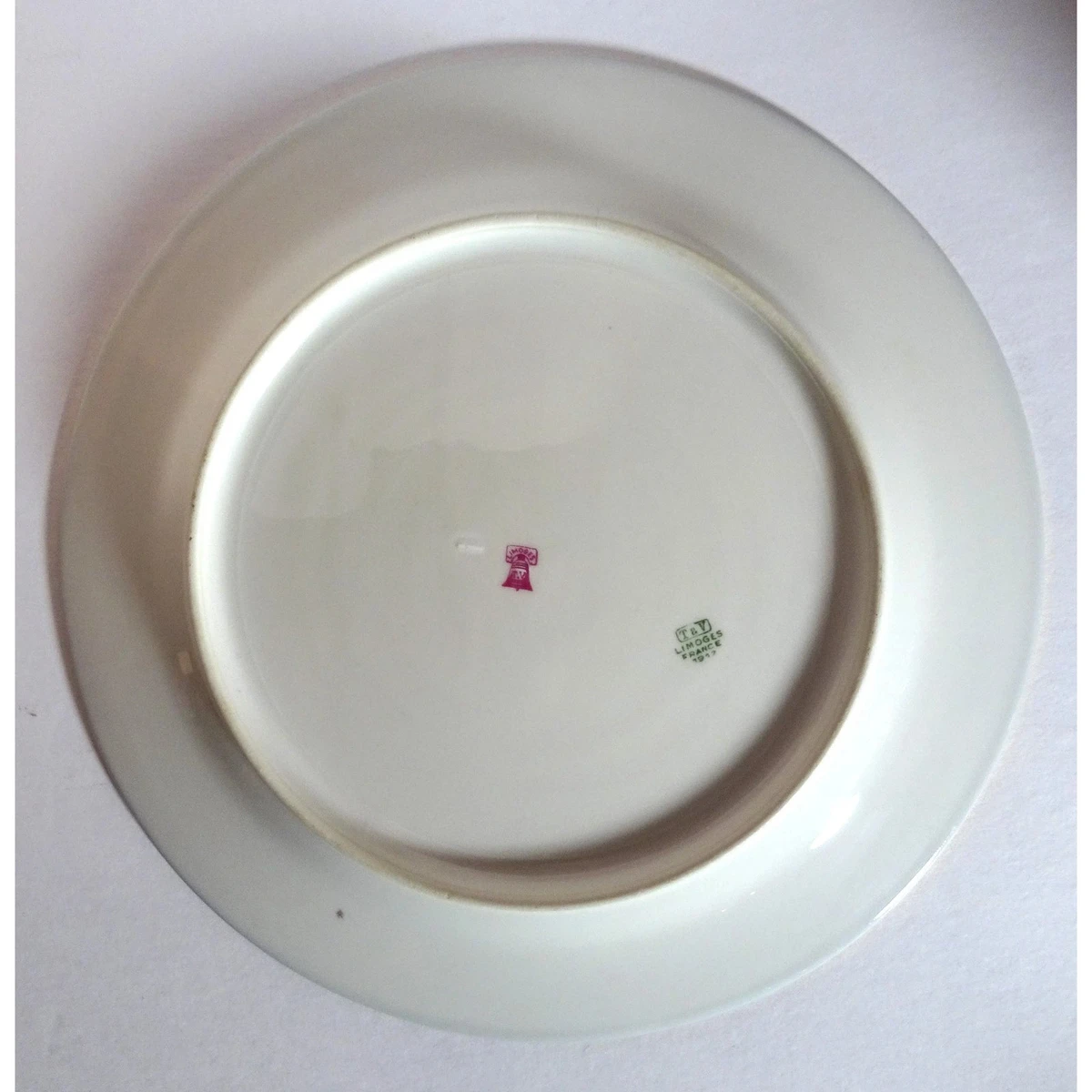
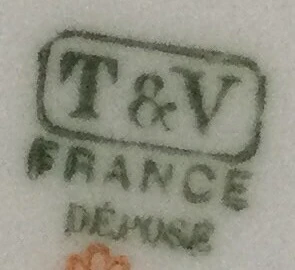
Undated
Tressemanes & Vogt
FRANCE sits below the bell; the separate green rectangle identifies the porcelain body.
Browse makers
16 makersJ. Pouyat LimogesFrance5 marksTressemanes & VogtFrance5 marksRochardUnited States5 marksLimoges FranceFrance5 marksWilliam Guérin LimogesFrance5 marksAhrenfeldt LimogesFrance11 marksBernardaud7 marksRedon16 marksLanternierUnited Kingdom13 marksElite Limoges10 marksGuerin Limoges9 marksBalleroy et Cie3 marksCoiffe Limoges3 marksBoisbertrand Theilloud Limoges2 marksBac et Perigault1 markPerigault1 mark