
Country guide
French porcelain hallmarks
French porcelain marks identify a manufacturer, a decorating workshop or sometimes a retailer. The useful inscription may be a name, monogram, emblem or short place statement. Several can appear together on one base, with impressed numbers or painted workmen’s signs beside them. Read those elements separately before comparing a factory chronology.
Key makers’ marks
13 marks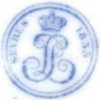
Sarreguemines
c. 1875–1899
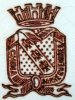
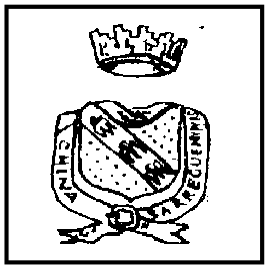
China Sarreguemines last quarter of .
Germany
China Sarreguemines last quarter of 19th century mark.

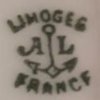
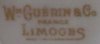

Sèvres
1892
DORE A SEVRES RF 92
Gilding mark dated 1892.
porcelain · France
Dore a Sevres 92, a gilding Sevres mark
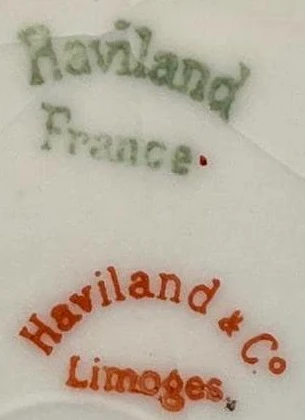
Haviland & Co.
c. 1894–1931
Haviland / France
Script Haviland above France, distinct from H&Co. initials and Theodore Haviland signatures.
printed · Porcelain · Limoges, France
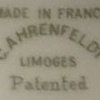
Ahrenfeldt Limoges
c. 1894–1939
Made in France C. Ahrenfeldt Limoges Patented
porcelain · Limoges, France
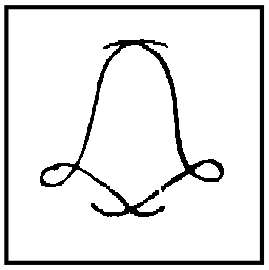
Sèvres
Undated
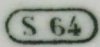
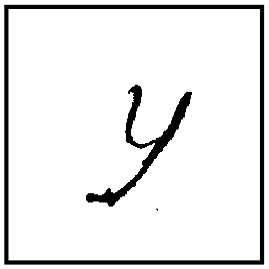
S 64 Sevres whiteware
S 64 dates the whiteware body to 1864; decoration could be added later.
porcelain · France
About French porcelain marks
Vincennes began making soft-paste porcelain in 1740 and moved to Sèvres in 1756. Sèvres marks changed with the factory’s royal, imperial and national identities; body-production and decorating marks can record different stages. The interlaced royal L device belongs to this wider history, but it was also copied on later wares.
Limoges developed as another major centre after the discovery of local kaolin in 1768 and the first manufactory’s foundation in 1771. Numerous businesses made or decorated porcelain there. Haviland, Bernardaud and Guérin are distinct names, while LIMOGES FRANCE is shared location wording. A green factory stamp and a separate coloured decorating signature can occur together.
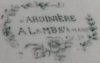
The wider French ceramic industry also made faience and stoneware. Sarreguemines, founded in 1790, produced several ceramic bodies and used named marks with decorative frames and pattern wording. A familiar French place or a blue-painted mark therefore does not identify the material or workshop by itself. Compare the full name and device with the clay, glaze, form and decoration, keeping model numbers and painter codes separate from dates.
How to read the marks
Photograph the entire base, including faint underglaze marks, overglaze stamps and impressed numbers.
Separate manufacturer, decorator and retailer names; keep each complete inscription.
For Sèvres, compare body and decoration marks with the correct royal, imperial or national period.
For Limoges, read the initials or company name beside LIMOGES FRANCE.
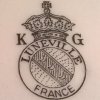
For Sarreguemines and Lunéville, distinguish the company name from a large pattern cartouche.
Check the ceramic body before applying a porcelain reference to faience or stoneware.
Treat painter and model numbers as separate identifiers unless the factory’s chronology defines a date code.
Key makers
Vincennes–Sèvres manufactory
Vincennes, then Sèvres, France · Founded at Vincennes 1740; moved to Sèvres 1756; continuing.
Soft-paste and later hard-paste porcelain services, figures and ornamental wares.
Haviland & Co.
Limoges, France · David Haviland established his Limoges activity in 1842; factory and company phases followed.
Porcelain table services and decorated export wares.
Bernardaud
Limoges, France · Factory from 1863; Bernardaud ownership from 1900.
Porcelain tableware and decorative objects.
Sarreguemines
Sarreguemines, Lorraine, France, with later associated works · Factory established 1790; successive ownership and site histories.
Faience, stoneware and porcelain tableware and decorative ceramics.
William Guérin & Co.
Limoges, France · Factory acquired 1877; combined with Pouyat in 1911; successor factory closed 1932.
Porcelain blanks and decorated tableware.
Look-alikes & fakes
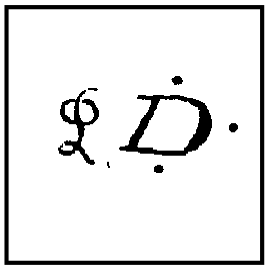
Sèvres-style royal monograms and later decoration
Interlaced Ls and palace-style seals were copied. Compare the body mark, decoration mark and object with the specific factory period rather than relying on a royal-looking device.
Limoges as a place
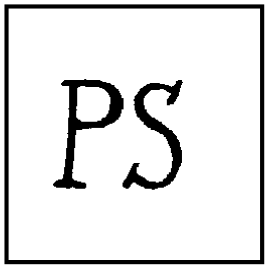
LIMOGES FRANCE is shared by several businesses. The additional initials, emblem or full name identify the factory or decorating house.
Sarreguemines and changing political boundaries
The same factory’s history crosses French and German political periods. Read the dated company and origin wording instead of assigning nationality from the town’s present location alone.
French-style wares from other countries
Floral gilding, blue script and French words can occur on imported ceramics. Read the actual maker and country statement alongside the style.
Related marks
2,080 marks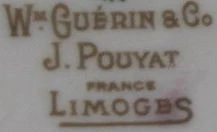
c. 1911–1920
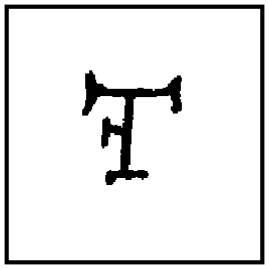
Wm Guérin & Co. / J. Pouyat
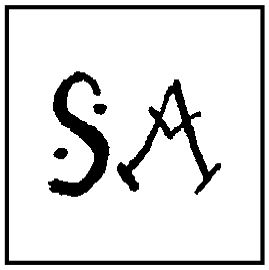
Both Guérin and Pouyat names place this after the 1911 combination.
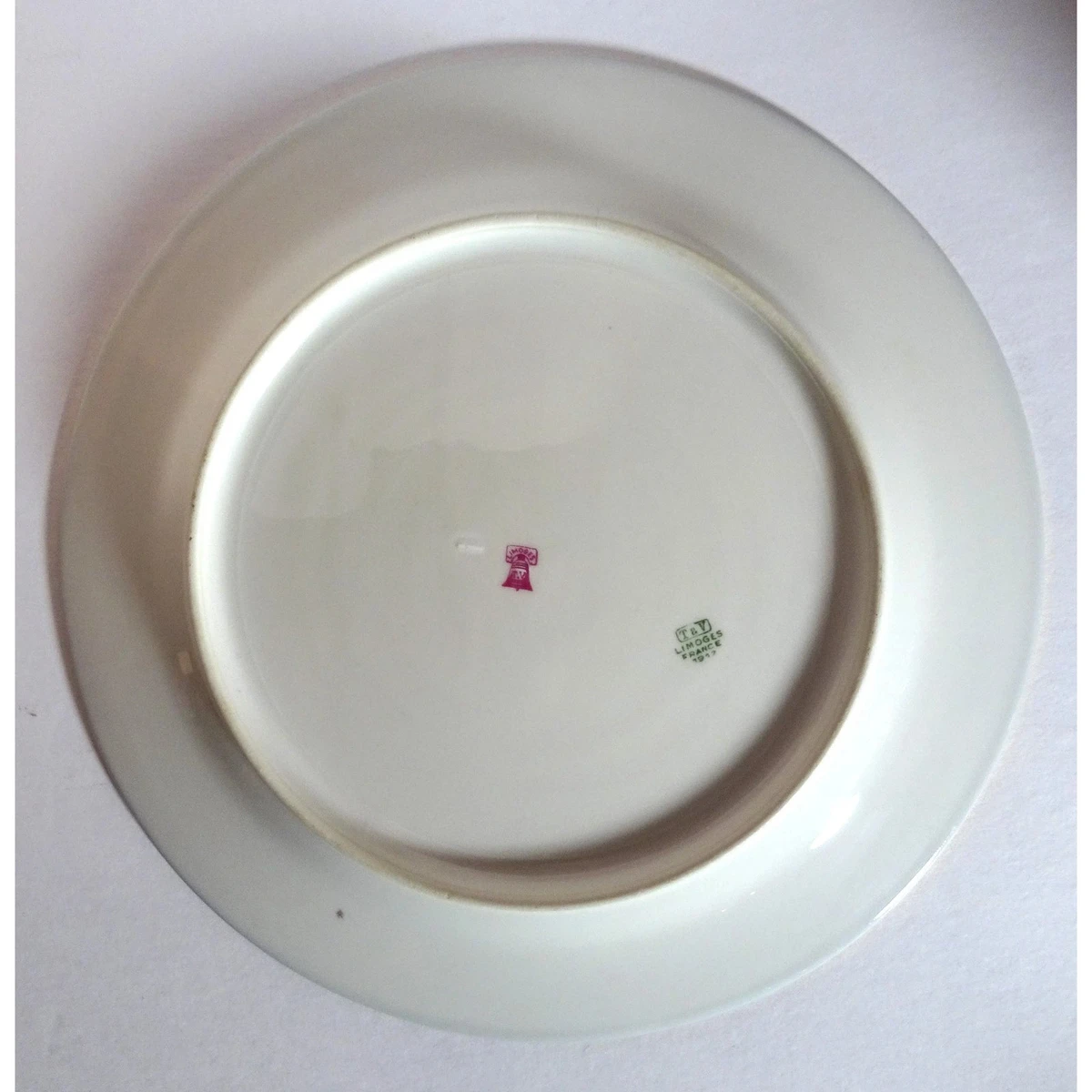
auctions.caswellprewittrealty.com
Undated
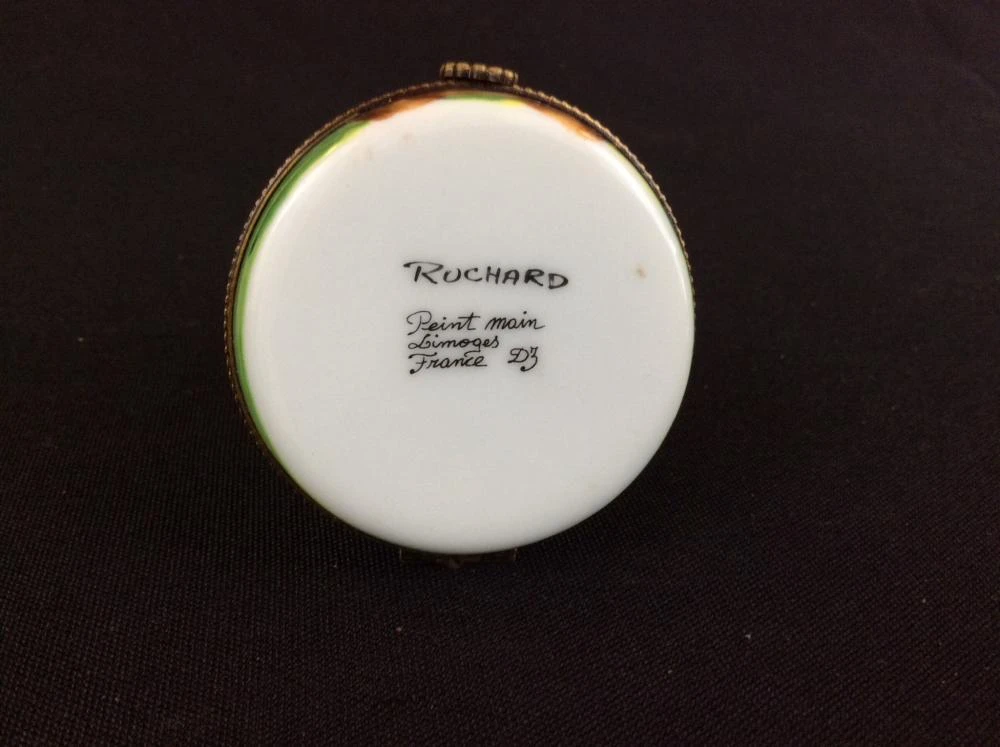
Rochard Limoges
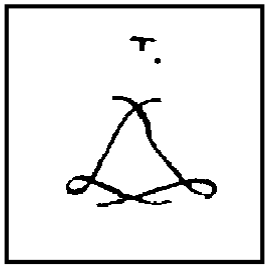
Separated uppercase ROCHARD above a four-line hand-painted inscription, with painter code at lower right.
c. From 1900
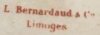
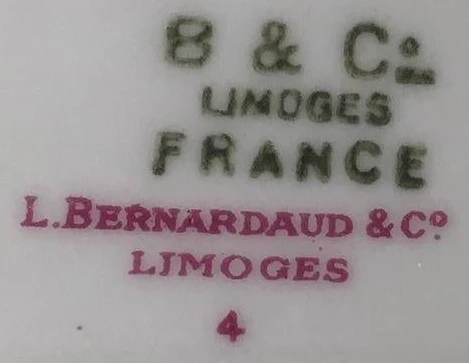
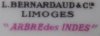
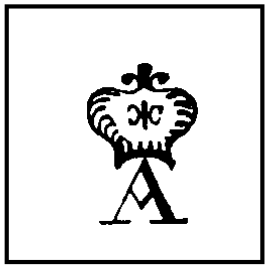
L. Bernardaud & Cie
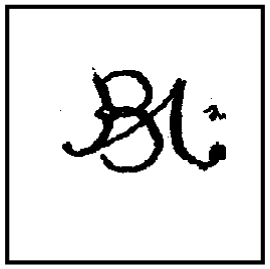
Initials factory stamp paired with full-name Bernardaud decorating stamp.
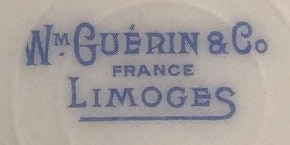
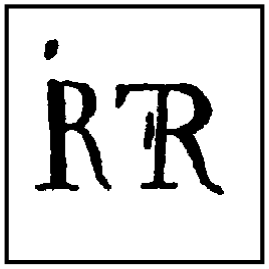
c. 1891–1932
William Guérin et Cie
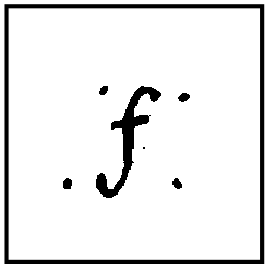
Full name over a separate France line and underlined Limoges; blue in this specimen.
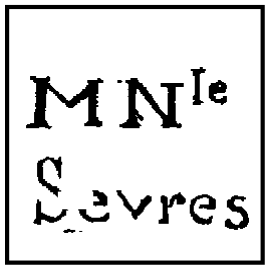
Browse makers
176 makersJ. Pouyat LimogesFrance5 marksTressemanes & VogtFrance5 marksSarregueminesGermany19 marksRochardUnited States5 marksLimoges FranceFrance5 marksWilliam Guérin LimogesFrance5 marksSèvres712 marksAhrenfeldt LimogesFrance11 marksLunevilleFrance20 marksBernardaud7 marksDesvresFrance12 marksMoustiersFrance60 marksSt. AmandFrance86 marksRouen297 marksLilleFrance69 marksFrankenthal60 marksParis55 marksMarseilles47 marksStrasbourgFrance40 marksNiederweilerFrance35 marksSinsenyFrance30 marksVincennesFrance28 marksNeversFrance25 marksSaint-AmandFrance23 marksOrleansFrance21 marksLimogesFrance20 marksBritish Anchor Pottery Co LtdUnited Kingdom19 marksApreyFrance17 marksRedon16 marksSaint-CloudFrance16 marksSincenyFrance16 marksLanternierUnited Kingdom13 marksChantillyFrance12 marksSceauxFrance11 marksElite Limoges10 marksGuerin Limoges9 marksPopincour Street ParisFrance8 marksValenciennesFrance8 marksBordeauxFrance7 marksLa SeynieeFrance7 marksMennecyFrance7 marksSaintesFrance7 marksTerracotta7 marksAmelot-Pont aux Choux Street ParisFrance6 marksAntique pottery6 marksde Crussol Street Paris6 marksMilet Sevres mark6 marksSaint-OmerFrance6 marksThiroux Street Paris6 marksArrasFrance5 marksBourg la ReineFrance5 marksClignancourtFrance5 marksde Bondy Street ParisFrance5 marksMaransFrance5 marksOironFrance5 marksParis, de la Paix Street,5 marksPoissonniere Boulevard ParisFrance5 marksStrasburgFrance5 marksTavernyFrance5 marksBoisetteFrance4 marksde Reilly outpost ParisFrance4 marksMontpellierFrance4 marksMoustierFrance4 marksnear Paris Bourges la ReineFrance4 marksnear Paris ClignancourtFrance4 marksParis de Crussol St.France4 marksParis du Petit Carrousel StreetFrance4 marksSaint-Denis ParisFrance4 marksSt.Antoine Boulevard ParisFrance4 marksVaragesFrance4 marksAmelot-Pont aux Chouh Street ParisFrance3 marksAntique clay and stoneware products (gres)3 marksBalleroy et Cie3 marksBelleville-FontainebleauFrance3 marksClermont FerrandFrance3 marksCoiffe Limoges3 marksde Bondy St. ParisFrance3 marksde Reuilly Street ParisFrance3 marksEtiolessFrance3 marksLimoges UniqueFrance3 marksLouis LouriouxFrance3 marksMoulinsFrance3 marksNiederwilFrance3 marksSaint-Cloud near ParisFrance3 markssuburb of Saint-Denis ParisFrance3 marksBayeuxFrance2 marksBoisbertrand Theilloud Limoges2 marksBond Street. ParisFrance2 marksBrancas LauragaisFrance2 marksCaenFrance2 marksColmarFrance2 marksCoquillere Street ParisFrance2 marksCrepy-en-ValoisFrance2 marksde Montmartre Street ParisFrance2 marksGros Caillou St. ParisFrance2 marksKeramos Sevres2 marksLa Tour d’AiguesFrance2 marksParis, de Charonne Street, Darte2 marksParis. Saint-Lazare suburbs.France2 marksPont-aux-Choux Street ParisFrance2 marksSaint-MauriceFrance2 marksSargeminesFrance2 marksSinseny (Ain)France2 marksSinseny (Sinceny Aisne)France2 marksSt. CloudFrance2 marksVinsare M.N.F.France2 marksAmelot St.—Pont-aux-Choux ParisFrance1 markAmelot-Poun aux Choux Street ParisFrance1 markAntique fire clayFrance1 markAntique French fireproof tableware (gres)1 markAntique Gallic — Roman potteryFrance1 markAntique Gallic-Roman tablewareFrance1 markAntique Gallo-Roman clayFrance1 markAntique white fire clay1 markAptFrance1 markAscribed to faience of OironFrance1 markBac et Perigault1 markBelleville-Fontainebleau (Paris)France1 markBloisFrance1 markBoulogneFrance1 markBourgesFrance1 markBrand is ascribed to Lille wareFrance1 markCasamene near BesanconFrance1 markChatillonFrance1 markClignancourt ParisFrance1 markCrussol Street ParisFrance1 markde Charonne Street Paris1 markde la Roguette Street ParisFrance1 markde la Roquette Street ParisFrance1 markde la Ville d’Eveque Street Paris1 markdes Recollets Street Paris1 markEarthenware and an antique clayFrance1 markEnglefontaineFrance1 markFenelon Street ParisFrance1 markFontaine au Roi Street ParisFrance1 markFontaine-au-Roy Street ParisFrance1 markFontaine-ou-Roy Street ParisFrance1 markGien on LoireFrance1 markLorraineFrance1 markMarseilleFrance1 markMazeaud and FaverotFrance1 markMeillonasFrance1 markMenehouldFrance1 markMoutreuil sous BoisFrance1 markNimesFrance1 markNotre Dame des Champs Street Paris1 markof Fontaine-au-Roy Street ParisFrance1 markParis, Amelot Street, “Pout-aux-Choux”1 markParis. Porcelain workshop (J. Leofold)1 markParis. The factory on the Voltaire Quai1 markPoitiersFrance1 markPoitouFrance1 markPrenieresFrance1 markQuimperFrance1 markRenacFrance1 markRennesFrance1 markRubellesFrance1 markRubelles near MelunFrance1 markRungis near ParisFrance1 markSaint ClementFrance1 markSaint-Amand (Saint-Amand-Les-Eaux)France1 markSaint-AmantFrance1 markSaint-Omer (Pas-de-Calais)France1 markSaint-Paul (de St. Paul)France1 markSceaux (Sceaux-Penthievre)France1 markSinseny or RouenFrance1 markStreet Batignolles ParisFrance1 markTaranne Street. Paris1 markTavernayFrance1 markToulFrance1 markToulouseFrance1 markToursFrance1 markUsezFrance1 markVaux (Chateau de Vaux)France1 markVendrennesFrance1 markVronFrance1 mark