
Undated
angel pewter hallmarks
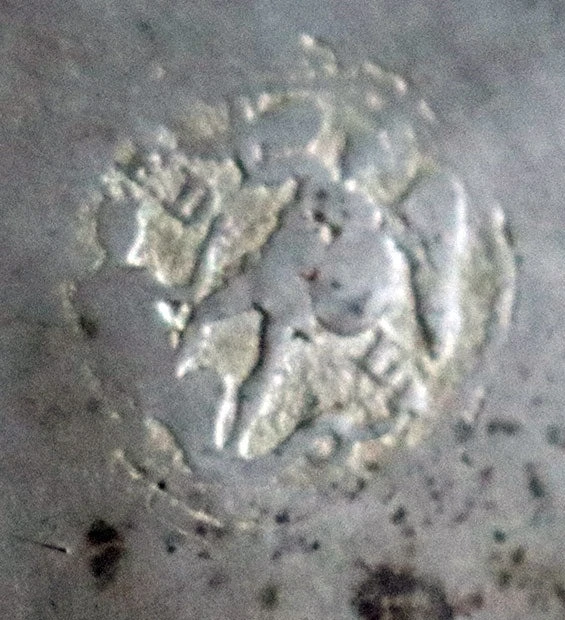
FDL angel touch on a plate dating to about 1800; compare the oval and initials with the separate crowned rose.
Read the stamp
An angel pewter mark can represent a quality claim or a particular pewterer’s device. Distinguish the single figure’s attributes and initials from Firma Svenskt Tenn’s circular two-angel seal, then compare the accompanying punches.
On German pewter of the eighteenth century, a winged figure with sword and balance, or palm and trumpet, could advertise lead-free tin. These attributes distinguish the standing allegorical figure from an eagle or another bird. The same broad motif was adapted in different workshops, so wings alone do not identify a factory or country. Examine what the figure holds, whether it stands on a globe, and whether a crown sits above its head. Keep any town or master’s punches beside it in the comparison.
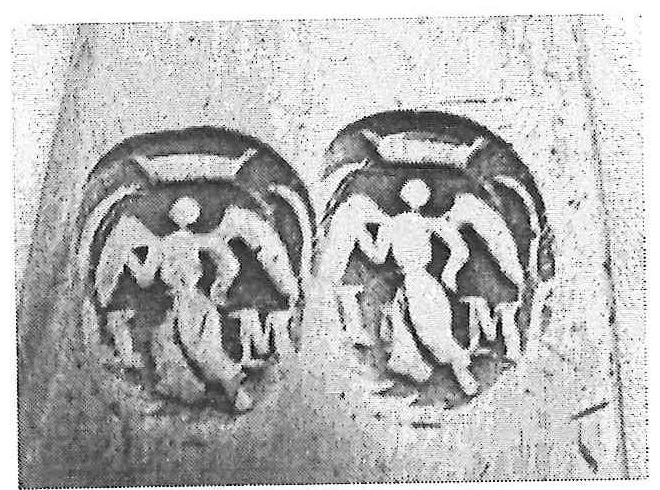
An oval angel with FDL is associated with Frans de Leeuw of Brussels. The plate pair dates to about 1800; the object’s age and the stamp’s period of use are separate. Beside the angel is a separate crowned rose with the same initials. Compare the whole oval and lettering, rather than assigning every crowned angel to de Leeuw. A ladle dating to the mid-nineteenth century has a larger crown, broad-winged figure and M beside the lower body. Its maker remains unidentified; the visible M does not turn it into an FDL variant.
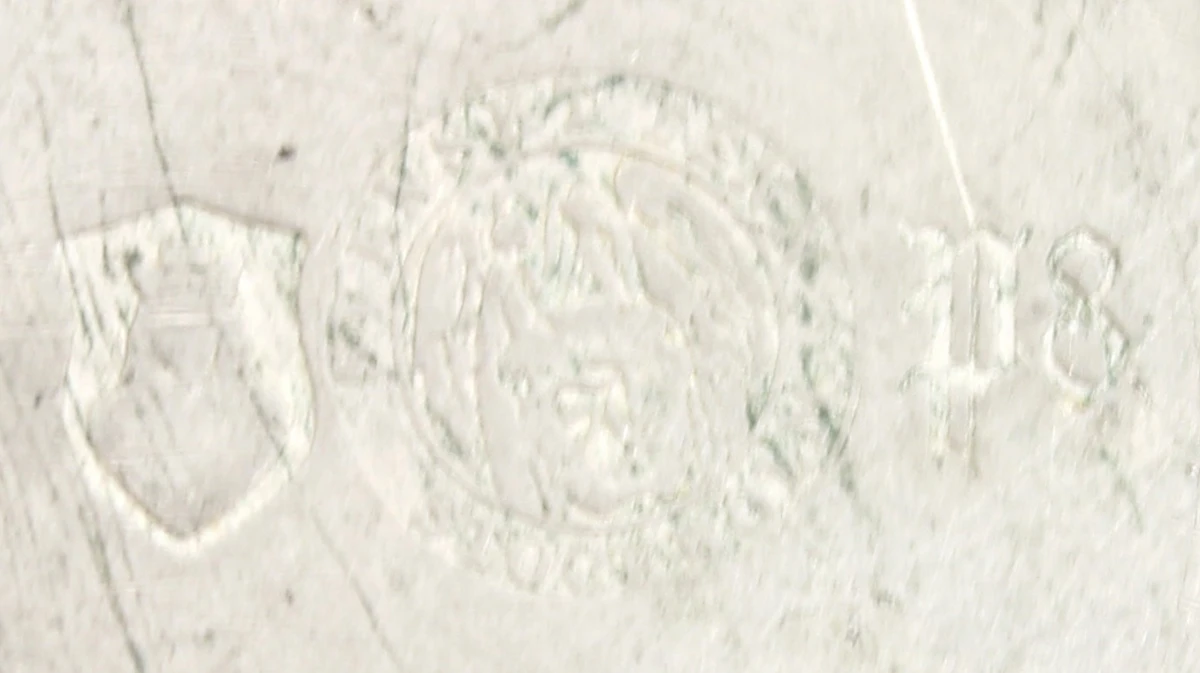
Firma Svenskt Tenn was founded in Stockholm in 1924 by Estrid Ericson with pewter artist Nils Fougstedt. Its company seal contains two winged figures within a circular design and is known as the Angel Mark. Look for the company wording around the seal and separate neighbouring punches. This is a different composition from a single angel with a sword, trumpet or globe. The words svenskt tenn can also describe Swedish pewter generally; the illustrated company seal, rather than those words in isolation, is the useful brand comparison.
Inspect the underside of a plate or tray and the handle of a ladle; the examples place their punches in different locations. Repeated impressions of one design remain a single maker’s mark. A rose, shield or year code beside an angel may have a separate purpose. Crowned roses were used widely and later lost consistent quality control, so their presence does not supply a universal tin percentage. When a wing is rubbed, the figure’s legs, held objects, initials and border usually provide a more specific comparison than the remaining wing shape.
Undated
FDL angel touch on a plate dating to about 1800; compare the oval and initials with the separate crowned rose.
Undated
Two impressions of the same crowned winged figure with M on a ladle dating to the mid-nineteenth century. Maker unidentified.
Undated
Firma Svenskt Tenn circular two-angel seal on a tray, beside separate punches; the worn year code is not decoded here.
Compare the initials, crown, border and objects held by the figure. FDL identifies a specific touch; an angel without those letters may belong to another pewterer.
Svenskt Tenn’s company seal uses two winged figures in a circular design. Single-angel touches also occur on older European pewter.
The exact design can narrow a comparison, but the general angel motif spans several periods. A dated comparison object does not establish the whole use period of its punch.