
Undated
pewter plate hallmarks
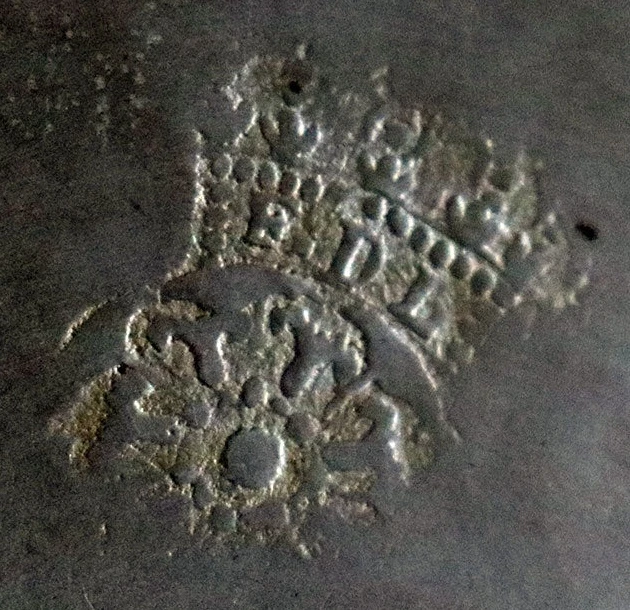
Crowned rose on a pewter plate sold as Frans de Leeuw: a separate quality device beside the maker’s touch.
Read the stamp
Pewter plate hallmarks can identify a pewterer through a touchmark or a group of small pseudo-hallmarks. Owner initials and quality devices, such as a crowned rose, carry different meanings and do not state silver purity.
Start with the largest stamped device on the underside of the plate. A touchmark can combine a name or initials with a lion, eagle, rose or another emblem. Read the letters, border and accompanying place label together: a familiar animal alone rarely identifies the maker. London and Edinburgh pewterers registered touches on guild touch plates, but that system did not extend to every town or to America. A date incorporated into a British touch normally records the pewterer’s establishment in business, rather than the year the plate was cast.
Pewter pseudo-hallmarks resemble the punches on silver but do not certify silver fineness. On British plates they usually form a group of four; five are particularly associated with Wigan, although other arrangements exist. The maker’s initials may appear among the devices. Dutch and American pewter also carries these groups. A crowned rose began as a quality symbol, and a crowned X was associated with harder alloys. Their use later became inconsistent. Neither symbol supplies a reliable modern tin percentage or a silver purity reading; compare the complete design with a named pewterer’s touch.
Large initials on the front rim can belong to the people who owned the plate. A traditional ownership triad places the family surname initial centrally, with the husband’s and wife’s given-name initials beside it. Pairs and groups of four also occur. Engraved crests, church names and institutional lettering serve the same ownership purpose. A plate can therefore carry a maker’s touch underneath and unrelated owner initials above. An ownership inscription may have been added long after manufacture; read its date as an inscription date unless the object’s history establishes more.
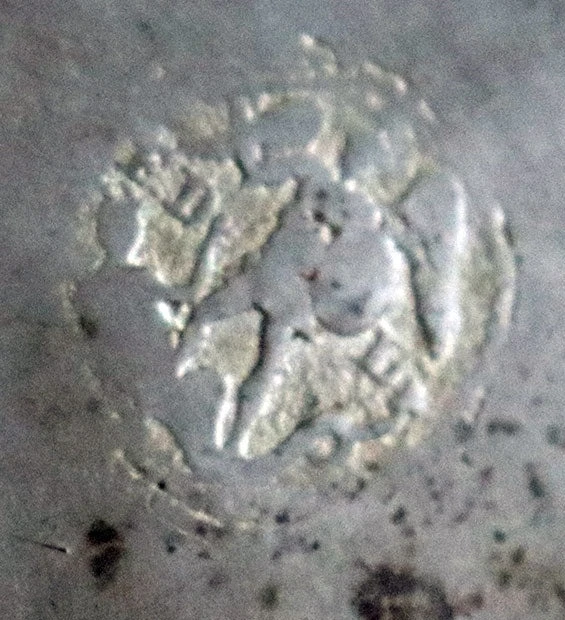
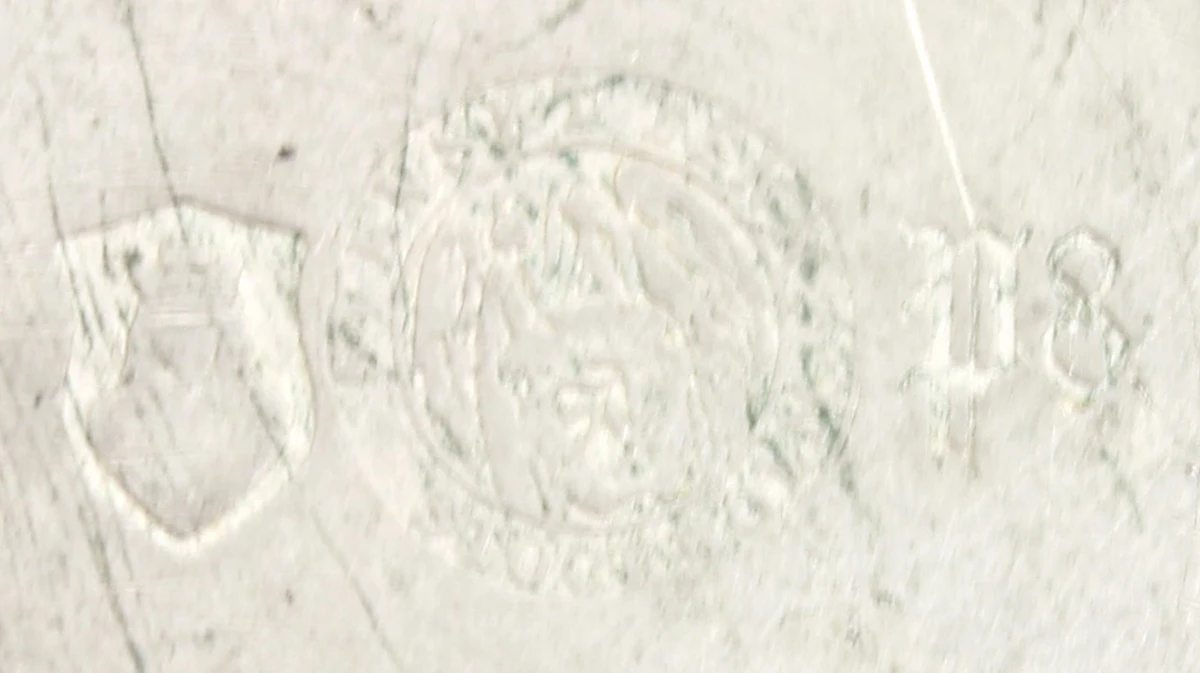
British pewter pseudo-hallmarks were not used before about 1630. On plates, dishes and chargers, they were normally on the front rim until about 1730, then on the back of the well. These are broad placement clues for British examples, not a date decoder for all countries. Later catalogue numbers are another trap: a four-digit stamp can be a model number. Preserve the spacing between marks when comparing them. On the pictured FDL plate, the crowned rose and the adjacent winged maker’s device are separate stamps; the Swedish tray comparison instead combines a company seal with neighbouring punches.
Undated
Crowned rose on a pewter plate sold as Frans de Leeuw: a separate quality device beside the maker’s touch.
Undated
The adjacent FDL winged figure on the same plate: initials and the enclosing oval distinguish the maker’s touch from its rose.
Undated
SVENSKT TENN circular seal and neighbouring punches on a Swedish pewter tray; a comparison for named tableware marks, not a British pseudo-hallmark group.
Separate the maker’s touch, small pseudo-hallmarks, quality devices and owner initials. Several kinds can occur on one plate.
Pewter pseudo-hallmarks imitate the appearance of silver punches but do not certify silver fineness.
They often identify owners. A three-initial arrangement can represent a married couple’s shared surname and given names; compare it with the separate maker’s touch.