
Country guide
Czech porcelain marks
Czech porcelain marks often preserve more than one geographical history. Bohemian factories used German-language town names alongside emblems, initials and country statements. Carlsbad is Karlovy Vary, Dux is Duchcov, Turn-Teplitz is Trnovany, and Klösterle is Klášterec nad Ohří. A change of language or country wording can occur while production continues at the same site.
Key makers’ marks
14 marks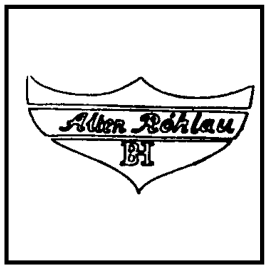
former Altrohlau Stara Role
1838–1884
impressed · porcelain, faience
impressed · porcelain, faience · Czechoslovakia
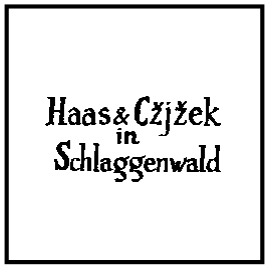
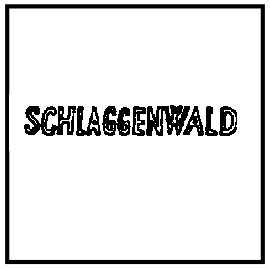
former Schlagenwald Slavkov
After 1866
printed · various colours · porcelain
printed · various colours · porcelain · Czechoslovakia
Printed mark in different colours. .
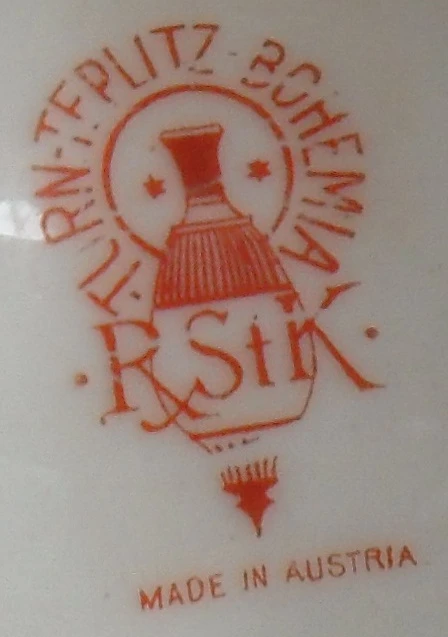
Amphora / Riessner works
c. 1899–1905
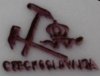
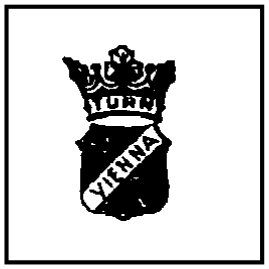
TURN-TEPLITZ-BOHEMIA; RStK; MADE IN AUSTRIA
Red urn-and-initials stamp; the separate three-rifle device at left is Max Emanuel’s retailer mark.
printed · pottery or porcelain · Turn-Teplitz, Bohemia

Royal Dux
c. From 1990
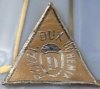
ROYAL DUX BOHEMIA D
label · porcelain · Dux (Duchcov)
Royal Dux D sticker used from 1990s
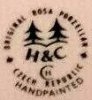
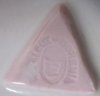
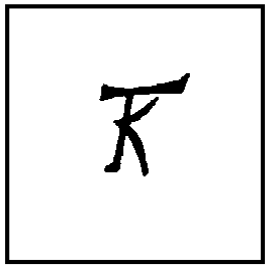
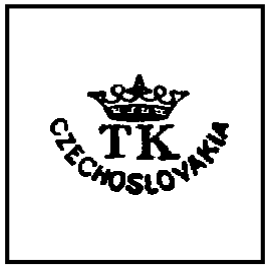
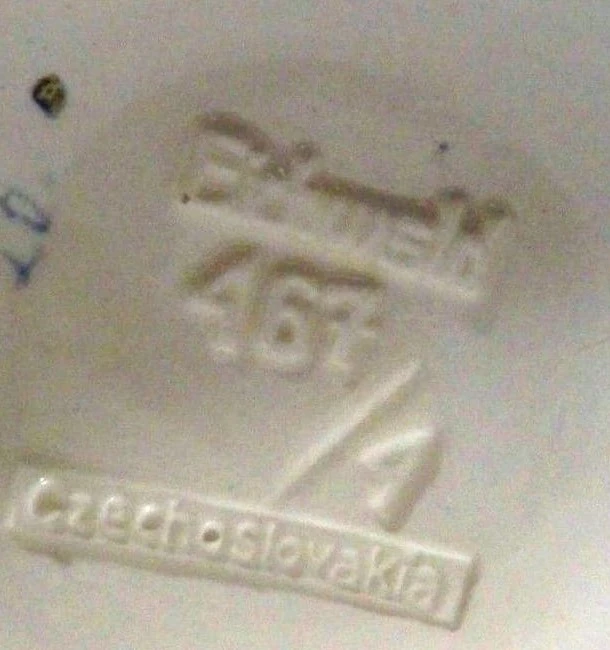
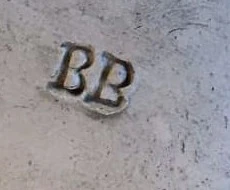
Eichwald / B. Bloch
Undated
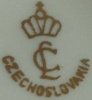
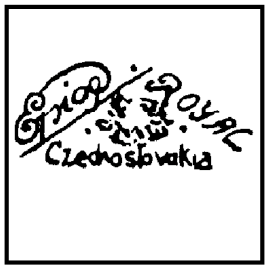
Eichwald / CZECHOSLOVAKIA
The Czechoslovakia panel distinguishes this composite mark from the name-only impression.
moulded in relief · glazed earthenware · Dubí (Eichwald), Bohemia
About Czech porcelain marks
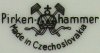
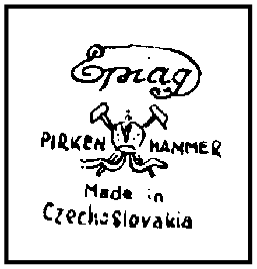
Porcelain manufacture developed in western Bohemia in the late eighteenth century. The Klášterec factory dates from 1794; other centres included Horní Slavkov, Březová, Chodov and Stará Role. Named tableware businesses used crowns, crossed tools, monograms and full factory names. Pirkenhammer’s crossed hammers are different from a crowned TK or a Royal Dux triangle.
Northern Bohemian art ceramics form another important branch. Royal Dux at Duchcov made figures and decorative wares. Amphora, established in Trnovany in 1892, became known for artistic ceramics. B. Bloch’s Eichwald production included majolica as well as porcelain from separate works. These materials and company histories should be compared individually.
BOHEMIA is a regional term, while AUSTRIA, CZECHOSLOVAKIA and CZECH REPUBLIC are country-wording clues used in different contexts. None names a single factory. Read the exact logo, town and origin line together. Factory ownership, decorating studios and export brands can add further stamps, while model and painter’s numbers normally serve different purposes from a date.
How to read the marks
Record the complete stamp, including German-language town names and later country lines.
Match place pairs such as DUX–Duchcov and PIRKENHAMMER–Březová without merging different factories in the same area.
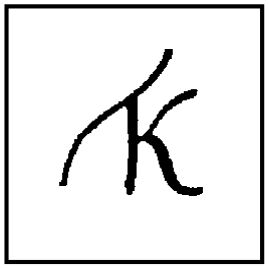
Compare distinctive devices: the Royal Dux applied triangle, crossed hammers, crowned TK and named Amphora formats.
Distinguish porcelain from majolica or other earthenware before using a factory’s mark sequence.
Keep distributor, decorator and factory marks separate when several appear.
Read mould and painter’s numbers separately from the company logo or country wording.
Key makers
Royal Dux
Dux / Duchcov, Bohemia, now Czechia · Factory origins in the mid-19th century; Eduard Eichler ownership from 1860.
Porcelain figures and ornamental ceramics, with earlier earthenware and majolica production.
Amphora / Riessner, Stellmacher & Kessel
Turn-Teplitz / Trnovany, Bohemia, now Teplice, Czechia · Established 1892; company names changed later.
Art pottery, sculptural vessels and decorative ceramics.
B. Bloch / Eichwald
Hohenstein and Eichwald / Dubí, Bohemia, now Czechia · B. Bloch business from 1871; Eichwald majolica factory acquired 1889 and porcelain works acquired 1899.
Majolica, earthenware, stoneware and porcelain from separate factories.
Klösterle / Klášterec, associated with the Thun name
Klášterec nad Ohří, Bohemia, Czechia · Factory founded 1794; later ownership and corporate forms.
Porcelain table services and related wares.
Look-alikes & fakes
BOHEMIA or AUSTRIA as a factory name
These words can occur at several Bohemian businesses. Read the independent name, town and emblem before identifying the manufacturer.
Royal Dux printed and applied triangles
Compare an applied ceramic pad with a printed stamp or foil label. Similar triangle wording does not make their construction or periods identical.
Eichwald and nearby Aich/EPIAG
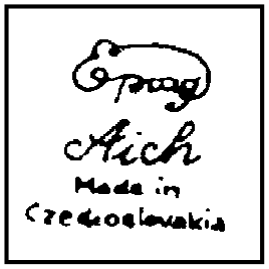
Aich and Eichwald are different factory identities. An EPIAG stamp that reads AICH should not be assigned to Eichwald from a surrounding group label.
Copied European royal devices
Crowns and initials resemble those of German and Austrian factories. Match the full company and place wording, and compare body and decoration with the corresponding period.
Related marks
228 marks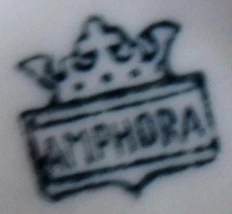

FPMMark wording
1887–1894
Porzellanfabrik Freiwaldau Robert Tietz
Freiwaldau (Polish 'Fryvaldov', Czech 'Jeseník')
Used between . Scpter above the " ".
EPIAGMark wording
c. 1921–1927
Vereinigte Porzellanfabriken "Porzellan-Union" AG
Klösterle (Klášterec)
Used around , cover-up hiding the mark from the O.&E. Gutherz factory in Altrohlau .
Browse makers
41 makersRoyal DuxCzech Republic21 marksAmphora potteryCzech Republic5 marksEichwald5 marksPirkenhammer Brezova22 marksElbogen Kämpf17 marksformer Schlagenwald Slavkov17 marksVictoria17 marksJosef Kuba11 marksformer Chodau Dolni Chodov8 marksformer Dallwitz Dalovice8 marksPorzellanfabrik Freiwaldau Robert Tietz8 marksformer Eichwald Duby7 marksformer Elbogen Loket7 marksformer Gieshubel Kusibl7 marksformer Pirkenhammer Brezova7 marksKlasterecCzech Republic7 marksPrague7 marksformer Altrohlau Stara Role6 marksformer Klösterle Klasterec6 marksVereinigte Porzellanfabriken "Porzellan-Union" AGCzech Republic6 marks Teplice TrnovanyCzech Republic4 marksAich4 marksformer Budau Budov4 marks Karlovy VaryCzech Republic3 marksBrezova3 marksformer Tannawa Zhdanov3 marksGrove & StarkUnited Kingdom3 marks KusiblCzech Republic2 marksformer Fischern Rybare2 marksformer Schlaggenwald Slavkov2 marksHammer near CarlsbadCzech Republic2 marksTeplice2 marksAltrohlau (Stara Role)1 markBrezova former Pirkenhamer1 markformer Brooks Most1 markformer Giskhyubel Kysibl (Kyselka)1 markPorzellan- und Steingutfabrik Gottfried & VielgutCzech Republic1 markPorzellanfabrik Tuma & VielgutCzech Republic1 markStara Rawle (former Altrolau)1 markTeunitzCzech Republic1 markthe former Brux Most1 mark