

Country guide
Italian pottery marks identification guide
Italian pottery marks cover several ceramic traditions. Renaissance maiolica is tin-glazed earthenware, with a white surface painted in coloured decoration. Centres such as Faenza, Deruta, Urbino and Gubbio produced dishes, bowls and other vessels; signatures can include a painter, workshop, town, inscription or date. A town name is not the name of one manufacturer.
Key makers’ marks
14 marks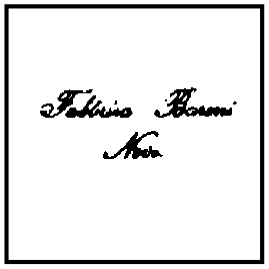
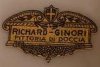
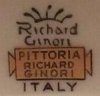
Ginori
c. 1950–1999
Richard Ginori Pittoria Italy ca. second half of the twentieth century
porcelain · Italy
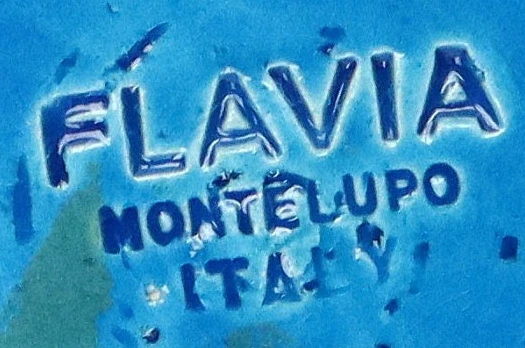
Bitossi / related Flavia production
c. From 1976
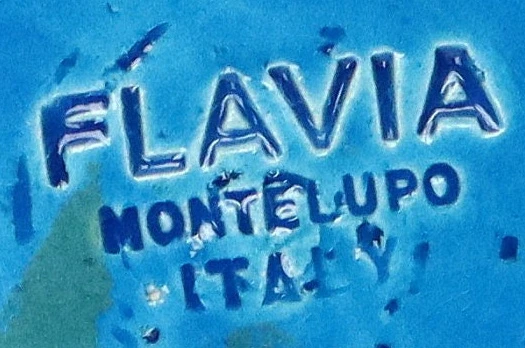
FLAVIA / MONTELUPO / ITALY
Three-line Flavia name impressed into the clay.
impressed · Glazed earthenware · Montelupo Fiorentino, Italy


Capodimonte
Undated
porcelain
porcelain · Capodimonte, Italy
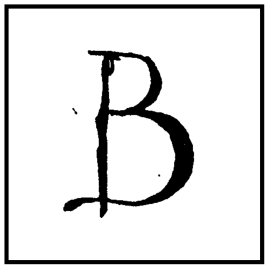
Charles III, King of Naples and Sicily, in 1743 established a factory in Capodimonte castle (near Naples). In 1759, Charles III was called to the Spanish throne and moved its production to Buen Retiro in Spain. The Capodimonte was soft and of high artistic level.

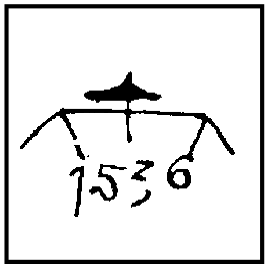
Gubbio
Undated
black or red · faience
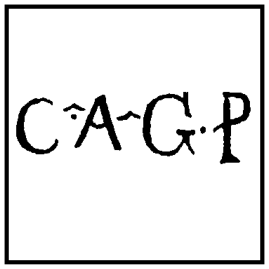
Gubbio ceramic production began around 1480.
black or red · faience · Italy

Urbino
Undated
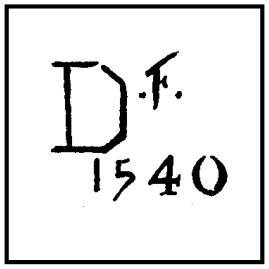
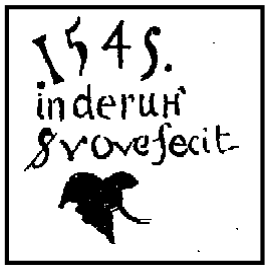
Nella Botega di M Guido Durantino In vrbino
dark-blue · earthenware · Italy
Name tag of Guido Durantino and Orazio Fontana workshop. Dark-blue mark.

Grazia
Undated
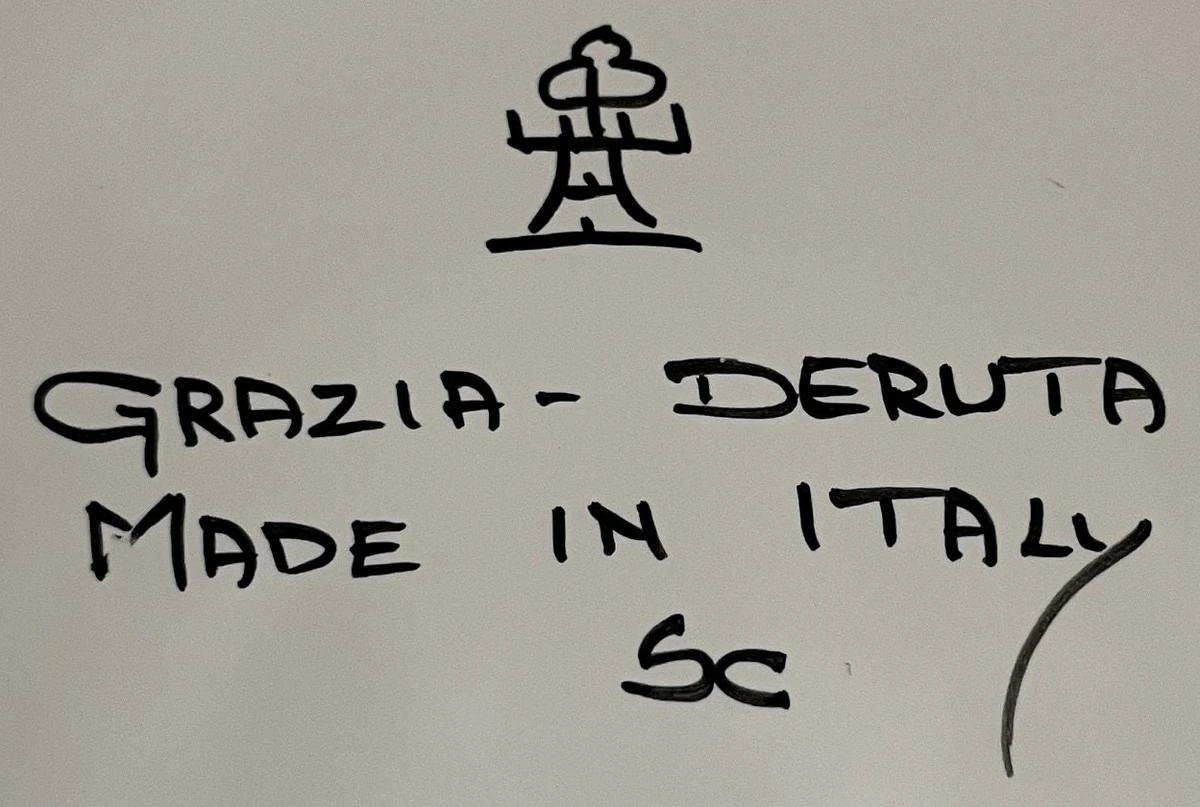
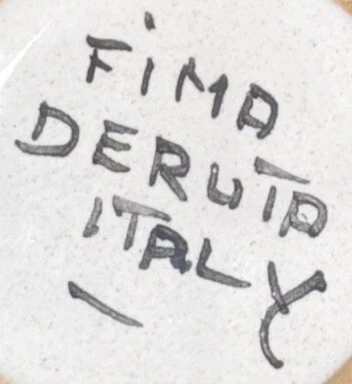
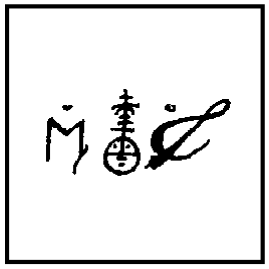
GRAZIA - DERUTA / MADE IN ITALY / SC
Small emblem above the Grazia workshop name; SC below is an additional initial group, not a year.
painted inscription · maiolica / glazed earthenware · Deruta, Umbria, Italy
About Italian pottery marks
Porcelain developed through different businesses. Carlo Ginori founded the Doccia factory near Florence in 1737. The royal Capodimonte factory operated near Naples from 1743 to 1759, using a fleur-de-lis device. The later royal Neapolitan manufacture, active from 1771 to 1806, forms a separate chapter. A crowned N is associated with the Naples tradition and with later decorative production; it does not by itself establish an eighteenth-century Capodimonte object.
Modern workshops continued both regional and new design traditions. Grazia made maiolica in Deruta, while Bitossi, founded in Montelupo Fiorentino in 1921, developed a wide range of decorative ceramics. Painted signatures, impressed names, labels and exporter names can all occur on twentieth-century pieces.
Start with the ceramic body and then read the complete base. ITALY and HAND PAINTED describe origin and decoration, while a maker’s name or distinctive device gives the more useful workshop lead. A stock number, painter’s initials and a historical-style mark need separate readings. Later revivals often reproduce Renaissance ornament without sharing the original workshop or date.
How to read the marks
Distinguish tin-glazed earthenware from porcelain before comparing factory marks.
Transcribe workshop, town, country and signature in separate lines, preserving dates and punctuation.
Read DERUTA, FAENZA or URBINO as a place unless a separate workshop name identifies the business.
Compare fleur-de-lis, crowned N and other devices with their specific factories and periods.
Record ITALY, HAND PAINTED, decorator initials and model numbers separately.
For a historic-style object, compare body, glaze, foot and decoration with the claimed period as well as the painted mark.
Key makers
Ginori / Doccia
Doccia, Sesto Fiorentino, near Florence, Italy · Factory founded 1737; later Richard-Ginori and Ginori identities.
Porcelain tableware, figures and decorative objects.
Royal Capodimonte factory
Naples, Italy · 1743–1759.
Soft-paste porcelain figures, table pieces and ornamental wares.
Real Fabbrica Ferdinandea
Naples, Italy · 1771–1806.
Royal Neapolitan porcelain services, figures and decorative wares.
Grazia
Deruta, Umbria, Italy · Workshop tradition active around the turn of the 20th century and continuing; Ubaldo Grazia active in the 1920s.
Painted maiolica tableware and decorative ceramics, including lustre revivals.
Bitossi
Montelupo Fiorentino, Tuscany, Italy · Founded 1921; continuing.
Decorative earthenware, vases and designer ceramics, including related Flavia production.
Look-alikes & fakes
Later Capodimonte-style crowned N
Many later makers used Naples-style marks. A crowned N alone cannot date a figure to the royal factory of 1743–1759, whose mark was a fleur-de-lis.
Renaissance-style maiolica revivals
Later workshops reused historical ornament and signature styles. Compare the foot, glaze, clay and full workshop inscription before assigning a Renaissance date.
Town names and generic ITALY
DERUTA or ITALY is shared by many businesses. Look for the independent workshop signature rather than identifying a factory from the place alone.
Imported wares with distributor names
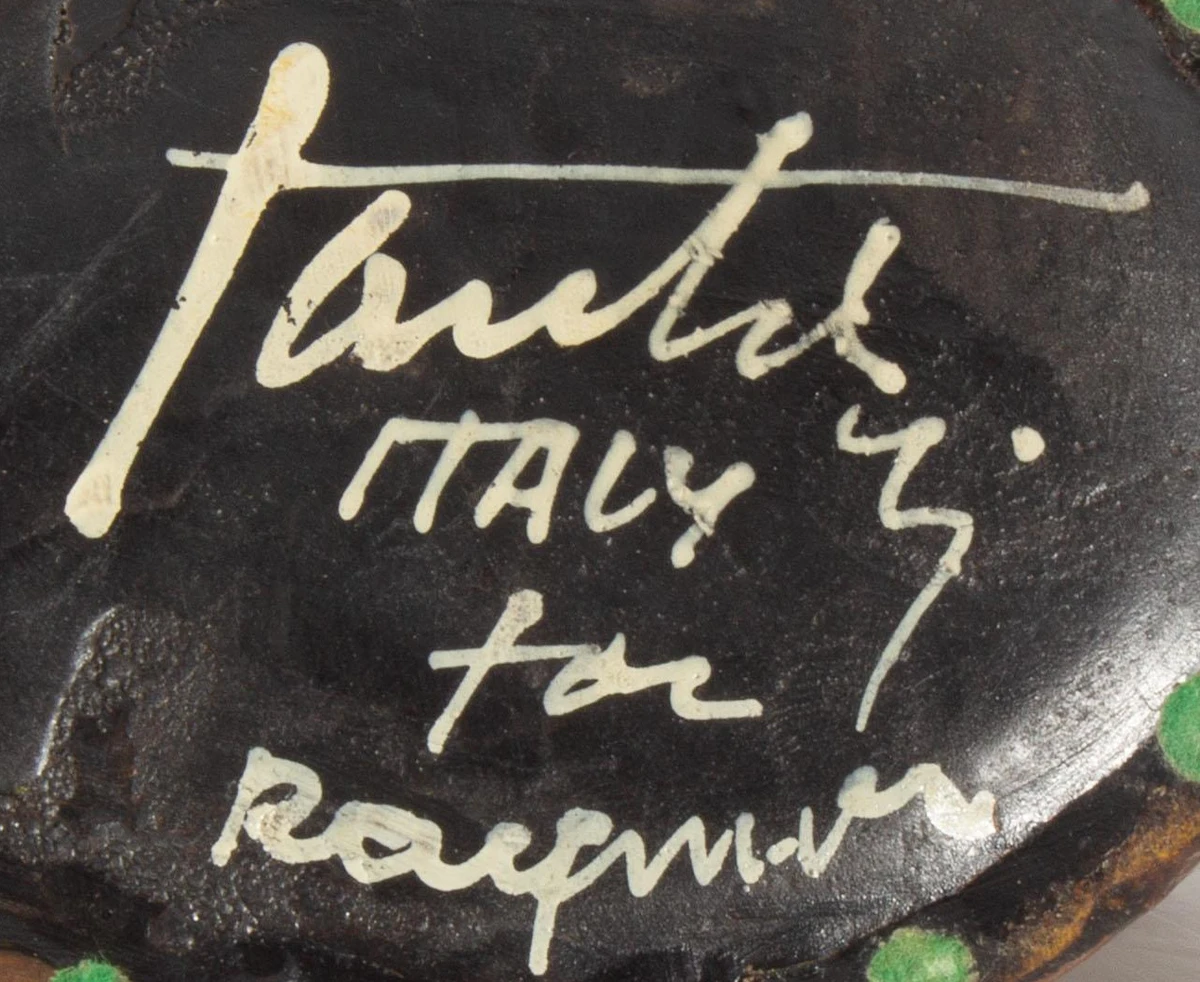
An exporter or retailer can accompany an Italian workshop signature. Read each name as a separate role rather than merging it into the manufacturer.
Related marks
512 marks
Undated
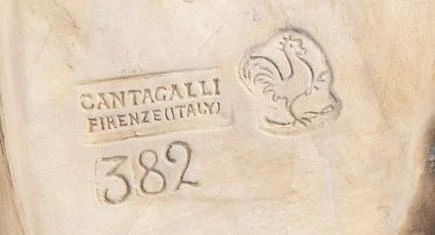
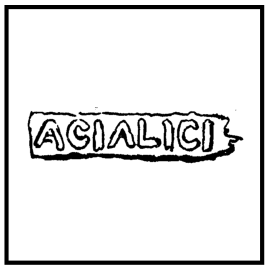
Manifattura Figli di Giuseppe Cantagalli
Separate rectangular impressed two-line factory wordmark. The nearby 382 is the model number; the cockerel is a different stamp.









Browse makers
65 makersCapodimonteItaly24 marksDeruta, ItalyItaly5 marksBitossiItaly5 marksRaymorUnited States5 marksCantagalliItaly5 marksMajolica17 marksGinori18 marksFaenzaItaly39 marksCastelliItaly12 marksNaplesItaly25 marksUrbinoItaly49 marksVeniceItaly46 marksGubbioItaly34 marksRoman Antique pottery21 marksSavonaItaly20 marksKaren Karnes19 marksCaffagioloItaly15 marksLe NoveItaly15 marksPalermoItaly15 marksCastelduranteItaly14 marksMilanItaly14 marksPesaroItaly12 marksDerutaItaly11 marksDocciaItaly11 marksFlorenceItaly11 marksDoccia near FlorenceItaly10 marksSiennaItaly7 marksTerracotta7 marksVinovo near TurinItaly7 marksAntique pottery6 marksGenoaItaly6 marksLe Nove near BassanoItaly6 marksEsteItaly4 marksItaly4 marksRiminiItaly4 marksTrevisoItaly4 marksBassanoItaly3 marksBassano Zortea3 marksTurinItaly3 marksTurin VinovoItaly3 marksForliItaly2 marksGironaItaly2 marksLodiItaly2 marksLodi near VeniceItaly2 marksMilanoItaly2 marksRomeItaly2 marksAntique Venetian tablewareItaly1 markCaffagiolo between Florence1 markCandianaItaly1 markDangrano near BassanoItaly1 markFerraraItaly1 markGubbio (the Duchy of Urbino)Italy1 markin-kind Faenza. ItalianItaly1 markKingdom of NaplesItaly1 markMontelupoItaly1 marknear Naples CapodimonteItaly1 markNoceraItaly1 markRovigoItaly1 markSan CristoforoItaly1 markSienaItaly1 markVeronaItaly1 markVicenzaItaly1 markVinovo near TorinoItaly1 markVinovo TorinoItaly1 markViterbo near RomeItaly1 mark