
Country guide
Staffordshire pottery marks
Staffordshire pottery marks belong to a manufacturing district containing many independent potters and factories. The north Staffordshire Potteries produced earthenware, stoneware, bone china and ornamental figures. Marks may give the maker, a works name or a town such as Burslem, Stoke or Hanley, while STAFFORDSHIRE and ENGLAND supply broader location wording.
Key makers’ marks
12 marks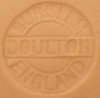
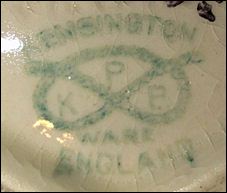
Price & Kensington Potteries Ltd
c. To 1963
KENSINGTON WARE P K P ENGLAND
Marks of the predecessor companies continued in use to about 1963.
earthenware · Longport, England
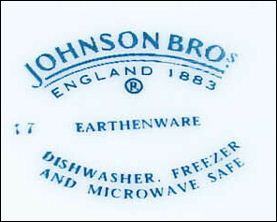
Johnson Bros, Hanley Ltd
2003–2015
Johnson Bros England 1883
Production moved to China in 2003; the name was discontinued in 2015.
printed · England, United Kingdom
ENGLAND is part of the brand inscription. The printed 1883 is the founding date.
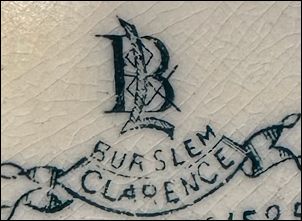
Burgess & Leigh
Undated
B&L Burslem
England, United Kingdom
Clarence is the pattern name. Registration numbers belonging to E. J. D. Bodley suggest production under arrangement with Bodley.
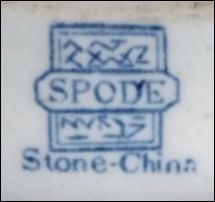
1767-1833 Josiah Spode
Undated
blue
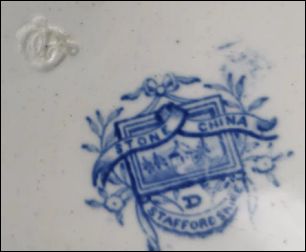
Stone-China stamps of this style date to the early nineteenth century.
blue · Stoke-on-Trent, England
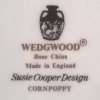
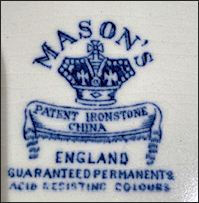
Mason's Ironstone China
Undated
G.L
earthenware · England, United Kingdom
Variants of this style continued under G. L. Ashworth & Bros, Mason's Ironstone China and Wedgwood.
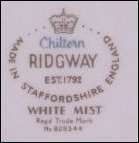
Ridgway Potteries Ltd
Undated
Ridgway Made in Staffordshire England
white · Staffordshire, England
White Mist is the pattern name.
About Staffordshire pottery marks
The district’s well-known businesses followed different paths. Josiah Wedgwood began independently in Burslem in 1759; Josiah Spode acquired his Stoke site in 1776. Minton developed another Stoke business from the 1790s. Doulton expanded into Burslem in 1877, and Burgess & Leigh’s business moved to Middleport Pottery in 1889. Their products and marks should be compared as separate company sequences.
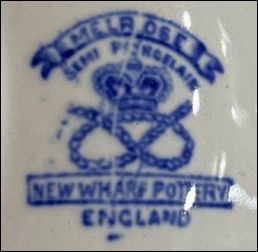
Printed backstamps often use familiar shared frames: a crown, royal-arms design, circular garter or the three-loop Staffordshire knot. The knot is a regional emblem, so initials and surrounding wording are needed to identify the maker. A large pattern name can dominate the stamp while the factory’s smaller initials sit below.
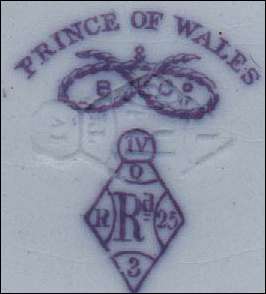
Other pieces carry impressed names, painted signatures or only workmen’s marks. Many Staffordshire figures have no maker’s mark, so their modelling, bases, colours and construction become useful comparisons. Registration diamonds and Rd numbers relate to registered designs; they do not replace the maker’s identity or automatically date every object made in that design.
How to read the marks
Read the smallest initials and works wording as well as the prominent pattern name.
Copy town, STAFFORDSHIRE and ENGLAND separately from the manufacturer.
For a Staffordshire knot, record all three loops and the letters around or below them.
Keep factory stamps, pattern names, registration marks and painter’s numbers apart.
Compare an impressed name and a printed backstamp separately when both occur.
For an unmarked figure, compare the base, modelling, decoration and construction with a matching attributed model.
Key makers
Josiah Wedgwood & Sons
Burslem, later Etruria and Barlaston, Staffordshire, England · Independent business founded 1759; continuing brand.
Creamware, jasper, ornamental stonewares and later tableware.
Spode
Stoke, Staffordshire, England · Josiah Spode acquired the Church Street site in 1776; production there continued to 2008.
Printed earthenware, stone china and bone china.
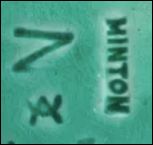
Minton
Stoke, Staffordshire, England · Thomas Minton began the business in the 1790s; Stoke works closed in 1992.
Earthenware, stone china, bone china and decorated ornamental wares.
Doulton, Burslem
Burslem, Staffordshire, England · Burslem operation from 1877; Royal Doulton name from 1901.
Tableware, art pottery and figures.
Burgess & Leigh / Burleigh
Burslem and Middleport, Staffordshire, England · Business origins 1851; Middleport site from 1889.
Earthenware tableware with transfer-printed decoration.
Look-alikes & fakes
The Staffordshire knot at different factories
The same three-loop emblem was used by many potters. Read the accompanying initials or factory name before assigning the maker.
Josiah Wedgwood and Enoch Wedgwood
These are separate businesses despite the surname and Staffordshire setting. Compare the exact company wording and device.
Later reproductions of Staffordshire figures
Compare the full model, foot, glaze and decoration as well as any added mark. A familiar dog, royal subject or regional name does not establish an early date.
Registration date versus manufacture
A design could be made for years after registration. Read the registration mark as a design clue, then compare the maker’s actual backstamp.
Related marks
105 marks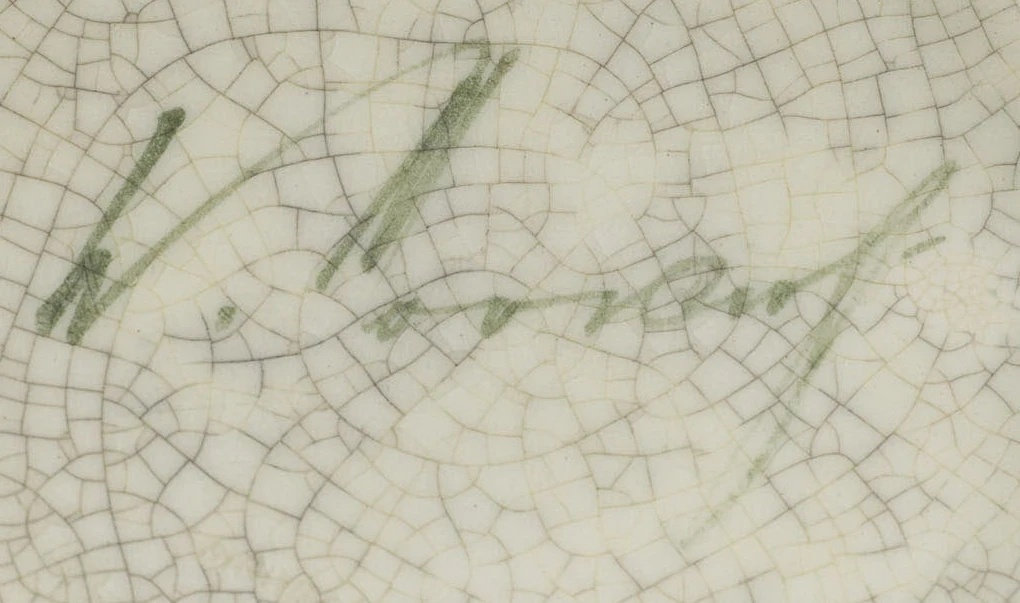
c. 1913–1928
Moorcroft
Full painted signature with impressed BURSLEM separates this early independent format from Macintyre Florian Ware and the later royal stamp.
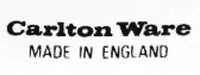
c. 1969–1989
Wiltshaw & Robinson / Carlton Ware
Heavy rounded type replaces flowing script; catalogue describes a slide-on lithographic transfer.
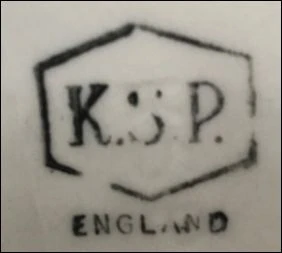
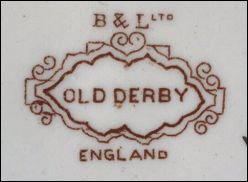
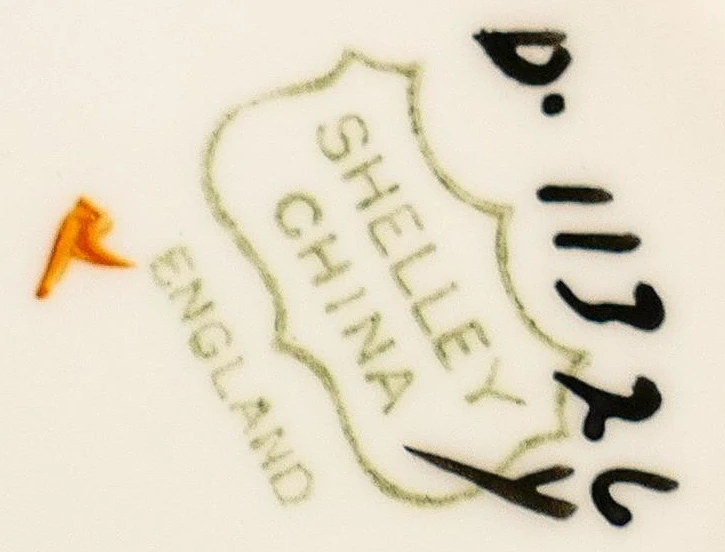
c. 1913–1926
Shelley
Capital lettering and CHINA inside the shield; this form lacks the separate Copyright wording.
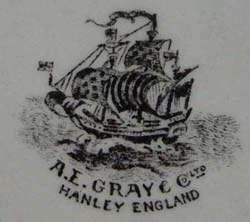
c. 1914–1918
Gray’s Pottery
The first galleon has a high detailed hull, distinct from the yellow-sailed second galleon.
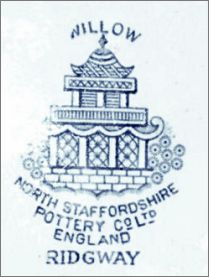
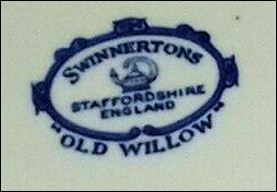
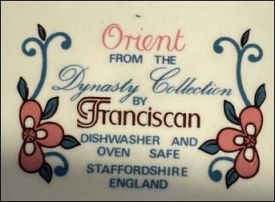
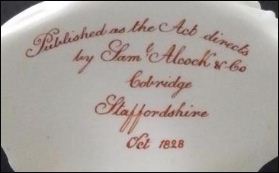
c. 1826–1853
Samuel Alcock and Co
The publication inscription includes October 1828; Cobridge wording is associated with circa 1826–1853.
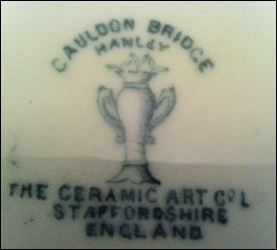
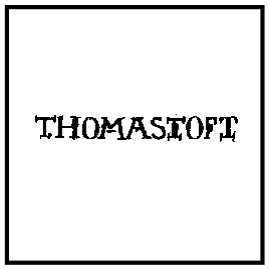
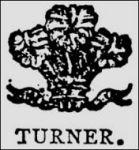
From 1784
John Turner / John & William Turner
The Prince of Wales feathers relate to the firm’s appointment as potters to the Prince in 1784.
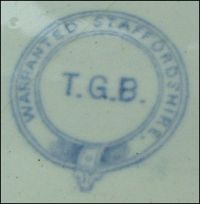
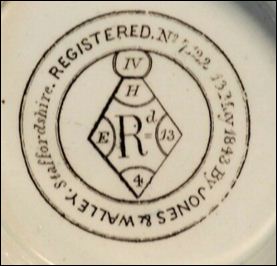
Undated
Elijah Jones
The inscription and registration diamond date the pattern registration to 13 May 1843, not mark use.
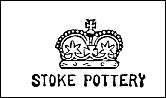
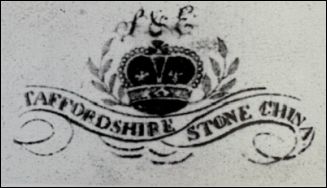
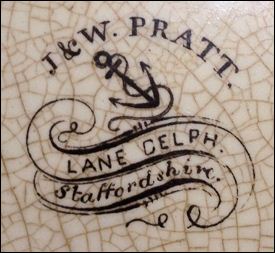
Browse makers
25 makersWilliam Moorcroft LtdUnited Kingdom5 marksCarlton Ware LtdUnited Kingdom5 marksKeele Street Pottery Co LtdUnited Kingdom5 marksBurgess & LeighUnited Kingdom30 marksWileman & CoUnited Kingdom12 marksA E Gray and Co LtdUnited Kingdom17 marksLate Mayers3 marksT HughesUnited Kingdom18 marksRidgway Potteries LtdUnited Kingdom15 marksSwinnertons LtdUnited Kingdom15 marksFranciscan TablewareUnited Kingdom14 marksSamuel Alcock and CoUnited Kingdom13 marksCeramic Art Co LtdUnited Kingdom7 marksAntique pottery6 marksJohn Turner / John & William TurnerUnited Kingdom5 marksThomas Gimbert BoothUnited Kingdom5 marksBurgess & GoddardUnited Kingdom4 marksThomas Dimmock (Jnr) & CoUnited Kingdom4 marksEnglish Ironstone Pottery Ltd3 marksNorfolk Pottery Co LtdUnited Kingdom3 marksElijah JonesUnited Kingdom2 marksJ Plant2 marksSwift and ElkinUnited Kingdom2 marksJ & W Pratt1 markTams & LoweUnited Kingdom1 mark