
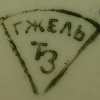
Country guide
Russian porcelain marks
Russian porcelain marks can record a factory, sovereign, company owner or later state identity. The Imperial Porcelain Manufactory was established in Saint Petersburg in 1744. Its crowned imperial ciphers belong to a different mark tradition from Soviet hammer-and-sickle devices and later factory monograms. The factory itself continued through changes of administration and name.
Key makers’ marks
12 marks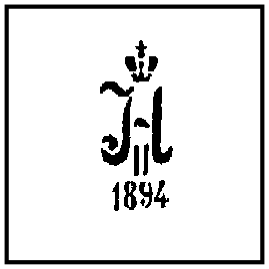
Imperial porcelain plant
Undated
IPP
porcelain · Saint Petersburg, Russia
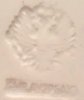
Near the city of Saint Petersburg The plant was opened at the behest of the Empress Elizabeth Petrovna in 1744 near Petersburg. The organizer of the production and the first craftsman was Dmitriy Ivanovich Vinogradov. Since the beginning of the ’s the first successful works were small objects, such as snuff boxes, cups, bottles, buttons, brooches inserts, pipes, handles for knives and forks. they began production of larger things (dishes, sets, vases, sculptures). till 1758 Vinogradov put on some products his own name tag in the form of the letter «W». A brand with the coat of arms of Saint Petersburg is also found: the two anchors and a crown over them. Sometimes they put a mark of Court Office «Ï.Ê.», which subsidized the plant. Later the brands were in the form of monograms and the crown of emperors. Brands of are usually green or gold underglaze. After the revolution the plant was nationalized and named State plant (ÃÔÇ). Brands ÃÔÇ were put with green and dark-blue colours under the glaze or by hand on the glaze. In 1936 plant was named after Lomonosov (ËÔÇ). Such brands are often overglaze made with the stamp or by hand of all colours. -1769 Eagle is in the paste or with dye. Monogram of Catherine II and the mark of Court Office.
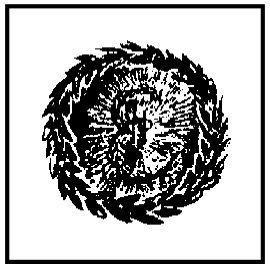
Imperial porcelain plant
Undated
IPP
porcelain · Saint Petersburg, Russia
Near the city of Saint Petersburg The plant was opened at the behest of the Empress Elizabeth Petrovna in 1744 near Petersburg. The organizer of the production and the first craftsman was Dmitriy Ivanovich Vinogradov. Since the beginning of the ’s the first successful works were small objects, such as snuff boxes, cups, bottles, buttons, brooches inserts, pipes, handles for knives and forks. they began production of larger things (dishes, sets, vases, sculptures). till 1758 Vinogradov put on some products his own name tag in the form of the letter «W». A brand with the coat of arms of Saint Petersburg is also found: the two anchors and a crown over them. Sometimes they put a mark of Court Office «Ï.Ê.», which subsidized the plant. Later the brands were in the form of monograms and the crown of emperors. Brands of are usually green or gold underglaze. After the revolution the plant was nationalized and named State plant (ÃÔÇ). Brands ÃÔÇ were put with green and dark-blue colours under the glaze or by hand on the glaze. In 1936 plant was named after Lomonosov (ËÔÇ). Such brands are often overglaze made with the stamp or by hand of all colours. -1769 Eagle is in the paste or with dye. Monogram of Catherine II and the mark of Court Office.
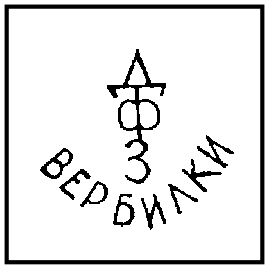
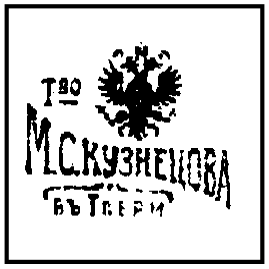
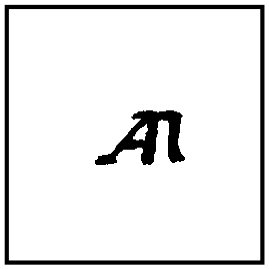
M.S. Kuznetsov plant
Undated
M.S
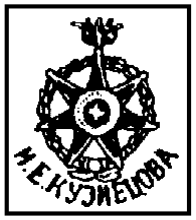
impressed, painted · red · porcelain. faience · Kuznetsovo / Konakovo, Tver province
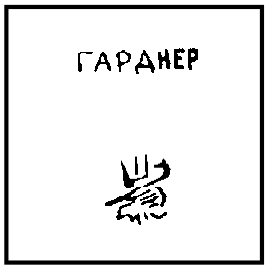
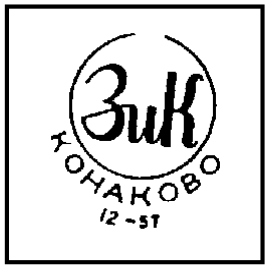
M.S. Kuznetsov plant
Undated
M.S
impressed, painted · red · porcelain. faience · Kuznetsovo / Konakovo, Tver province
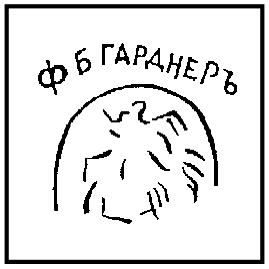
Imperial porcelain plant
Undated
IPP
porcelain · Saint Petersburg, Russia
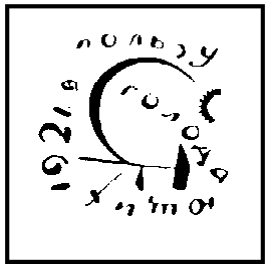
Near the city of Saint Petersburg The plant was opened at the behest of the Empress Elizabeth Petrovna in 1744 near Petersburg. The organizer of the production and the first craftsman was Dmitriy Ivanovich Vinogradov. Since the beginning of the ’s the first successful works were small objects, such as snuff boxes, cups, bottles, buttons, brooches inserts, pipes, handles for knives and forks. they began production of larger things (dishes, sets, vases, sculptures). till 1758 Vinogradov put on some products his own name tag in the form of the letter «W». A brand with the coat of arms of Saint Petersburg is also found: the two anchors and a crown over them. Sometimes they put a mark of Court Office «Ï.Ê.», which subsidized the plant. Later the brands were in the form of monograms and the crown of emperors. Brands of are usually green or gold underglaze. After the revolution the plant was nationalized and named State plant (ÃÔÇ). Brands ÃÔÇ were put with green and dark-blue colours under the glaze or by hand on the glaze. In 1936 plant was named after Lomonosov (ËÔÇ). Such brands are often overglaze made with the stamp or by hand of all colours. -1769 Eagle is in the paste or with dye. Monogram of Catherine II and the mark of Court Office.
Kornilov brothers plant
Undated
V.M
porcelain · Saint Petersburg, Russia
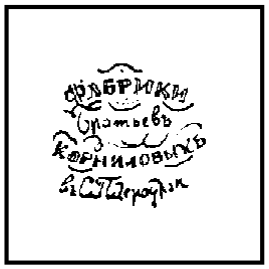
The plant was established by . Kornilova in . the plant was owned by her sons: Mikhail, Petr, Ivan and Vasiliy. In 1886 the «Partnership of Kornilov brothers» was established. Plant produced only very high quality . The exhibitions of 1839, awarded it with gold medals. In 1843 it gained the right to put the state coat of arms on the products. For the first time in Russia in 1881, chromolithography was introduced. It was closed in 1918. Red brand. Dark-blue brand.
Imperial porcelain plant
Undated
IPP
porcelain · Saint Petersburg, Russia
Near the city of Saint Petersburg The plant was opened at the behest of the Empress Elizabeth Petrovna in 1744 near Petersburg. The organizer of the production and the first craftsman was Dmitriy Ivanovich Vinogradov. Since the beginning of the ’s the first successful works were small objects, such as snuff boxes, cups, bottles, buttons, brooches inserts, pipes, handles for knives and forks. they began production of larger things (dishes, sets, vases, sculptures). till 1758 Vinogradov put on some products his own name tag in the form of the letter «W». A brand with the coat of arms of Saint Petersburg is also found: the two anchors and a crown over them. Sometimes they put a mark of Court Office «Ï.Ê.», which subsidized the plant. Later the brands were in the form of monograms and the crown of emperors. Brands of are usually green or gold underglaze. After the revolution the plant was nationalized and named State plant (ÃÔÇ). Brands ÃÔÇ were put with green and dark-blue colours under the glaze or by hand on the glaze. In 1936 plant was named after Lomonosov (ËÔÇ). Such brands are often overglaze made with the stamp or by hand of all colours. -1769 Eagle is in the paste or with dye. Monogram of Catherine II and the mark of Court Office.
About Russian porcelain marks
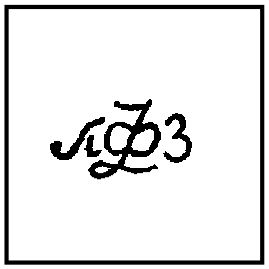
The Saint Petersburg works received the Lomonosov name in 1925; the intertwined Cyrillic ЛФЗ mark became closely associated with its later production. The historic Imperial name was restored in 2005. These company-name changes provide context, but they do not give one universal use interval for every cipher or monogram. Exact lettering, crown and accompanying numerals still need comparison.
Private factories supplied another large part of Russian porcelain. Francis Gardner founded his Verbilki works near Moscow in 1766. The Kuznetsov family developed a network of factories, including Dulyovo from 1832 and other separately located works. A Kuznetsov name can therefore require an additional town line, such as Тверь, to identify the particular factory.
Read Cyrillic as Cyrillic: Н resembles a Latin H, while Р resembles a Latin P. Keep country wording, painter’s numbers and quality or grade signs separate from the main factory mark. A sovereign’s cipher, a double-headed eagle or USSR export wording is shared context rather than a complete maker identification. Compare the body, model and decoration with the exact mark format, especially on later reproductions of imperial or Soviet designs.
How to read the marks
Photograph the complete crown, cipher or monogram with all nearby digits and wording.
Transcribe Cyrillic letters before making a Latin-letter search; preserve spellings and hard signs such as Ъ.
Read a factory name and town line separately, especially within Kuznetsov-era stamps.
Distinguish an imperial sovereign’s cipher from a private company’s eagle-and-name emblem.
Keep СССР, USSR, MADE IN USSR and later country wording with the factory mark when comparing periods.
Read grade colours, painter’s numbers and model numbers using that factory’s own system.
Compare reproductions with the original model and mark format rather than dating from imperial or Soviet imagery alone.
Key makers
Imperial Porcelain Manufactory / Lomonosov
Saint Petersburg, formerly Petrograd and Leningrad, Russia · Founded 1744; Lomonosov name from 1925; Imperial name restored 2005.
Porcelain services, figures, decorative vessels and art porcelain.
Gardner factory and Verbilki successors
Verbilki, near Moscow, Russia · Founded by Francis Gardner in 1766; later factory ownership and state identities.
Porcelain tableware and figures, including street vendors and artisans.
Kuznetsov family factories
Multiple works, including Dulyovo and Tver, Russia · Dulyovo founded 1832; wider family factory network developed through the 19th century.
Porcelain and faience tableware, figures and other ceramic products.
Popov factory
Russia, near Moscow · Active in the 19th century; illustrated museum figure c. 1850.
Porcelain figures and decorated wares.
Look-alikes & fakes
Imperial ciphers and private-factory eagles
A double-headed eagle can accompany more than one factory name. Read the name or sovereign’s cipher beneath it rather than assigning the Imperial factory from the eagle alone.
Cyrillic ЛФЗ and Latin letter readings
The flowing Lomonosov factory monogram is Cyrillic. Preserve its three letters instead of reading it as unrelated Latin initials.
USSR wording and present-day Russia
The Soviet Union included factories in several republics. USSR wording alone does not place manufacture within present-day Russia; use the actual factory and town.
Later imperial and Soviet-style reproductions
Historic models and decoration have been reproduced. Compare the exact factory mark, body and painting with the period being claimed.
Related marks
865 marks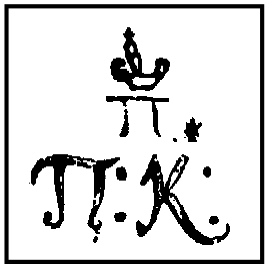
Browse makers
123 makersImperial porcelain plantRussia99 marksMajolica17 marksGardner plantRussia64 marksKuznetsov plantRussia36 marksKuznetsov33 marksI.E. Kuznetsov factoryRussia31 marksM.S. Kuznetsov plantRussia30 marksNovy brothers factoryRussia27 marksSafronov plantRussia24 marksKhaytaJapan22 marksProletariy22 marksPainting institution21 marksPopov plant.20 marksDunashevs’ factoryRussia17 marksA. Kiselev factoryRussia16 marksFactory of Gulin brothersRussia14 marksFomin plantRussia13 marksPlants of Zhadin brothersRussia13 marksFactory of Kuznetsov brothersRussia12 marksKrasnodar12 marksSipyagin plantRussia12 marksTerekhov and Kiselev factoryRussia12 marksFactory of Rachkin brothersRussia11 marksFactory of Yakov11 marksPlant of the Duke YusupovRussia11 marksKonakovo10 marksKornilov brothers plantRussia10 marksM.S. Kuznetsov factoryUkraine10 marksPlant of Kudinov brothers10 marksCeramics9 marksKislovodsk9 marksAuerbach plantRussia8 marksFactories of Popikhin brothersRussia8 marksMarkovs factoryRussia8 marksPesochnoye8 marksPlant of Samsonov brothersRussia8 marksVladivostokRussia8 marksVsevolozhskiy and Polivanov plantRussia8 marksFactory of Kozlov brothersRussia7 marksKornilov Brothers7 marksMardashovs’ factoriesRussia7 marksNasonov plant7 marksNikita Khrapunov factoryRussia7 marksPoskochin plant7 marksBatenin plantRussia6 marksIkonnikova plantRussia5 marksKhrapunov Noviy5 marksKiryakov plant5 marksMalakhov plantRussia5 marksIsayev factoryRussia4 marksM. Kurinov factoryRussia4 marksPlant of Barmin brothersRussia4 marksStartsev plantRussia4 marksTerekhov factoryRussia4 marksBogdanovich3 marksFactory of Aksenov brothersRussia3 marksFactory of Anokhin brothersRussia3 marksFactory of Ovechkin3 marksFactory of the trading house3 marksFedyashin plantRussia3 marksGunter plantRussia3 marksKokoshkin plant3 marksMusakov factory3 marksPainting institution of Mikhail ZhukovRussia3 marksWorkshop of Stroganov3 marksZaitsev factoryRussia3 marksAfanasiy Grebenshchikov plantRussia2 marksand faience plant «Chaika»Russia2 marksDevyatov PlantRussia2 marksFartalnys’ (Kvartalnys’) plantRussia2 marksGasilin factoryRussia2 marksGuryshevs’ plantRussia2 marksGusyatnikov factoryRussia2 marksKaulin plantRussia2 marksKuznetsov factory2 marksPainting institution of MatissenRussia2 marksPerevalov factoriesRussia2 marksReichel factoryRussia2 marksShmelev brothers factoryRussia2 marksSiemens and Halske plant2 marksThe town of ProkopevskRussia2 marksWorkshop at the School2 marksYuzhnouralskRussia2 marks«Kazenny» («state-owned») faience plantRussia1 markA. Kiselev plant1 markDelta-X1 markDipedri and Borisov plant ShirobokovRussia1 markDolgorukiy factoryRussia1 markFactories of Trapeznikov brothersRussia1 markI.E. Kuznetsov plantRussia1 markIvan Gulin factoryRussia1 markKonakovo village (former Kuznetsovo)Russia1 markKopeikin plantRussia1 markM.V. Lomonosov Leningrad1 markMardaschevs'1 markMedvedovskoe villageRussia1 markMishelevka villageRussia1 markNemart plantRussia1 markNewspaper «Pravda» Dulevo plantRussia1 markNovo-Kharitonovo villageRussia1 markOtto plantRussia1 markPainting institution of MaslovRussia1 markPainting institution of Petr LopukhinRussia1 markPainting institution of Terebenev1 markPainting institution of Vagin1 markPainting institution of Vasiliy Mikhailovich1 markPainting institution of VlaskovRussia1 markPetr Fomin plantRussia1 markPlant of Ponomarev brothersRussia1 markProletariy village (Bronnitsy village)Russia1 markRozhdestvenskiy brothers1 markSadov plantRussia1 markSaraktash stationRussia1 markSemen Kudinov plant1 markShishkin factory1 markThe Higher State Artistic1 markThe town of BogdanovichiRussia1 markThe town of Chudovo (Gruzino)Russia1 markThe town of Pesochnoe on VolgaRussia1 markTregubov plantRussia1 markTsepalin plantsRussia1 markVerbilki villageRussia1 markYengalychev factoryRussia1 mark