
Country guide
German markings on porcelain
German porcelain marks span court manufactories, industrial tableware factories and independent decorating studios. Meissen began in Saxony in 1710; other centres developed in Berlin, Bavaria and Thuringia. Their output includes dinner services, figures, vases and ornamental wares. A German country statement places the object within this broad industry, while the factory’s name and emblem lead to the individual producer.
Key makers’ marks
12 marks
Rosenthal
1927
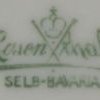
Rosenthal SELB-BAVARIA
1927 variant distinguished by a dot below the crown and a dot above B.
porcelain · Germany
Rosenthal mark with a dot below and a dot above B.
Rosenthal
1941
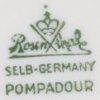
Rosenthal Selb Germany Pompadour pattern
porcelain · Selb, Germany
Pompadour pattern; dot above the .

About German porcelain marks
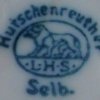
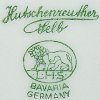
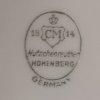
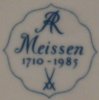
The principal devices are different. Meissen uses crossed swords, KPM Berlin a blue sceptre, and Nymphenburg a shield associated with the Bavarian ruling house. Rosenthal’s named marks developed through several versions. Hutschenreuther marks need particular care because the Hohenberg and Selb businesses had different beginnings and identities. Crowns occur across many factories and cannot identify one company by themselves.
BAVARIA, SELB, HOHENBERG and other place words can narrow a comparison. BAVARIA is a regional name shared by numerous makers, rather than a manufacturer. GERMANY, W. GERMANY and GDR describe different country-wording formats, but the exact factory mark, lettering and object form are needed to refine a date.
A second stamp may belong to a decorator. Dresden studios often worked on purchased porcelain bodies, so the decorated object can carry both a factory identity and a later workshop signature. Keep those roles separate, and distinguish model numbers and painter’s marks from the main factory device.
How to read the marks
Copy the full factory name, initials, crown or device and every country or town word.
Start with a distinctive emblem, then compare its lettering and layout with the named maker.
Treat BAVARIA as a region and SELB or HOHENBERG as a place clue; retain the company name beside them.
Look for separate underglaze and overglaze stamps to distinguish porcelain manufacture from decoration.
Read anniversary dates, model numbers and pattern names separately from a mark-use date.
Compare exact versions of GERMANY, W. GERMANY or GDR with the object’s shape and decoration.
Key makers
Meissen
Meissen, Saxony, Germany · Founded 1710; crossed swords introduced 1722; continuing.
Hard-paste porcelain tableware, figures and decorative objects.
KPM Berlin
Berlin, Germany · Royal manufactory established 1763; continuing.
Porcelain services, figures, vases and painted wares.
Nymphenburg
Munich, Bavaria, Germany · Founded 1747; continuing.
Porcelain figures, tableware and ornamental pieces.
Rosenthal
Selb, Bavaria, Germany · Business began as a decorating workshop in 1879; later expanded into porcelain manufacture.
Porcelain table services, figures and artist-designed wares.
C. M. Hutschenreuther and Lorenz Hutschenreuther
Hohenberg an der Eger and Selb, Bavaria, Germany · Hohenberg origins 1814, factory concession 1822; Selb business from 1857.
Porcelain tableware, figures and decorative objects under distinct company marks.
Look-alikes & fakes
KPM initials at other factories
KPM letters occur outside the Berlin manufactory. Compare the blue sceptre, accompanying decoration marks and the full object rather than initials alone.
Crossed-sword imitations
Other businesses copied or adapted Meissen’s device. Match the full painted mark and model, including differences in the hilts and extra signs.
Dresden decorator versus factory
A Dresden decorating stamp can appear on a body made elsewhere. Read both stamps before assigning a manufacturer.
Bohemian and neighbouring factories
Historic German-language names and similar crowns occur on Czech and other neighbouring wares. Use the factory and town together rather than language or a crown alone.
Related marks
3,865 marks
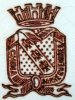
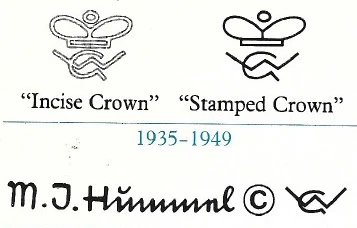
c. 1935–1950
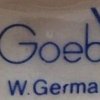
W. Goebel, used on M. I. Hummel figurines
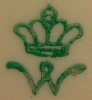
Crown over interlaced WG precedes the bee-with-V families.
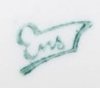
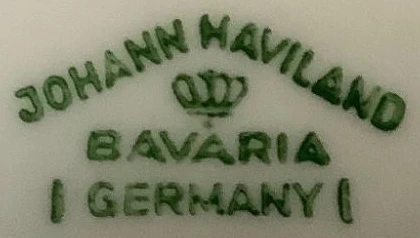
Undated
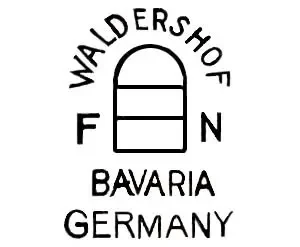
Johann Haviland / Waldershof successor brand
Crown above Bavaria and a separate Germany line; differs from the crowned-monogram example.
From 2000
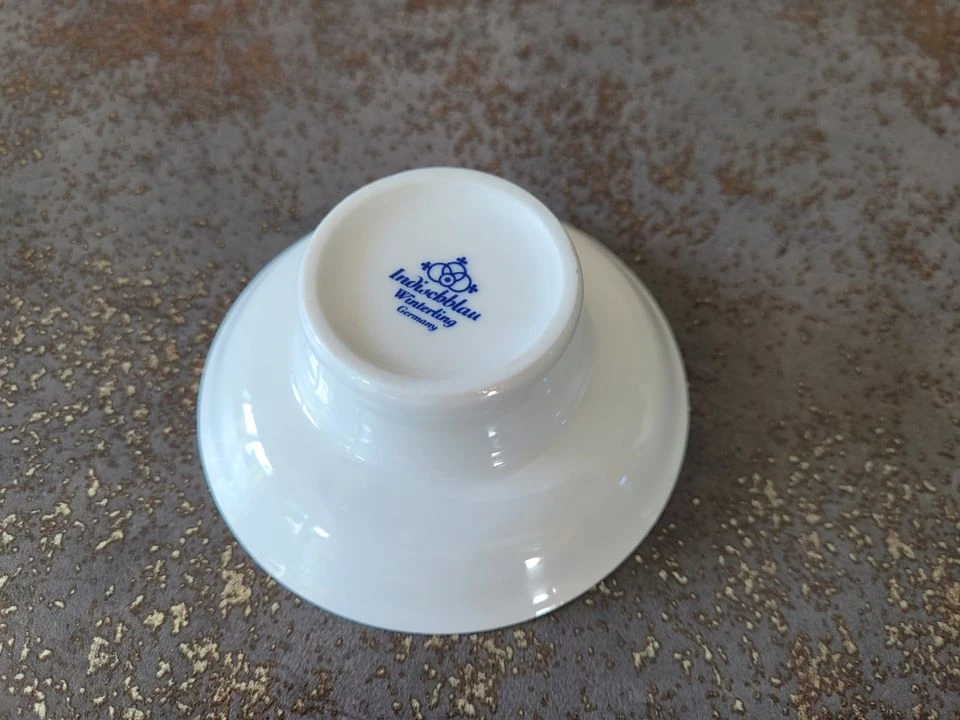
Gebrüder Winterling group / successor brand
Blue floral emblem with Indischblau and Winterling; no Bavarian works town in the inscription.
c. 1800–1999
Volkstedt
Karl Ens ownership period, dated to the late nineteenth and early twentieth centuries.
c. 1972–1990
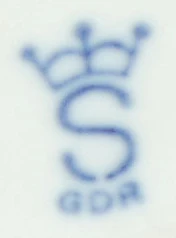
Carl Scheidig / Gräfenthal successor
GDR is printed below the crowned S, unlike later plain-S variants.
c. From 1918
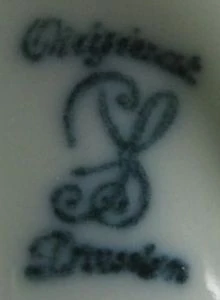
Sächsische Porzellan-Fabrik Carl Thieme and successors, Potschappel
Original above and Dresden below distinguish the complete layout from the monogram-only design.
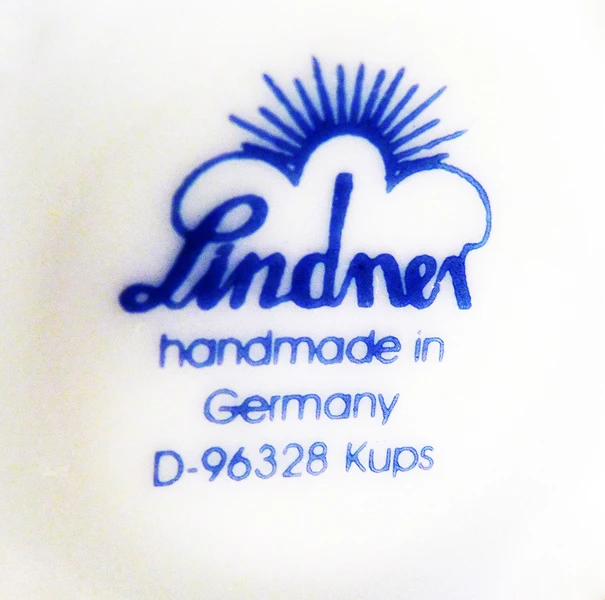
Undated
Lindner Porzellan, Küps
Five-digit 96328 address uses the postcode system introduced in 1993; exact stamp introduction remains unproved.
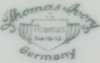
RWZRMark wording
1908–1939
Porcelana Krzysztof Sp.ZOO
Marktredwitz, Germany
Used between . Mark re-registered at the under №·419·522 on -06. Also used with only one "Thomas" ...

Browse makers
326 makersMeissenGermany151 marksRoyal DuxCzech Republic21 marksSarregueminesGermany19 marksM. I. Hummel figurinesGermany5 marksKarl ENSGermany5 marksJohann HavilandGermany5 marksWinterlingGermany5 marksWaldershof — Franz NeukirchnerGermany6 marksTettauGermany13 marksVolkstedtGermany65 marksHutschenreuther12 marksSimon & HalbigGermany5 marksPorzellanfiguren Gräfenthal GmbHGermany23 marksDresden Porcelain CoUnited Kingdom7 marksGoldscheider11 marksLindnerGermany5 marksGoebel10 marksSitzendorfGermany8 marksPorcelana Krzysztof Sp.ZOO44 marksThomas13 marksKahlaGermany17 marksRosenthalGermany40 marksWallendorfGermany44 marksNymphenburgGermany32 marksMitterteich BavariaGermany11 marksHochstGermany15 marksTirschenreuth9 marksMettlachGermany2 marksFurstenbergGermany25 marksKalk11 marksHeinrich & CoGermany11 marksGerz8 marksGerold21 marksSchönwaldGermany14 marksHutschenreuther Hohenberg13 marksBerlinGermany23 marksKatzhutteGermany12 marksVilleroy & BochGermany94 marksLudwigsburgGermany62 marksFrankenthal60 marksWerk Vohenstrauß SKV-Porzellan-Union GmbHGermany59 marksPorzellanfabrik Carl Schumann AGGermany57 marksTriptis Porzellan GmbH & Co. KGGermany56 marksWessel Keramische Werke AGGermany56 marksKaiser-Porzellanmanufaktur Staffelstein GmbH & Co. KGGermany51 marksNeue Porzellanfabrik Ilmenau GmbHGermany43 marksBonn Villeroy & BochGermany42 marksDesign House Lichte GmbHGermany42 marksPorzellanfabrik Waldsassen Bareuther & Co. AGGermany41 marksSchlossmanufaktur Ludwigsburg GmbHGermany39 marksLimbachGermany38 marksKloster-VeilsdorfGermany37 marksGilitzer Porzellan-Manufaktur GmbHGermany36 marksJaeger Porzellan GmbHGermany36 marksPorzellanfabrik Otto ReineckeGermany36 marksWerk Windischeschenbach Triptis Porzellan GmbH & Co. KGGermany36 marksPorzellanfabrik Schumann & SchreiderGermany35 marksIlmenauGermany34 marksKöniglich privilegierte Porzellanfabrik Tettau34 marksGermany32 marksPorzellanfabrik Mitterteich AGGermany32 marksPorzellanfabrik Zeh, Scherzer & Co. AGGermany32 marksPorzellanfabrik und -malerei Erdmann SchlegelmilchGermany31 marksMetzler & OrtloffGermany29 marksAnsbachGermany28 marksMarkredtwitz Jaeger28 marksArzberg Porzellan GmbHGermany27 marksGothaGermany26 marksPorzellanfabrik Heinrich Winterling GmbH & Co. KGGermany26 marksWeimar Porzellan GmbHGermany26 marksRoyal Bonn25 marksZeller Keramik Manufaktur GmbH & Co. KGGermany25 marksPorzellanfabrik Gebrüder SimsonGermany24 marksSchramberger Majolikafabrik GmbHGermany24 marksVereinigte Kunstporzellanwerke EisenbergGermany24 marksFraureuthGermany23 marksPorzellanmanufaktur Rudolf WächterGermany23 marksGeraGermany22 marksWerk Roschütz Porzellankombinat KahlaGermany22 marksEisenbergGermany21 marksNP Neue Porzellangesellschaft mbHGermany21 marksSchumann ArzbergGermany21 marksPorzellanfabrik Galluba & HofmannGermany20 marksPorzellanmanufaktur Scheibe-Alsbach GmbHGermany20 marksRauensteinGermany20 marksSitzendorfer Porzellanmanufaktur GmbHGermany20 marksPorzellanfabrik Schlottenhof GmbHGermany19 marksPorzellanfabrik F. WesselGermany18 marksPorzellanmalerei Josef KubaGermany18 marksDresdenGermany17 marksPorzellan- und Feinsteingutfabrik Max Roesler AGGermany17 marksPorzellanfabrik Sandizell GmbH & Co. KGGermany17 marksErdmann SchlegelmilchGermany16 marksGebrüder HeubachGermany16 marksPorzellanambiente ReichenbachGermany16 marksPorzellanfabrik Gebrüder Winterling AGGermany16 marksPorzellanfabrik Joseph Rieber & Co. AGGermany16 marksPorzellanmalerei Erich ParbusGermany16 marksVEB Zierkeramik KatzhütteGermany16 marksKrister15 marksNuremberg15 marksPassauGermany15 marksPorzellanmanufaktur Martinroda Erbengemeinschaft EgerGermany15 marksPorzellanmanufaktur Wagner & Apel GmbHGermany15 marksSchneyGermany15 marksBayreuthGermany14 marksClou & Classic Porcelain Company Germany GmbHGermany14 marksElektroporzellanfabrik Hans NeuererGermany14 marksGrossbreitenbachGermany14 marksJaeger Eisenberg14 marksPorzellanfabrik Rudolstadt Straus & Söhne AGGermany14 marksPorzellanmanufaktur Martha BudichGermany14 marksPorzellfabrik Hertel, Jacob & Co. GmbHGermany14 marksReinhold MerkelbachGermany14 marksScheibe-AlsbachGermany14 marksGotha, Thuringia, Germany13 marksHoechstGermany13 marksKronester13 marksPlaue SchierholzGermany13 marksPorzellanfabrik Gareis, Kühnl & Co. AGGermany13 marksPorzellanmanufaktur Friedrich KaestnerGermany13 marksUnterweissbachGermany13 marksAbteilung Arzberg Porzellanfabrik Hutschenreuther AGGermany12 marksBauscher Weiden mark12 marksJohann Seltmann12 marksKönitz Porzellan GmbHGermany12 marksPorzellanfabrik Kalk GmbHGermany12 marksPorzellanmanufaktur Allach-München GmbHGermany12 marksRoschützGermany12 marksSPM GmbHGermany12 marksVEB Ilmenauer Zier- und WerbeporzellanGermany12 marksWürttembergische Porzellanmanufaktur AGGermany12 marksBohne11 marksClara Lamm & Rudolf PitschkeGermany11 marksGlas- und Porzellan-Manufaktur Theo Kühn e.K.Germany11 marksHuttensteinachGermany11 marksJosef Kuba11 marksReutter11 marksRotberg Henneberg11 marksSPM WalkureGermany11 marksSteingutfabrik Wick Werke AGGermany11 marksWaechtersbach11 marksBareuther Waldsassen10 marksHertel JacobGermany10 marksPorzellanfabrik Christian Seltmann GmbHGermany10 marksPorzellanfabrik E.&A. Müller AGGermany10 marksPorzellanfabrik Matthes & EbelGermany10 marksPorzellanfabrik Oechsler & AndechserGermany10 marksPorzellanfabrik RosenthalGermany10 marksPorzellanmanufaktur Karl KletteGermany10 marksSelbGermany10 marksSilberporzellanmanufaktur Plüderhausen Manfred VeyhlGermany10 marksStadtlengsfeld FeldaGermany10 marksWerk Röslau Triptis Porzellan GmbH & Co. KGGermany10 marksBlankenhainGermany9 marksCeramics9 marksColditzGermany9 marksM.W. Reutter Miniaturen GmbHGermany9 marksMartinrodaGermany9 marksVEB Porzellanfabrik ProbstzellaGermany9 marksBauer & Pfeiffer8 marksBremer Schmidt8 marksBunzlau BolesławiecGermany8 marksGerman Doll CompanyGermany8 marksLamm8 marksMajolikafabrik E.&C. Carstens Tönnieshof GmbHGermany8 marksOscar SchlegelmilchGermany8 marksPorsgrundsGermany8 marksPorzellan- und Fayencefabrik I. PfefferGermany8 marksPorzellanfabrik Wilhelm RittirschGermany8 marksSteingutfabrik Witteburg AGGermany8 marksWeimarGermany8 marksF. WesselGermany7 marksFuldaGermany7 marksGebrüder Winterling7 marksGrafenthalGermany7 marksKjøbenhavns Porcellains MaleriGermany7 marksLichteGermany7 marksPorzellanfabrik Weißenstadt Dürrbeck & RuckdäschelGermany7 marksPotschappelGermany7 marksÜbelacker Zierkeramik (Ü-Keramik)Germany7 marksVolkstedt-RudolstadtGermany7 marksHohenbergGermany6 marksKelsterbachGermany6 marksKielGermany6 marksOhrdrufGermany6 marksPlaueGermany6 marksPoessneckGermany6 marksPorzellanmanufaktur und Keramikfabrikation Hans WormsGermany6 marksRetschGermany6 marksRudolstadt6 marksRudolstadt StraussUnited Kingdom6 marksSuhlGermany6 marksVEB Spezialkombinat Porzellan EisenbergGermany6 marksWerk Darmstadt Porzellan- und Feinsteingutfabrik Max Roesler AGGermany6 marksX.E. Stephan Porzellanmalerei Helena Wolfsohn NachfolgerGermany6 marksAllach SSGermany5 marksArzbergGermany5 marksBaden-BadenGermany5 marksElgersburgGermany5 marksErnst Göcke5 marksErnst Teichert5 marksGräf & Krippner5 marksInh. Arno Apel Porzellanfabrik KeramikaGermany5 marksJunkersdorfGermany5 marksKeramik KeruskaGermany5 marksKoppelsdorfGermany5 marksKrister Porzellan-Manufaktur AG NachfolgerGermany5 marksLippelsdorfGermany5 marksOttGermany5 marksPorzellanmalerei R. Grossbaum & SöhneGermany5 marksRheinische Porzellan-Fabrik Mannheim GmbH.Germany5 marksRhenania5 marksSchorndorfGermany5 marksSMF SchrambergUnited Kingdom5 marksvan Well5 marksFranziska Hirsch4 marksGräfenroda VoigtGermany4 marksHaager, Hoerth & Co.Germany4 marksKrautheim & Adelberg4 markslater Agrob Buchtal GmbH Agrob Wessel Servais AGGermany4 marksPfalz ZweibruckenGermany4 marksPorzellan- und Steingutfabrik Hugo Lonitz & Co.Germany4 marksPorzellan-Manufaktur Ludwigsburg AGGermany4 marksPorzellanfabrik Bremer & SchmidtGermany4 marksPorzellanfabrik Dornheim, Koch & FischerGermany4 marksPorzellanfabrik Leube & Co.Germany4 marksPorzellanmanufaktur Fritz PoppGermany4 marksPorzellanmanufaktur J. SchmeisserGermany4 marksSaxonia Porzellanfabrik Georg BennewitzGermany4 marksWedgwoodUnited Kingdom4 marks“Rosenthal” concernGermany3 marksAnnaburgGermany3 marksBock and TeichGermany3 marksCottatherm LimitedGermany3 marksEdelsteinGermany3 marksGehren near IlmenauGermany3 marksKeramikwerkstatt KrösselbachGermany3 marksKlemm3 marksKonitzGermany3 marksLangewiesenGermany3 marksLudwigsburg in WurttembergGermany3 marksPlankenhammer3 marksPorzellan- und Steingutfabrik Carl HubbeGermany3 marksPorzellanfabrik Friedrich Schwab & Co.Germany3 marksPorzellanmalerei Gottfried RohlederGermany3 marksPorzellmanufaktur Düssel, Roth & Co.Germany3 marksAntique German clay and stoneware products (gres)2 marksArnstadt Coburg-GothaGermany2 marksBasdorf near BerlinGermany2 marksEllwangenGermany2 marksGmundenGermany2 marksHochst am Main near FrankfurtGermany2 marksHochst near Frankfurt am MainGermany2 marksKämmer VolkstedtGermany2 marksKasselGermany2 marksMainzGermany2 marksMarktredwitzGermany2 marksMeuselwitzGermany2 marksMoritz2 marksNeuhaldenslebenGermany2 marksNeuhausGermany2 marksOberhondorfGermany2 marksOrben KnabeGermany2 marksOttweiler-Nassau SaarbruckenGermany2 marksPorzellanfabrik Heber & Co.Germany2 marksPorzellanmanufaktur Gisela KeilhauerGermany2 marksReichmannsdorfGermany2 marksRheinische Porzellan-Manufaktur L. HerrmannGermany2 marksSchwarzenbachGermany2 marksStadtlengsfeldGermany2 marksSteingutfabrik Sauer & RoloffGermany2 marksWürttemberg SchreitzheimGermany2 marks“Hutschenreuter” in HohenbergGermany1 markAntique clay — stoneware utensils (gres)1 markAntique clay (gre) of German origin1 markAntique fireproof potteryGermany1 markAntique German potting clay1 markAntique ovenware.Germany1 markBurgauGermany1 markCharlottenburg near BerlinGermany1 markCologneGermany1 markEldosGermany1 markFeilsdorfGermany1 markFriedbergGermany1 markGehrenGermany1 markGeingenGermany1 markGerman1 markGrefenrodaGermany1 markGrefenthalGermany1 markGreinladt or FrankenthalGermany1 markHarburg-HannoverGermany1 markHidesheimGermany1 markKellinghusenGermany1 markKeppelsdorfGermany1 markKoch1 markKonigssee and GarsitzGermany1 markKonigssee and HarsitzGermany1 markKronachGermany1 markLandstuhlGermany1 markLudwigsburg (Wurttemberg)Germany1 markLunbachGermany1 markMagdeburg (Buckau)Germany1 markMeiningenGermany1 markPiesauGermany1 markPoppelsdorf near Bonn on the RhineGermany1 markPorzellanmalerei Schützmeister & QuendtGermany1 markPorzellanmanufaktur Franz SieberGermany1 markPorzellanmanufaktur Ley & WiedermannGermany1 markProbstzellaGermany1 markRendsburgGermany1 markRieber1 markSaargemundGermany1 markSchaalaGermany1 markSchmiedefeldGermany1 markSchreitzheim in WurttembergGermany1 markSchwarzenfeldGermany1 markSpechtsbrunnGermany1 markStadtilm (Thuringia)Germany1 markTaubenbachGermany1 markthe Duchy of Baden VillengenGermany1 markVeilsdorf (Wilsdorf)Germany1 markVillingenGermany1 markWaldsassenGermany1 markWeingartenGermany1 markZeller Steingut- und Porzellanfabrik C. SchaaffGermany1 mark